


In the operation and maintenance of power systems, transformer testing is a key link to ensure the safe and stable operation of equipment. However, facing the wide variety of testing equipment in the market, how to choose a transformer testing kit that is truly suitable for on-site operations has become a practical problem faced by many power operation and maintenance units.

Clearly define the test object and core requirements
The first step in selecting a transformer testing kit is to identify the type and voltage level of the transformer that needs to be tested. The requirements for testing equipment vary significantly among distribution transformers, power transformers, and rectifier transformers. The voltage level from 10kV to 1000kV determines the testing voltage and accuracy requirements, while the capacity range directly affects the configuration of testing current and power.
In terms of testing items, if mainly used for handover testing and preventive testing, DC resistance testing, transformation ratio group testing, insulation resistance testing, and no-load load loss testing are the basic configurations. If used for factory testing in transformer manufacturing plants, it is necessary to add induction withstand voltage and partial discharge measurement functions, which are also key indicators to distinguish between mid-range and high-end testing equipment.
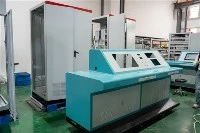
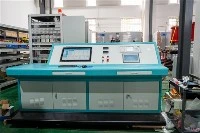
Taking the transformer comprehensive testing platform developed by Wuhan UHV Power Technology Co., Ltd. as an example, it adopts a modular architecture design, integrating six core functions including DC resistance testing, transformation ratio group testing, insulation resistance testing, dielectric loss testing, no-load loss testing, and load loss testing. Without the need for additional equipment, it can complete the full testing of transformers from basic electrical performance to insulation safety. This integrated design means less equipment handling and simplified wiring processes for on-site operations.
Accuracy and reliability cannot be compromised
The on-site testing environment is much more complex than the laboratory, and there are various interference signals such as power frequency electric fields and harmonics in substations and factory workshops. Whether the testing equipment can stably output accurate data in complex electromagnetic environments is a key factor that must be considered when purchasing.
In terms of key performance indicators, the output capacity must be greater than the maximum no-load loss and load loss of the tested transformer to ensure a smooth rise to the rated voltage and current; The measurement accuracy needs to meet or exceed relevant national standards, and the loss measurement accuracy is usually required to reach level 0.2 or higher. The resolution of the DC resistance testing module is particularly important. High resolution equipment can accurately capture subtle differences in winding resistance, effectively identifying hidden dangers such as wire joint oxidation and uneven winding.
The anti-interference ability cannot be ignored either. An excellent dielectric loss testing module should be equipped with anti-interference algorithms that can effectively filter out interference signals such as on-site power frequency electric fields and harmonics, ensuring stable output of insulation performance data in complex electromagnetic environments such as substations and factory workshops.
Balance between portability and environmental adaptability
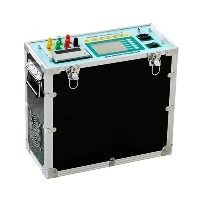
The biggest difference between on-site testing and laboratory testing is the mobility of the equipment. Portable testing equipment is suitable for scenarios that require frequent movement, transfer operations between remote areas or different sites, while desktop or cabinet equipment is more suitable for fixed installation in laboratories. For most power operation and maintenance units, portable devices with reasonable weight and support for single person handling are a more practical choice.
In addition, working environment factors such as on-site power supply conditions, temperature, and humidity also need to be taken into consideration. Some handheld testing devices now support built-in battery power supply, without relying on mains power, greatly improving the convenience of on-site testing in outdoor, high-altitude, and remote areas.
Automation and software capabilities determine efficiency
Modern transformer testing kits are no longer just measuring tools, their software capabilities directly affect on-site operational efficiency. When purchasing, attention should be paid to whether the device supports "one click" completion of the scheduled testing process, whether report generation is convenient, and whether data management functions are complete.
The Wuhan UHV transformer comprehensive testing platform provides valuable reference in this regard: equipped with a 15 inch touch operation screen, built-in detection templates for hundreds of common transformer models, operators only need to input the equipment nameplate parameters, and the system can automatically match the testing standards and parameter thresholds, and start the fully automatic detection process with one click. After the testing is completed, the system automatically generates standardized reports that support PDF export, cloud storage, or direct printing, greatly simplifying the data archiving and quality traceability process.
Brand service and long-term guarantee
Transformer testing equipment is a professional equipment for long-term use, and the supplier's after-sales service capability is equally crucial. When choosing, priority should be given to brands with good reputation and strong technical strength in the industry, to ensure that suppliers can provide timely technical support, training, and maintenance services. Whether the device has reserved expansion interfaces and whether it can add testing modules according to subsequent testing needs directly affects the long-term value of the device. Wuhan UHV has established a full process quality control system in after-sales service. Key modules undergo multiple rounds of testing and screening, including high and low temperature cycling, voltage shock, and vibration shock. Before leaving the factory, the entire machine needs to pass a continuous 72 hour full load operation test and provide free on-site installation, debugging, and customized training services.
Choosing the appropriate transformer testing kit is essentially finding the best balance between functional coverage, measurement accuracy, portability, and long-term service. It is recommended to have technical communication with multiple suppliers based on a clear list of testing requirements, and if necessary, request on-site demonstrations of key testing processes, with the convenience and stability of actual operations as an important basis for final decision-making.