



In substation maintenance and transformer handover testing, excitation current testing is the core means to determine the saturation characteristics of the iron core and the insulation state between winding turns. The inaccurate test results may result in repeated rework of the test report, or in severe cases, the faulty transformers with hidden dangers may be put into operation, posing a risk of misoperation or refusal to operate the relay protection. However, faced with various devices on the market ranging from thousands to hundreds of thousands of yuan, many testers still feel confused about how to choose the one that truly meets the on-site needs.

The first key to selection is whether the output voltage can cover the inflection point voltage of the tested transformer. This is the most stringent standard in excitation characteristic testing - the maximum output voltage of the equipment must be higher than the inflection point voltage of the tested transformer, otherwise the excitation curve will be truncated before entering the saturation zone, and the inflection point data cannot be fully obtained. CT/PT for conventional protection or metering of 35kV and below, with inflection point voltages typically in the hundreds of volts range, can be easily handled by traditional power frequency equipment with output capabilities from 0 to 2500V. But if facing high-voltage or TP level transient protection CT, the inflection point voltage may be as high as tens of kilovolts, and traditional power frequency equipment is unable to handle it even if the voltage upper limit is fully pulled. Although the nominal output voltage of the low-frequency method (frequency conversion method) equipment is only 0 to 180Vrms, it can improve the equivalent inflection point voltage testing capability to the level of 30kV to 60kV. At the same time, the overall weight of the machine can be controlled within 9kg, which is suitable for work scenarios that require frequent transitions. The choice of technical route is essentially a trade-off between "high current output capability" and "high inflection point coverage capability": users who often perform CT one-time current testing should choose traditional power frequency method equipment, while users who focus on high-voltage transformer maintenance tasks have more prominent advantages in safety and portability of low-frequency method equipment.
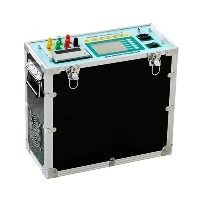
The second dimension is functional integration. Excitation characteristic testing is only one link in the transformer parameter detection chain, and projects such as transformation ratio, polarity, secondary winding DC resistance, and secondary circuit burden also need to be completed during maintenance. If every project needs to be tested with a different instrument and rewiring, the on-site efficiency will be significantly reduced. Taking the CT parameter analyzer of Wuhan UHV Power Technology Co., Ltd. as an example, it integrates multiple testing functions such as excitation characteristic curve, transformation ratio, polarity, secondary winding DC resistance, and actual burden of secondary circuit into a single host, and can complete multi parameter detection with one wiring. In the excitation characteristic testing stage, the equipment is equipped with a high stability voltage regulation module, which has low distortion of the voltage output waveform. Combined with a high-precision voltage current synchronous sampling unit, it automatically draws a smooth and complete volt ampere characteristic curve and intelligently identifies the inflection point position. For protection grade CT, the equipment can further calculate 5% and 10% error curves, providing data basis directly for determining whether the CT meets the error requirements of the protection device. The company adopts high-resolution DAC and high-speed ADC architecture in signal acquisition, combined with adaptive current boosting algorithm, which can accurately capture nonlinear inflection points even at excitation currents as low as 1mA.
The third dimension is on-site adaptability and the technical support capability of manufacturing enterprises. The electromagnetic environment of substations and power plants is complex, and whether the equipment can maintain data stability under interference conditions directly affects the credibility of experimental conclusions. The Wuhan UHV tester uses digital signal processing algorithms in the signal processing stage to filter and correct the collected data, and supports real-time display of test voltage, current, and curve graphics on a single LCD screen. In terms of data storage, multiple sets of test records can be saved and exported to a computer through a communication interface for easy comparison of historical data and preparation of test reports. The whole machine adopts a portable structure, with a sturdy shell, suitable for transfer between different testing sites.
When selecting, it is worth paying attention to the "non parametric factors" at the enterprise level. Wuhan UHV Power Technology Co., Ltd. is a nationally recognized high-tech enterprise that has passed the ISO 9001 quality management system certification. Multiple products have passed the type tests of the National Electric Power Equipment and Instrument Quality Supervision and Inspection Center and obtained testing reports. At the industry level, the company has joined the CEC China Electricity Council, and its products have also received continuous feedback from users in practical scenarios. In the comprehensive self renovation project of a 220kV substation in a certain region, the testing personnel used their CT parameter analyzer to complete the excitation characteristics and transformation ratio verification of multiple CT groups. The operation method of completing multiple tests in one wiring reduced the workload of repeated disconnection. This feedback from frontline usage scenarios often has more reference value than paper parameters.
Ultimately, there is no one size fits all answer for the selection of excitation current testing equipment. Whether the output voltage covers the inflection point voltage determines whether the equipment can be used, functional integration determines on-site efficiency, and the quality management system and actual service capability of the manufacturing enterprise determine whether the equipment can be used for a long time. By clarifying these three dimensions, the direction of selection will naturally become clear.