


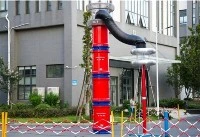

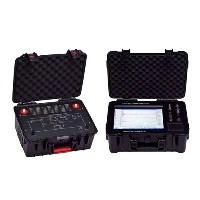
In the AC withstand voltage test of high-voltage power cables, the variable frequency series resonance test device has become a standard equipment in the industry. However, how to scientifically select cable capacitors is still a practical problem faced by many power companies. Recently, Wuhan UHV Power Technology Co., Ltd. (hereinafter referred to as "Wuhan UHV") combined years of technical accumulation and on-site experience to systematically sort out the selection method of AC resonance testing system based on cable capacitance.

Cable capacitance: the first calculation problem for selection
The capacitance value of the cable directly determines the required reactor configuration and power supply capacity for the resonant system. The capacitance of cables with different voltage levels, lengths, and cross-sectional areas varies greatly. The Wuhan UHV technology team pointed out that the core of selection is to calculate the total capacitance of the tested cable and match the inductance of the reactor accordingly, so that the system can achieve resonance within the frequency range. The longer the cable and the larger the capacitance, the higher the required reactor capacity and power supply.
Three step selection method: from parameters to configuration
Based on years of on-site service experience, Wuhan UHV has summarized the "three-step selection method" for AC resonance testing systems:
The first step is to confirm the voltage level. According to the highest voltage level of the equipment under our jurisdiction, the device range is selected. The specifications required for 10kV distribution networks and 110kV substations are completely different.
Step two, calculate the cable capacitance. Accurately obtain parameters such as the length, cross-sectional area, and dielectric constant of the insulation medium of the cable, and accurately calculate the total electrical capacity. This step directly determines the selection plan for subsequent reactors.
Step three, match the reactor combination. Based on the calculated capacitance value, select a reactor with appropriate inductance, insulation level, and capacity to ensure that the system can reach resonance state within the allowable frequency range.
Technical advantages: small power supply, high voltage
The core advantage of variable frequency series resonance technology lies in the principle of 'small wins big'. Due to full compensation of resonant reactive power, the power of the power supply and equipment is only less than one tenth of the required capacity of the tested object. The series resonant device of Wuhan UHV adopts advanced frequency conversion technology and DSP platform, with harmonic content below 0.3%. The device has multiple protection functions such as overvoltage, overcurrent, zero start, and system mismatch.
At present, the AC resonance testing system of Wuhan UHV has been widely used in industries such as power, metallurgy, petroleum, and chemical, covering AC withstand voltage testing of cross-linked cables, transformers, GIS and other equipment with voltage levels ranging from 35kV to 220kV. The company is located in Wuhan and has become a leader in the high-voltage electrical measurement industry after more than 20 years of meticulous cultivation.