


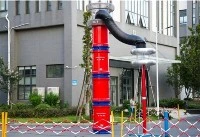

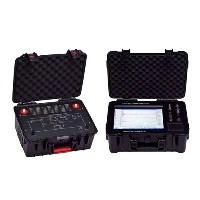
In the power system, the variable frequency AC resonance testing system (also known as the variable frequency series resonance testing device) is a key equipment to ensure the safe operation and stable operation of high-voltage electrical equipment. Whether it's the handover test of cross-linked cables or transformers GIS, The preventive voltage withstand test of generators and other equipment cannot be separated from this system. However, facing the dazzling array of product models and parameter configurations in the market, how to scientifically and accurately choose a testing system that suits one's own needs has become a focus of attention for many power workers. The reporter combined the product technology and selection experience of Wuhan UHV Power Technology Co., Ltd. (hereinafter referred to as "Wuhan UHV"), a mainstream manufacturer in the industry, to sort out the following core considerations.

1, Clarifying the type of test sample is the "first step" in selection
Different electrical equipment have vastly different requirements for test voltage, frequency, and capacity. When selecting, the first thing to clarify is' what to test '.
Power cables: It is important to consider the voltage level, length, and cross-sectional area of the cable. For example, for a 10kV, 300mm ² cable with a length of 1km, a device equipped with a 22kV reactor can be selected; If the length increases to 3km, a larger capacity model needs to be selected accordingly.
Generator: The device model should be determined based on the capacity and voltage level of the generator. Some universal devices can meet the testing requirements of a certain length of cable while also meeting the testing needs of the generator.
GIS and SF6 switches: For AC withstand voltage testing of 110kV GIS, suitable voltage levels and reactor configuration schemes need to be selected.
In addition, the device is widely used for the handover and preventive testing of high-capacity, high-voltage capacitive specimens such as hydroelectric generators, main transformers, and busbars.
2, Match the test voltage and capacity to ensure that it can be raised
The test voltage and capacity are the hard indicators for selection. The variable frequency series resonance test device uses advanced resonance technology to adjust the output frequency of the variable frequency power supply, causing resonance between the reactor inductance L and the sample capacitance C, thereby generating high voltage on the sample.
The technical data of Wuhan UHV shows that its device adopts a dual chip architecture of DSP+FPGA, and calculates the load capacitance change in real time through dynamic frequency tracking algorithm, controlling the resonance frequency error within ± 0.05Hz. Its output frequency range is generally 30-300Hz, which can meet the test frequency requirements of different power equipment. The resonance voltage waveform is a sine wave with a waveform distortion rate of less than 1.0%. At the same time, the equipment adopts modular design, which can flexibly combine boost reactors and excitation transformers, covering voltage withstand test scenarios of 10kV to 500kV full voltage levels.
3, Pay attention to key technical parameters and protection functions
An excellent testing system not only requires "strength", but also "intelligence" and "safety".
Waveform quality: The device adopts an imported specialized SPWM digital waveform generation chip, which can ensure good output voltage waveform. The resonant power supply itself is a resonant filtering circuit, which can effectively improve the distortion of the output voltage waveform and prevent harmonic peaks from causing false breakdown of the test sample.
Protection mechanism: A comprehensive protection function is the core guarantee for experimental safety. Modern frequency conversion series resonant devices generally have multiple protection functions such as overvoltage, overcurrent, zero position starting, and system detuning (flashover). In the series resonance state, when the weak point of the insulation of the test sample is broken down, the circuit immediately loses resonance, and the loop current rapidly drops to 1/Q of the normal test current, effectively avoiding large short-circuit currents from burning the fault point.
Convenient operation: The device should support multiple operation modes such as fully automatic, manual, automatic tuning, and manual boosting. Some high-end systems have built-in series resonance parameter calculators, which can quickly calculate key parameters such as inductance, capacitance, and frequency with just one click.
4, Assess the manufacturer's technical strength and after-sales service
The variable frequency series resonance testing system is a high-value and high-tech professional equipment. The manufacturer's research and development capabilities and service level directly affect the service life and test reliability of the equipment.
Taking Wuhan UHV as an example, it has independent intellectual property rights in the field of variable frequency series resonance, such as "series resonance control protection circuit" and "series resonance power supply". In terms of service, the technical team can provide free solution design and model recommendations based on customer project needs, as well as equipment installation guidance, operation training, and lifelong maintenance services. Simultaneously supporting customized non-standard devices, providing personalized solutions for testing difficulties in special scenarios.
Choosing a variable frequency AC resonance testing system is essentially a comprehensive consideration of multidimensional factors such as the requirements of the test object, technical parameters, safety protection, and manufacturer services. As proven by industry practice, a properly selected series resonant device can not only significantly reduce the capacity requirement of the test power supply (only 1/Q of the test capacity), but also reduce the weight and volume of the equipment to 1/10 to 1/30 of ordinary test devices. Electric power workers should conduct thorough research and clarify their requirements before procurement. If necessary, they can contact professional manufacturers for technical support to ensure maximum equipment efficiency.