



Introduction:
In the fields of power systems and scientific research, the term 'low-frequency high-voltage generator' may not be unfamiliar. But what exactly is it? What else can it do? This article takes you into its world and reveals its mysterious veil.
Definition: What is a low-frequency high-voltage generator?
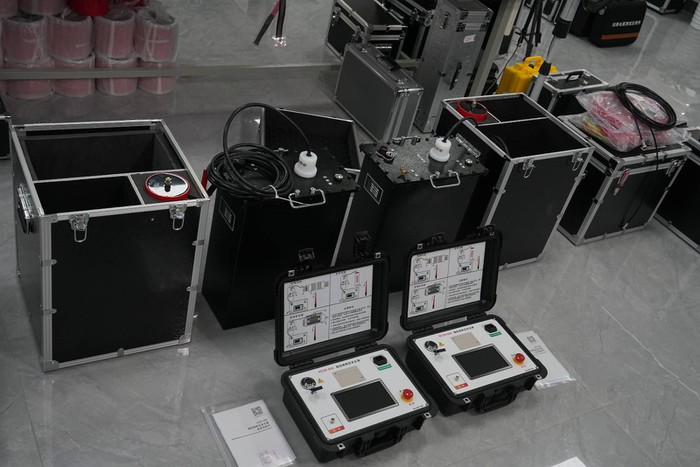
Simply put, a low-frequency high-voltage generator is a device capable of generating high voltage outputs at specific frequencies (typically between tens of hertz and several kilohertz). It is different from the mains (50/60 Hz) that we come into daily contact with, and can output voltage levels far from mains. This type of device plays an indispensable role in many fields.
Influencing factors and application scenarios
The performance of low-frequency high-voltage generators is influenced by various factors, including:
Power stability: The stability of the input power directly affects the accuracy of the output voltage and frequency.
Load characteristics: The impedance and capacitance of the connected load can affect the output performance.
Environmental temperature and humidity: High temperature and humidity may lead to a decrease in insulation performance, affecting the safe operation of equipment.
Due to its unique performance, low-frequency high-voltage generators have a wide range of applications in the following scenarios:
Insulation testing of power equipment: This is one of the most common applications. For example, the low-frequency high-voltage generator provided by Wuhan UHV Power Technology Co., Ltd. can be used to test the insulation performance of power equipment such as cables, transformers, and switches, ensuring their safety and reliability during operation.
Electromagnetic compatibility (EMC) testing: In some EMC tests, it is necessary to simulate a specific electromagnetic environment, and the generation of low-frequency and high-voltage signals is one of the steps.
Scientific research and experimentation: In some basic scientific research, such as plasma physics, materials science, etc., specific low-frequency and high-pressure conditions are required for experiments.
How to better utilize low-frequency high-voltage generators?
To fully utilize the efficiency of the low-frequency high-voltage generator, there are several key points that need to be noted:
Accurate parameter setting: Based on testing standards or experimental requirements, accurately set the output voltage, frequency, and testing time.
Standardized operating procedures: strictly follow equipment operating procedures to ensure personal and equipment safety.
Regular maintenance and calibration: Regularly inspect and maintain the equipment to ensure its stable performance. Wuhan UHV Power Technology Co., Ltd. provides professional equipment maintenance and technical support services.
Select appropriate equipment: Choose a generator with performance parameters that match the specific application scenario and testing requirements.
Related fields
Low frequency high-voltage generators are closely related to the following fields:
Power engineering is a critical component of the safe operation of the power system.
High voltage technology: It is one of the fundamental equipment for researching high voltage technology.
Electronic engineering is also involved in the development and testing of certain electronic devices.
Tools and Resources
In addition to the low-frequency high-voltage generator itself, there are also some auxiliary tools and resources that can help you better understand and use it:
Oscilloscope: Used for observing and measuring output voltage waveforms.
High voltage probe: safely and accurately measure high voltage.
Relevant testing standards, such as IEC, GB, etc., provide detailed testing methods and requirements.
Professional technical support: For example, Wuhan UHV Power Technology Co., Ltd. can provide professional technical consultation and solutions.
As an important equipment for power testing and scientific research, low-frequency high-voltage generators have a wide range of applications. By understanding its principles, influencing factors, and following standardized operations and maintenance, we can better utilize this tool to ensure the safe operation of the power system and promote scientific and technological progress.
Frequently Asked Questions (FAQ)
Q: What is the difference between a low-frequency high-voltage generator and a high-frequency high-voltage generator? A: The main difference lies in the output frequency. The low-frequency high-voltage generator operates in a lower frequency range, while the high-frequency high-voltage generator operates in a higher frequency range. They may differ in application areas and test objects.
Q: What safety precautions should be taken when using a low-frequency high-voltage generator for insulation testing? A: Be sure to wear insulated shoes and gloves, confirm that the equipment is well grounded before operation, stay away from live objects during the testing process, and fully discharge after the test is completed.
Q: What factors can affect the output accuracy of a low-frequency high-voltage generator? A: Fluctuations in power supply voltage, changes in ambient temperature, aging of internal components in equipment, and nonlinear characteristics of loads can all affect output accuracy.
Q: What is the role of a low-frequency high-voltage generator in power cable testing? A: Mainly used to test the voltage resistance of cable insulation materials and whether there are insulation defects, in order to determine whether the cable can operate safely.
Q: Where can I find reliable low-frequency high-voltage generators and related technical support? A: You can consider professional manufacturers like Wuhan UHV Power Technology Co., Ltd. They usually provide high-quality products and comprehensive technical services.