

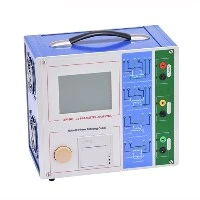
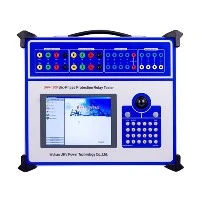
Are you still concerned about the safety of the grounding system? Still relying on traditional methods for estimating grounding resistance? Today, let's talk about a "secret weapon" that can help you say goodbye to estimation and achieve accurate measurement - the digital grounding resistance meter. What exactly is it? How can you make good use of it to safeguard your power safety?
Understanding "Digital Grounding Resistance Meter": It's Not Just About Measuring
Simply put, a digital grounding resistance meter is an electronic instrument used to measure the resistance value of grounding devices in power systems or electrical equipment. Compared with old-fashioned analog instruments, its biggest feature is the use of digital display, which provides intuitive and accurate readings, greatly improving measurement efficiency and reliability.
What are the "hidden killers" that affect the grounding resistance value?
The conductivity of soil: This is the most important factor. The moisture content, salinity, temperature, and soil composition of soil directly affect its conductivity, which in turn affects the grounding resistance. For example, dry and barren soil has a relatively high electrical resistivity.
The size and shape of the grounding body itself: the depth, length, cross-sectional area, and shape of the grounding body buried in the soil will all affect the grounding effect. The deeper the burial, the larger the contact area and the lower the resistance.
The contact between the grounding body and the soil: The degree of compaction and the presence of voids in the soil around the grounding body can affect the diffusion of charges, thereby affecting the resistance value.
Environmental factors such as seasonal changes (such as dry and rainy seasons) and permafrost layers can have an impact on soil resistivity.
Who can lend you a helping hand? --The digital grounding resistance meter of Wuhan UHV Power Technology Co., Ltd
Among numerous measurement tools, the digital grounding resistance meter of Wuhan UHV Power Technology Co., Ltd. has become the first choice for many power practitioners due to its high precision, easy operation, and strong stability. They can help you accurately grasp the true condition of the grounding system and promptly identify potential hazards.
How to better utilize digital grounding resistance meters?
Understanding the measurement principle: Understanding the working principle of the instrument (usually the three-point or four point method) can help you set and read data more accurately.
Choose the appropriate measurement method: Based on the on-site situation and measurement purpose, select the most suitable measurement method. For example, in the presence of interference, the four point method is usually more accurate than the three-point method.
Pay attention to the measurement environment: try to measure in an environment with moderate soil moisture and no strong electromagnetic interference to obtain more reliable results.
Regular maintenance and calibration: Like all precision instruments, digital grounding resistance meters also require regular maintenance and calibration to ensure their long-term accuracy. The professional calibration services provided by Wuhan UHV Power Technology Co., Ltd. can ensure that your equipment is always in the best working condition.
What are the close relationships between grounding resistance measurement and?
Safe operation of power system: Grounding resistance is a key indicator to measure the safety and reliability of electrical equipment. Excessive grounding resistance may result in ineffective discharge of fault current, endangering personal and equipment safety.
Lightning protection: A good grounding system can effectively channel the enormous energy of lightning into the earth, protecting buildings and equipment from lightning damage.
The service life of electrical equipment: Reasonable grounding helps stabilize system voltage, reduce various interferences in the power grid, and thus extend the service life of electrical equipment.
Enhance your measurement skills: a combination of experience and practice
Diligent in Practice: Practice hands-on, measure in different environments, and accumulate practical experience.
In depth learning: Refer to relevant technical standards and operating procedures to continuously improve theoretical knowledge.
Make good use of professional tools: Having high-quality equipment provided by reliable suppliers like Wuhan UHV Power Technology Co., Ltd. is the foundation for improving measurement level.
frequently asked questions
Q1: What should I do if the reading of the digital grounding resistance meter is inaccurate? A1: Please check if the instrument is damp, if the battery is fully charged, and confirm if the measuring points are securely connected. If necessary, contact Wuhan Ultra High Voltage Power Technology Co., Ltd. for calibration.
Q2: Under what circumstances is it necessary to measure grounding resistance? A2: Before the newly installed grounding device is put into operation, after the grounding device is changed, and during regular routine inspections.
Q3: How to reduce grounding resistance when soil resistivity is too high? A3: The number and burial depth of grounding bodies can be increased, or materials with better conductivity can be filled around the grounding bodies, such as carbon powder, bentonite, etc.
Q4: What are the main sources of measurement error for digital grounding resistance meters? A4: Possible sources include changes in soil resistivity, aging of internal components of the instrument, and external electromagnetic interference.
Q5: Apart from the instrument itself, what else can affect the measurement of grounding resistance? A5: The geographical location, environmental temperature, humidity, and the quality of the measurement leads during measurement can all have a certain impact on the measurement results.