

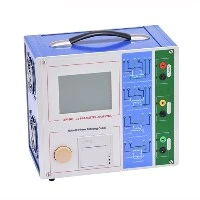
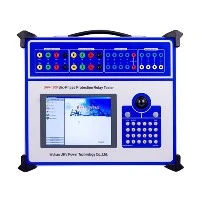
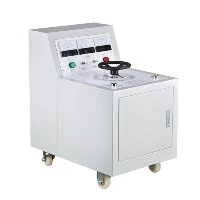
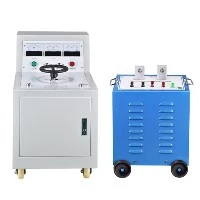
The trace moisture analyzer under UHV power can help many power workers conduct various power tests more conveniently.

The popularity of Karl Fischer titration is largely attributed to its several practical advantages in other methods of moisture determination, such as accuracy, speed, and selectivity.
The Karl Fischer titration method is selective for water because the titration reaction itself consumes water. On the contrary, the measurement of quality loss during drying will detect the loss of any volatile substances. However, strong redox chemistry (SO2/I2) means that the redox active sample components can react with the reagents. Therefore, the Karl Fischer titration apparatus is not suitable for solutions containing substances such as dimethyl sulfoxide.
The Karl Fischer moisture titrator (also known as a trace moisture analyzer) has high accuracy and precision, typically within 1% of available water, such as 3.00% displayed as 2.97-3.03%. Although the Karl Fischer titration instrument is a destructive analysis, the sample size is small and is usually limited by weighing accuracy. For example, in order to achieve a 1% accuracy using a scale with a typical precision of 0.2mg, the sample must contain 20mg of water, such as 200mg for a sample containing 10% water. For a power meter, the measurement range is 1-5 ppm to ca 5%. The Karl Fischer titration instrument can easily measure up to 100% of samples, but for analytes with water content below 0.05%, an impractical large amount of samples is required. The response of Karl Fischer titration instrument is linear. Therefore, using a calibrated 1% water standard for single point calibration is sufficient, and there is no need to calibrate the curve.
Requires minimal sample preparation: Typically, liquid samples can be directly injected using a syringe. The analysis is usually completed within one minute. However, the Karl Fischer water titrator suffers from an error called drift, which is a significant water input that may confuse measurements. The glass wall of the container adsorbs water, and if any water leaks into the cells, the water slowly releases into the titration solution, which can last for a long time. Therefore, before measurement, the container must be carefully dried and subjected to a 10-30 minute "dry run" to calculate the drift rate. Then subtract the drift from the result.
The Karl Fischer moisture titrator is suitable for measuring liquids and special equipment, gases. The main disadvantage of solids is that water must be easily accessible and easy to add to methanol solutions. Many common substances, especially foods such as chocolate, release water slowly and difficult, and require additional effort to reliably bring the total water content into contact with Karl Fischer reagent. For example, a high shear mixer can be installed on the battery to damage the sample. The Karl Fischer titration instrument has a problem with compounds that strongly bind to water, such as lithium chloride, in hydrated water. Therefore, the Karl Fischer titration instrument is not suitable for special solvents LiCl/DMAc.
The Karl Fischer moisture titrator is suitable for automation. Usually, a separate Karl Fischer titration apparatus is used for volumetric titration, and the titration cell of the Karl Fischer titration apparatus is installed in a universal titration apparatus.
By UV/VIS spectrophotometry, colored samples can be used, and volumetric titration and visual detection of titration endpoints can also be employed.