


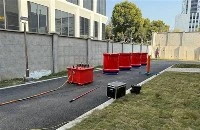
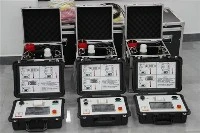
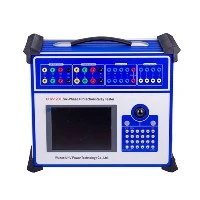
The series resonance (also known as series resonance device) test is different from general testing instruments. Its characteristic is that the same set of equipment can be used for AC withstand voltage testing of different electrical equipment such as cross-linked cables, transformers, etc GIS, Electric motors and generators usually require the design of configuration schemes based on the user's sample range and testing requirements to meet the testing requirements of different regions, users, and samples. However, there are always some uncertain factors that affect the results of series resonance tests, including:

1. The impact of weather
Under high humidity conditions, the corona loss of the lead wire increases significantly, and the interference of the surrounding electromagnetic field also increases, resulting in a decrease in the Q value; At high temperatures, the equivalent resistance of the circuit increases significantly, causing a decrease in the Q value.
2. The impact of experimental time
As the test time prolongs, the equipment is heated, the equivalent resistance increases, and the Q value also shows a downward trend. This phenomenon is very significant in hot weather, and the equipment often needs to rest for 30 minutes before it can continue to be used.
3. The impact of reactors
Reactors are generally required to be lossless. If the process is poor, the losses are often significant; In addition, when the reactor is placed on metal components such as iron plates, eddy current losses are formed and the equivalent resistance increases.
4. The influence of not selecting a good resonance point on the Q value in high-voltage test frequency
In application, it has been found that when the voltage rises close to the test voltage, the voltage rise speed is too fast and accompanied by significant voltage fluctuations, which can even cause voltage protection action and require the test to restart, which is not conducive to equipment safety. However, if the voltage protection value is set too high, it cannot effectively protect the tested equipment from overvoltage. Therefore, generally, the resonant frequency is lowered to a good level at 2% of the test voltage, and then the frequency is adjusted slightly lower than 40% of the test voltage to avoid the above phenomenon.
5. The impact of high-voltage leads
When conducting AC withstand voltage tests on individual electrical equipment, due to the small capacitance of the test sample, the impact of high-voltage leads on the test is not significant. When conducting AC withstand voltage tests on outdoor distribution equipment as a whole, the installation height of the equipment increases with the voltage level, and the higher the voltage level, the longer the high-voltage leads. Generally, high voltage leads are longer, resulting in increased corona losses and an increase in equivalent resistance in the circuit. The stray capacitance formed by this increases in parallel with the measured capacitor, causing a decrease in the resonant frequency of the circuit and a decrease in the Q value; At the same time, the interference of surrounding electromagnetic fields also increases, causing a decrease in Q value. Therefore, when conducting AC withstand voltage tests on high-voltage electrical equipment, corrugated tube high-voltage leads should be used as much as possible.
In addition to relying on the good performance of the reactor during the AC withstand voltage test. It is also necessary to adopt various good voltage equalization measures, select wires reasonably, arrange test sites reasonably, and schedule time reasonably to maximize the Q value. And take measures such as heat dissipation to reduce the impact of equipment heating on Q value.