



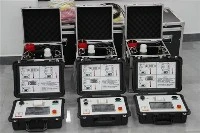
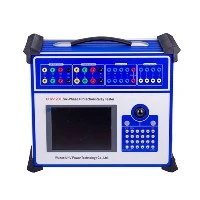
The AC Resonant Test System under Wuhan UHV can help many power workers conduct various power tests more conveniently.
AC Resonant Testing is a method for testing the insulation performance of high-voltage electrical equipment. It utilizes the principle of series resonance or parallel resonance to apply the required power frequency (50Hz or 60Hz) or near-power-frequency high voltage to the test object (such as cables, transformers, generators, GIS, etc.) to assess its insulation strength.

1.Core Purpose:
Simulate the power frequency voltage stress the equipment withstands under normal operation or overvoltage conditions.
Detect defects present in the equipment's insulation (such as cracks, bubbles, impurities, aging, installation damage, etc.).
Ensure that the equipment's insulation can withstand the specified power frequency withstand voltage level before being put into service or after a period of operation, preventing breakdown failures during operation.
2.Basic Principle: Resonance Voltage Boost
The test system mainly consists of a variable-frequency power supply, an excitation transformer, an adjustable reactor, a capacitive voltage divider (for measurement and protection), and the test object.
The test object itself can be considered a capacitor Cx.
The adjustable reactor L (inductor) and the test object capacitance Cx form a series resonant circuit.
When adjusting the power supply frequency f or the reactor inductance L so that the circuit's inductive reactance equals the capacitive reactance, i.e., XL = XC or 2πfL = 1/(2πfCx), the circuit enters series resonance.
At the resonant state:
The total circuit impedance is minimized (theoretically equal to the circuit resistance, purely resistive).
The circuit current is maximized.
The voltage UL across the inductor L and the voltage UCx across the capacitor Cx are equal in magnitude, opposite in phase, and significantly higher than the output voltage U of the excitation transformer. The voltage boost factor equals the circuit's quality factor Q (Q = UL / U = UCx / U).
By controlling the relatively low output voltage U from the excitation transformer and utilizing the resonance principle, the required high voltage UCx can be generated across the test object Cx for the withstand voltage test.