

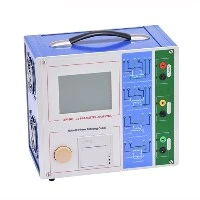
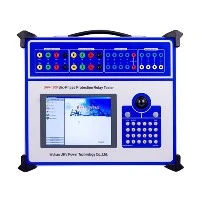
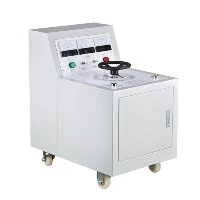
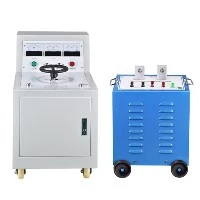
The Transformer Dielectric Loss Tester under Wuhan UHV can help many power workers conduct various power tests more conveniently.

The dielectric loss of a transformer (also known as dielectric loss or loss tangent (tanδ)) does not have a fixed value because it depends on several key factors:
1.Type and quality of insulation materials:
Transformer oil (new oil): Typical tanδ values range from 0.001 to 0.005 (0.1% to 0.5%) (measured at 90°C and power frequency).
Insulating paper/board: New paper has a relatively low loss factor, but it increases significantly with aging and moisture absorption.
Varnishes, resins, etc.: Loss factors vary greatly between different materials.
Overall insulation system: The transformer's total dielectric loss results from the combined effect of the oil, paper, solid insulation materials (e.g., spacers, angle rings), etc.
2.Condition of the transformer:
New transformer/Good condition: Overall tanδ is typically low, often within the range of 0.005 to 0.015 (0.5% to 1.5%) (measured at 20°C or a reference temperature). Well-designed new transformers using high-quality materials may be even lower (close to 0.005 or below).
Aging, Moisture Ingress, Contamination: These are the primary causes of increased dielectric loss.
Moisture Ingress: Water is one of the main factors causing a sharp rise in tanδ.
Aging: Degradation of insulating paper produces more polar molecules, increasing loss.
Contamination: Pollutants in the oil such as dissolved acids, particles, and metal soaps significantly increase loss.
Local Overheating/Partial Discharge: While primarily affecting local insulation, these can also be reflected in an overall increase in tanδ.
Transformers in poor condition may have tanδ exceeding 0.02 (2%), or even higher.
3.Measurement conditions:
Temperature: Dielectric loss changes significantly with temperature. Standards require measurement and comparison at reference temperatures like 20°C or 90°C. Rising temperature usually increases tanδ (especially for moist or aged insulation). Measurement reports must specify the temperature.
Frequency: Measurement is usually done at power frequency (50Hz or 60Hz) since this is the transformer's operating frequency.
Test Voltage: Measurement is typically done at rated voltage or lower. The tanδ value itself is not very sensitive to voltage (unless severe partial discharge is present), but the test voltage must be high enough to reflect operating conditions.
4.Transformer voltage class and capacity:
While not a direct factor, transformers with higher voltage classes and larger capacities have stricter requirements for insulation. Their tanδ values are usually monitored more closely, with lower expected values.