

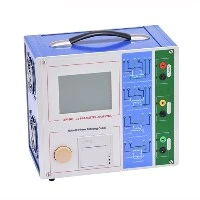
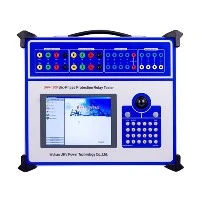
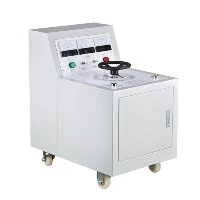
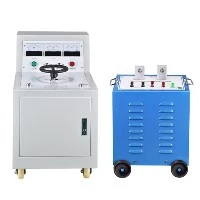
The Vacuum Circuit Breaker Analyser under Wuhan UHV can help many power workers conduct various power tests more conveniently.

Regular testing of the vacuum level in vacuum switches is critical for the following reasons:
1.Ensuring Reliable Interruption Capability (Arc Extinguishing Performance):
The core advantage of a vacuum switch lies in its vacuum interrupter chamber. A high vacuum level (typically required to be ≤10⁻⁴ Pa) provides excellent insulation and arc-extinguishing properties.
When the vacuum level deteriorates (i.e., pressure increases), the number of gas molecules within the interrupter chamber rises.
During current interruption, the arc plasma generated between the contacts cannot diffuse and cool rapidly, leading to a drastic decline in arc-quenching capability.
This can result in interruption failure:
Current chopping may occur with small currents, causing overvoltages.
For large currents, arc reignition or even explosion of the interrupter chamber may happen, causing equipment damage and power outages.
2.Maintaining Sufficient Insulation Strength:
High vacuum offers extremely high dielectric strength (breakdown voltage).
A decrease in vacuum level means more residual gas molecules inside the chamber. These molecules are easily ionized under strong electric fields, forming conductive paths and significantly reducing the insulation strength between contacts and between contacts and shields/enclosures.
This can lead to:
Power-frequency withstand voltage failure: Breakdown under normal operating voltage.
Reduced lightning impulse or switching surge withstand capability: Highly susceptible to breakdown during system overvoltages, triggering short-circuit faults.
3.Ensuring Personnel and Equipment Safety:
Severe vacuum degradation can cause the switch to explode while interrupting fault currents. The ejection of high-temperature arcs and molten metal poses a serious safety threat to operators and nearby equipment.
Insulation failures causing short circuits can also lead to secondary accidents like arcs and fires.
4.Preventing Catastrophic Failures and Minimizing Losses:
Vacuum switches are often critical protection and control devices (e.g., circuit breakers) in power systems. Their failure can cause widespread blackouts, damage expensive downstream equipment (e.g., transformers, motors), and require lengthy, costly repairs.
Regular testing allows early detection of potential problems before the vacuum level reaches dangerous levels, enabling preventive maintenance or replacement to avoid costly downtime.
5.Assessing Interrupter Chamber Lifespan and Condition:
Vacuum interrupter chambers are not permanently sealed. Although designed for long life (typically 20+ years), vacuum levels can slowly decrease due to:
Material permeation: Minute permeation at glass/ceramic-to-metal seals.
Metal outgassing: Internal metal components (contacts, shields) release adsorbed gases under the heat of arcing.
Micro-leaks: Manufacturing defects or long-term operational stress can cause tiny leaks.
Regular testing monitors trends in vacuum level changes, assesses the aging state of the interrupter chamber, and provides data for equipment life management and replacement planning.
6.Compliance with Operating Regulations and Preventive Test Requirements:
Power industry standards and operating regulations (e.g., DL/T 596 Preventive Test Code for Electric Power Equipment in China) explicitly mandate vacuum level testing for vacuum circuit breakers after commissioning, after major overhaul, and periodically during operation (typically every 1-3 years). This is a necessary preventive test to ensure the safe and reliable operation of the power system.