

With the development of the power industry, the detection of power equipment is gradually moving towards specialization, efficiency, and refinement. Different testing environments have different requirements for testing equipment in substations, power maintenance sites, power plants, and electrical equipment production workshops. Portable testing equipment and fixed testing equipment each have their own characteristics. How to choose suitable equipment according to actual work needs has become a problem that power testing personnel and equipment purchasers need to consider.
Characteristics of portable testing equipment
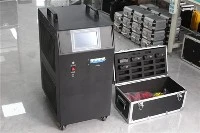
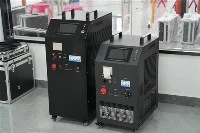
Portable testing equipment is mainly designed for on-site testing and mobile operations, and usually has the characteristics of small size, moderate weight, and easy operation. The equipment can be moved between different locations according to the detection task, suitable for substation inspection, power equipment maintenance, on-site handover testing, and fault troubleshooting.
For example, portable insulation resistance testers, circuit resistance testers, transformer ratio testers, and partial discharge detection equipment can all be used for on-site testing of different power equipment. For personnel who need to frequently change testing locations, portable devices can reduce transportation and installation time and improve on-site work efficiency.
However, when choosing a portable device, attention should also be paid to its measurement range, output capability, battery life, anti-interference performance, and on-site environmental adaptability. Some high-voltage and high-capacity testing projects have high requirements for the output power and overall configuration of the equipment, and their suitability cannot be judged solely based on their small size and light weight.
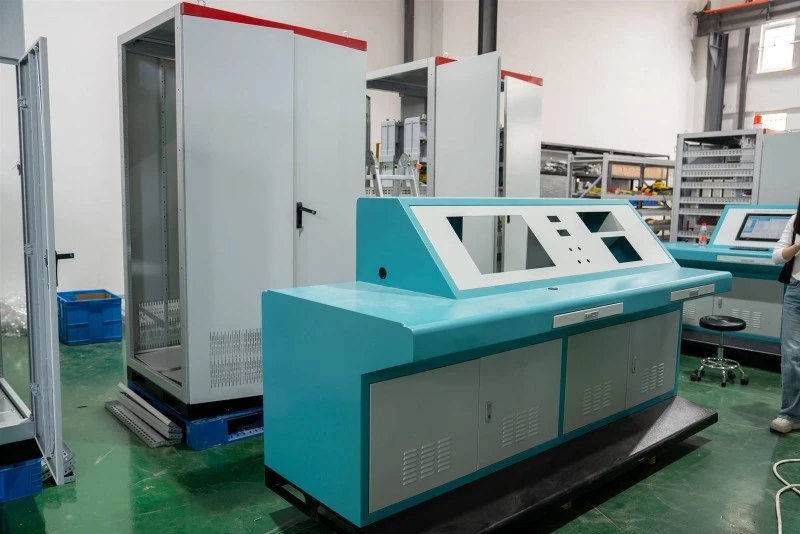
Characteristics of fixed testing equipment
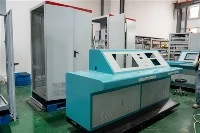
Fixed testing equipment is usually installed in laboratories, production workshops, or dedicated testing areas, mainly used for testing tasks with high repeatability and complex testing requirements. These types of equipment often have strong testing capabilities and can be configured with different testing modules and auxiliary devices according to actual needs.
Fixed testing equipment has significant application advantages in the manufacturing and quality inspection process of power equipment. For example, transformer comprehensive testing bench, motor comprehensive testing bench, and high-voltage testing system can complete various electrical performance tests to meet the needs of production inspection, factory testing, and quality control.
Compared with portable devices, fixed devices usually do not require frequent movement and can be systematically configured according to the detection process, playing a role in continuous testing, batch testing, and multi project comprehensive experiments. But such equipment usually requires specialized installation space, power conditions, and supporting facilities, and the initial investment and maintenance requirements also need to be included in the procurement plan.
What factors should be considered when choosing portable or fixed testing equipment?
1. Testing environment
If the main work scenario is a substation, power plant, power line, or other outdoor site, portable devices are usually more convenient. If testing work is concentrated in laboratories or production workshops, fixed equipment may be more suitable for long-term use needs.
2. Test items and technical requirements
Different testing projects have different requirements for the output voltage, current, power, measurement accuracy, and testing range of the equipment. For conventional electrical parameter measurement, portable instruments can be selected according to actual needs; For large capacity equipment testing, multi project comprehensive testing, or complex high-voltage testing, it is necessary to focus on the output capability and system configuration of the equipment.
3. Testing frequency and work efficiency
If testing personnel need to go to multiple sites every day, portable devices can reduce the time cost of handling and installation. If the testing tasks are concentrated and the quantity is large, fixed equipment is more likely to form a stable testing process, improving the efficiency of repeated testing and batch testing.
4. Equipment installation and usage conditions
Portable devices typically have lower requirements for installation space, but still need to meet requirements such as on-site power supply, safety distance, and environmental conditions. Fixed equipment requires advance planning of installation location, grounding system, power capacity, and related safety protection facilities.
5. Procurement budget and maintenance costs
Equipment procurement should not only consider the initial price, but also comprehensively evaluate the costs of transportation, installation, calibration, maintenance, and subsequent upgrades. For on-site inspection tasks with lower frequency of use, portable devices may be more flexible; For long-term and continuous professional testing work, the comprehensive use value of fixed equipment may be higher.
Equipment selection in different power detection scenarios
In the daily maintenance of substations, portable insulation resistance testers, transformer ratio testers, transformer testers, and circuit resistance testers can meet various on-site detection needs.
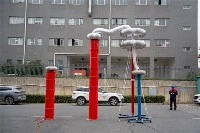
In high-voltage electrical equipment testing, the configuration of AC withstand voltage testing equipment, series resonance testing device, and DC high-voltage generator needs to be determined according to the voltage level, capacitance, and testing requirements of the tested object. Some systems can adopt a movable structure, but whether the equipment is easy to transport and deploy on site still needs to be determined based on the specific model.
In transformer and motor production workshops, fixed testing systems such as transformer comprehensive testing benches and motor comprehensive testing benches are more suitable for conducting multi item testing and factory quality inspection. By configuring testing functions reasonably, switching between devices can be reduced and production testing efficiency can be improved.
Select appropriate testing equipment based on actual needs
There is no absolute superiority or inferiority between portable and fixed testing equipment, the key lies in whether they meet the actual testing needs. For on-site maintenance, mobile inspection, and daily patrol, portability, ease of operation, and environmental adaptability are more important; For laboratory testing, production quality control, and batch testing, testing capability, measurement accuracy, system stability, and extended functionality need to be given priority consideration.
Wuhan UHV Power Technology Co., Ltd. focuses on the research and production of power testing equipment and high-voltage testing equipment, with products covering transformer testing equipment, high-voltage testing equipment, transformer testing equipment, motor testing equipment, and battery testing equipment. Purchasing personnel can select equipment suitable for on-site operations or fixed testing scenarios based on the type of equipment being tested, test items, usage environment, and technical parameters.
In the actual procurement process, it is recommended to clarify the testing objects, testing requirements, and frequency of use in advance, and confirm the equipment configuration, technical parameters, and after-sales service with the equipment supplier. Only by combining equipment performance with actual working conditions can we improve testing efficiency and control long-term usage costs while ensuring testing quality.