

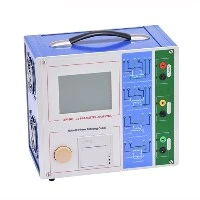
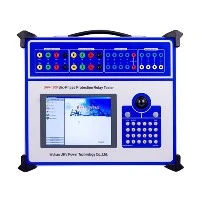
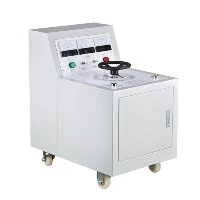
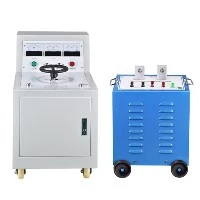
With the continuous growth of demand for distribution network renovation, new energy grid integration, and preventive testing of substations, the on-site commissioning and selection of high-voltage testing equipment has become a core issue in the annual procurement of power construction units and power supply companies. Improper selection may not only cause the experiment to fail, but also result in resource waste and even safety hazards. As a company that has been deeply involved in the high-voltage electrical testing industry for nearly 22 years, Wuhan UHV Power Technology Co., Ltd. (hereinafter referred to as "Wuhan UHV") has systematically sorted out the key points of on-site debugging and selection of high-voltage testing equipment based on a large amount of on-site feedback and project practical experience.

Voltage level matching: the primary principle of selection
In the procurement of high-voltage testing equipment, precise matching of voltage levels is the basis for selection. The requirements for equipment specifications for 10kV distribution networks and 110kV substations are completely different, and the corresponding range must be selected based on the highest voltage level of the equipment under the jurisdiction of this unit. Taking the variable frequency series resonant withstand voltage test device as an example, standard equipment covering voltage levels from 35kV to 110kV is the most commonly purchased specification by power supply companies. At the same time, the accuracy level needs to be determined in accordance with relevant GB/T or DL/T standards. The higher the accuracy, the higher the price. "Enough is enough" is a rational procurement principle.
The type of test sample determines the direction of equipment selection
The parameter requirements for series resonant devices vary among different power equipment tests, with significant differences in capacitance values and withstand voltage levels for cross-linked cables, hydroelectric generators, main transformers, and other equipment. Wuhan UHV technicians pointed out that when selecting, it is necessary to accurately calculate the capacity and voltage level of the required device based on the parameters of the test sample.
On site usage environment: an essential variable that cannot be ignored
The on-site usage environment of high-voltage testing equipment has a direct impact on the selection. For outdoor use with high frequency, it is recommended to choose models with dust-proof and waterproof shells. In new energy scenarios such as photovoltaic power plants and wind farms, the detection environmental conditions for wind turbine tower foundations and box transformers are poor, and it is necessary to select equipment models with higher protection levels. When the winter temperature in northern regions drops to minus 15 ℃, the LCD screen response of some devices may slow down. It is recommended to choose a wide temperature screen model. In addition, if there is no mains power supply at the field construction site, the battery life of the equipment will become a limiting factor, requiring backup generators or high-capacity mobile power sources.
Series resonant device: the mainstream choice for on-site withstand voltage testing
Series resonant devices are a new method and trend in high-voltage testing, which have been widely praised and applied both domestically and internationally due to their low power requirements, light equipment weight, and small size. The frequency modulation resonance device of Wuhan UHV adopts DSP platform technology, which has protection functions such as overvoltage, overcurrent, zero start, and system detuning (flashover). Its core advantage lies in the fact that the required power capacity is only 1/Q of the test capacity, the equipment weight and volume are generally 1/10 to 1/30 of ordinary test devices, and the output voltage waveform distortion rate is ≤ 1%. The device has three working modes: fully automatic, manual, automatic tuning, and manual boosting, making it convenient for users to flexibly choose according to the on-site situation.
VLF and DC high voltage generators: targeted selection for specific scenarios
For the handover test of cables with voltage levels of 35kV and below, a 0.1Hz VLF high voltage generator is an efficient choice. In the distribution network renovation project, multiple devices of different specifications can be selected according to the equipment types and voltage levels covered by the project to meet all testing requirements. DC high-voltage generators are suitable for DC withstand voltage tests of lightning arresters and other equipment. When selecting, the output specifications should be determined based on the voltage level of the tested equipment.
On site debugging: the key link from theory to practice
After the equipment selection is completed, on-site debugging and operation training are equally crucial. The after-sales technical team of Wuhan UHV continues to conduct equipment installation, commissioning, and specialized practical training throughout the country. The training strictly follows national and industry regulations such as GB 50150 and DL/T 596, and adopts an integrated mode of theoretical lectures, on-site practical operations, and assessment. During the on-site practical operation stage, technical engineers conducted full scene teaching in the high-voltage testing hall and distribution site, completing the full process demonstration of the main transformer non partial discharge induction withstand voltage test, insulation tool withstand voltage testing, transformer withstand voltage test, etc., focusing on solving practical pain points such as unfamiliar parameter setting, non-standard pressurization process, and inability to independently troubleshoot faults.
In terms of operational standards, Wuhan UHV has clearly defined the operation standards for wiring, self inspection, testing, boosting, lowering, discharging, and disconnecting wires, emphasizing the strict prohibition of sudden boosting, overpressure, and overload operation, and the strict implementation of the "one person operation, one person supervision" system. Before and after the experiment, the insulation testing process must be strictly followed to comprehensively evaluate the insulation performance of the equipment.
Arrival acceptance and post maintenance: closed-loop management after selection
After the equipment arrives, it should be jointly inspected by the technical specialist and the user team. The acceptance content includes visual inspection, random data verification, and power on testing. The procurement cost is only a part of the total cost of ownership, and later annual inspection expenses, replacement of vulnerable parts, etc. also need to be included in the budget. Conventional models of equipment usually take 7 to 15 working days to ship, while customized specifications may take 20 to 30 working days.
Wuhan UHV stated that it will continue to deepen its cultivation in the field of high-voltage electrical measurement, providing full chain services from selection consultation, equipment supply to on-site debugging and technical training for power construction, maintenance and operation units, and helping the safe and stable operation of the power system