


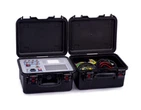
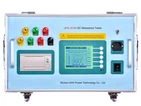

A high current generator is a detection equipment required for high current places in electrical debugging in various industries. Can be used in power plants, substations, electrical equipment manufacturers, scientific research, laboratories, and other units. Belonging to short-term or intermittent work system. It has the characteristics of small size, light weight, good performance, and easy use and maintenance. The working principle of a high current generator is: after connecting to the working power supply, the required high current for the test can be obtained by adjusting the output voltage of the voltage regulator, which can be manually or automatically adjusted to meet the requirements of the high current test.
Use of high current generator: During high current testing, connect the working circuit correctly according to the product circuit diagram. Select the position of the size range switch based on the magnitude of the output current. First, reset the voltage regulator to zero, and then press the start test button. At this point, hold the handle of the voltage regulator clockwise, gradually turn the handwheel of the voltage regulator, and stare at the ammeter until the desired current value is reached. After the experiment reaches the set value, immediately turn the regulator handwheel counterclockwise to zero and press the stop button to cut off the power.
The performance characteristics of the high current generator, load testing, and instantaneous output meet the requirements. Stable output current, clear instrument indication, easy to record data and observe the measured object. The output current is divided into different levels, and the size of each level is smooth and adjustable. The rise and fall control is free, and the adjustment is continuous and uniform. Small size, light weight, flexible mobility, easy operation, suitable for outdoor use.
The use of high current generators is generally a 50Hz switch. Current transformers or other electrical equipment need to be tested before leaving the factory to infer whether the product can be shipped. A high current generator is an instrument recognized for current rise and load testing of this type of electrical equipment, widely used in power plants, substations, electrical equipment manufacturers, research laboratories, and other units.

Inspection before high current generator test and handling of common problems during the test:
1. Connect the working circuit according to the electrical schematic diagram, and ensure that the transformer casing and control panel are well grounded.
2. After connecting the power, the green indicator light on the high current generator console will light up. Press the start button, and the red indicator light will turn on. At this point, the current booster will wait for the current to rise.
3. Rotate the voltage regulator evenly in a clockwise direction, paying attention to the output current indication on the operating platform, until the required high current is reached. To ensure testing accuracy, a standard ammeter can be connected in series to the instrument terminals.
4. During the high current generator test, if any abnormal phenomenon is found, the power should be immediately cut off, and the cause should be identified before conducting the test.
5. After the experiment is completed, the voltage regulator must return to zero, press the stop button to cut off the power supply, cut off the working power supply, and then remove the test wiring to ensure safety.
6. High current generators are designed for short-term operation and are not allowed to operate at rated capacity for long periods of time, especially not exceeding rated current to prevent overheating.
7. When using a high current generator, the step-up transformer and operating platform must be reliably grounded to ensure test safety.
Wuhan UHV specializes in producing high current generators (also known as boosters) and has been engaged in the electrical measurement industry for many years. Its products have first-class quality and welcome customers to come and purchase.