


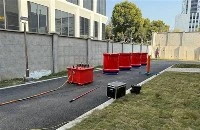
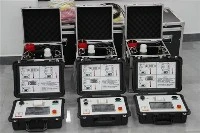
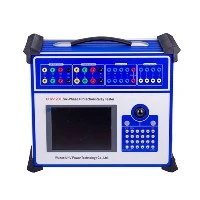
The insulation withstand voltage test of VLF high-voltage generators (also known as ultra-low frequency withstand voltage testers) is actually an alternative method to the power frequency withstand voltage test. When conducting power frequency withstand voltage tests on large generators, cables, and other specimens, it can replace large capacity resonant transformers.

Test principle of VLF high voltage generator
We know that when conducting power frequency withstand voltage tests on large generators, cables, and other test samples, due to the large capacitance of their insulation layers, large capacity test transformers or resonant transformers are required. Such huge equipment is not only bulky and expensive, but also very inconvenient to use. In order to solve this contradiction, the power department has adopted a method of reducing the test frequency, thereby reducing the capacity of the test power supply.
By integrating advanced modern digital frequency conversion technology and adopting microcomputer control, the boost, buck, measurement, and protection are fully automated. Due to full electronicization, it has a small size, light weight, large screen LCD display, clear and intuitive display, and can display output waveforms and print test reports. The design specifications fully comply with the "General Technical Conditions for Special Test Instruments for Power Equipment, Part 4: General Technical Conditions for VLF High Voltage Generators" in the power industry standards, making it very convenient to use. Both domestically and internationally, mechanical methods are used for modulation and demodulation to generate ultra-low frequency signals, resulting in non-standard sine wave waveforms, large measurement errors, spark discharge in the high-voltage part, bulky equipment, and high-power high-voltage resistors for discharge shaping in the second and fourth quadrants of sine waves. Therefore, the overall power consumption of the equipment is relatively high.