

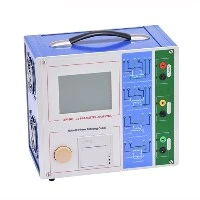

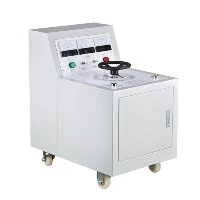
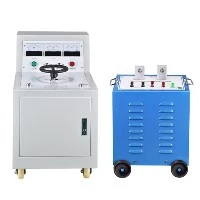
A resonant circuit is a circuit that includes an inductor, a capacitor, and a source of electrical energy. When the components of a circuit are connected in series, a resonant circuit is called a series resonance (also known as a variable frequency resonance) circuit. A resonant circuit is the simplest system in which free electromagnetic resonance may occur.
The resonant frequency of a circuit is determined by the so-called Thomson formula:

working principle
Charge the capacitor C to voltage U0. The energy stored in the capacitor is

When a capacitor is connected to an inductor, the current will flow through the circuit, causing a self induced electromotive force (EMF) in the coil, with the aim of reducing the current in the circuit. The current caused by this EMF (in the absence of inductive losses) will be equal to the discharge current of the capacitor at the initial moment, that is, the resulting current will be zero, and at this (initial) moment, the magnetic energy of the coil will be zero.

Then, the current generated in the circuit will increase, and the energy from the capacitor will be transferred to the coil until the capacitor is completely discharged, at which point the electrical energy of the capacitor Ec=0. On the contrary, the maximum magnetic energy concentrated in the coil is equal to

The inductance I0 of coil L is the maximum value of the current.
Afterwards, the capacitor will start charging, that is, the capacitor will be charged with voltages of different polarities until the magnetic energy of the coil is converted into the electrical energy of the capacitor. In this case, the capacitor will be charged again to voltage U0, resulting in oscillations in the circuit whose duration will be inversely proportional to the energy loss in the circuit.
Usually, the above process in a parallel resonant circuit is called resonant current, which means that the current flowing through the inductor and capacitor is greater than the current flowing through the entire circuit, and these currents will increase a certain number of times, which is called quality factor. These high currents have no phase difference and can self compensate, so they will not exceed the loop limit. It is also worth noting that the resistance of a parallel resonant circuit tends to infinity at the resonant frequency (opposite to the resistance of a series resonant circuit tending to zero at the resonant frequency), making it an irreplaceable filter.