

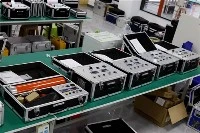
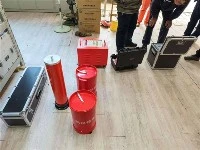

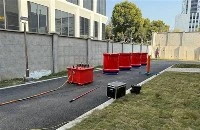
Series resonance devices (also known as series resonance test systems or AC withstand voltage test devices) are highly important high-voltage testing equipment. Their core principle involves utilizing the series resonance characteristics of inductance (L) and capacitance (C) to generate high voltage and large current in the test object (which is capacitive), while the power supply itself only needs to provide a very small input power.

Their main application areas can be summarized as follows:
1. Power System Field (The Primary and Most Extensive Application)
This is the core application scenario for series resonance devices, primarily used for acceptance tests and preventive tests of electrical equipment, i.e., inspecting whether the insulation performance of equipment remains intact after long-term operation.
AC Withstand Voltage Test for GIS (Gas-Insulated Switchgear):
GIS is the core equipment of substations, internally insulated with SF6 gas, requiring extremely high standards of cleanliness and insulation strength. Series resonance devices can generate power frequency or near-power frequency high voltage with adjustable frequency, effectively simulating operating conditions to check for defects such as burrs or metal particles inside the GIS. This is a mandatory test to ensure the safe operation of GIS.
AC Withstand Voltage Test for Power Cables:
Especially for cross-linked polyethylene (XLPE) insulated cables, their AC withstand voltage test must use power frequency or near-power frequency power sources. DC withstand voltage tests can cause space charge effects in cable insulation, potentially causing irreversible damage to the insulation. Series resonance devices are the only effective means for withstand voltage testing of long-distance, high-capacity power cables.
AC Withstand Voltage Test for Generators (Generators/Motors):
Large generators have significant ground capacitance, and the power capacity required for power frequency testing is enormous, making it almost impossible to achieve. Using series resonance devices, leveraging the resonance condition, allows the test to be completed with a much smaller power capacity, making it highly efficient.
AC Withstand Voltage Test for Transformers (Main/Distribution Transformers):
Used to test the insulation strength of transformers, including applied voltage tests and induced voltage tests. For large transformers, induced voltage tests require increased frequency to prevent core saturation, and series variable frequency resonance devices perfectly meet this requirement.
Insulation Performance Testing of Switches, Transformers (CT/PT), and Other Equipment:
Conduct AC withstand voltage tests on various high-voltage switches, current transformers, voltage transformers, etc., to ensure their insulation levels meet standards.
2. Scientific Research and Testing Field
Universities and Research Institutes: Used for teaching experiments and scientific research in disciplines such as high-voltage technology, insulating materials, and discharge physics, for example, studying the breakdown characteristics of gas, liquid, and solid media.
Third-Party Testing Agencies and Quality Supervision Units: Used for factory inspection and type testing of products manufactured by various electrical equipment manufacturers to ensure product quality complies with national and international standards (e.g., GB, IEC, IEEE).
3. Industrial Production Field
Manufacturers of Components such as Capacitors, Insulators, and Lightning Arresters: These products must undergo high-voltage insulation testing before leaving the factory, and series resonance devices are critical testing equipment on production lines.
Aerospace, Shipbuilding, and Rail Transportation: Used to test the insulation performance of special electrical equipment, such as motors, transformers, and cables, used in these specific industries, where reliability requirements are extremely high.
In summary, series resonance devices are core testing tools for ensuring the safe operation of power systems. They are widely used in insulation performance tests of all high-voltage electrical equipment throughout power generation, transmission, transformation, and distribution processes. They are also important equipment for scientific research and product quality control.