

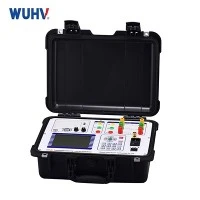


Product introduction
The Insulating Boots(Gloves) Test Device is a specialized piece of equipment designed for testing the power frequency AC withstand voltage performance and leakage current of rubber-based personal protective equipment (PPE) such as insulating boots and gloves. It is a mandatory testing tool crucial for ensuring the safety of electrical workers and verifying the reliability of this protective gear in high-voltage environments.

Product Features
1. Automated testing: It can automatically complete operations such as boosting, voltage endurance timing, and voltage reduction, reducing manual adjustment and improving testing efficiency.
2. Multi station design: It can conduct voltage withstand tests on multiple insulated boots or gloves simultaneously, suitable for batch testing.
3. Leakage current monitoring: Real time monitoring of the leakage current of the test sample during the test process to help determine whether the insulation performance meets the test requirements.
4. Easy to operate: adopting digital display and automatic control methods, the experimental parameter settings are intuitive, making it convenient for staff to operate daily.
5. Convenient data recording: Some models support the storage, display, and printing of test data, making it easy to establish safety tool test files.
Core Functions

1.Power Frequency Withstand Voltage Test: Simulates the AC high voltage encountered in actual working environments. This voltage is applied to the tested insulating boot or glove for a specified duration (typically 1-3 minutes) to verify whether the insulating material can withstand the voltage without breakdown.
2.Leakage Current Test: Precisely measures the weak current (typically in the mA range) flowing through the insulating material of the boot or glove while the specified voltage is applied. This determines the quality of the insulation. Excessive leakage current indicates degraded insulation or defects.
3.Automatic Judgment: Automatically determines whether the tested item passes or fails (Pass/Fail) based on preset parameters such as voltage value, duration, and leakage current threshold.
Product advantages
Improve detection efficiency. The multi station structure can complete the testing of multiple insulated boots or gloves at once, reducing the time for item by item testing, especially suitable for units that need to regularly conduct a large number of safety tool tests.
Reduce manual operations. Automatically control the boosting, timing, and lowering processes to reduce repetitive work and minimize the impact of human operational differences on the testing process.
Timely detection of insulation defects. By monitoring the leakage current and observing any abnormal situations during the testing process, it is possible to promptly detect test samples with insulation performance that does not meet the requirements, thus avoiding the continued use of unqualified tools.
Improve the safety of the experiment. The equipment can be configured with overcurrent protection, abnormal shutdown, and automatic tripping functions to reduce operational risks during the testing process. In actual use, it is still necessary to comply with the safety regulations for high-voltage testing.
Easy for daily management. The test results can be organized according to workstations and test subjects, and some models support data storage or printing, making it convenient for subsequent queries, archiving, and regular testing management.
Widely applicable. Suitable for power supply companies, power maintenance units, power testing laboratories, industrial and mining enterprises, and safety tool testing institutions, it can be used for regular preventive testing of insulated boots and gloves.
Technical Parameters
| Power | 220V±10% 50Hz | |
| Console Output voltage | 0-250V | |
| Console Output current | 12A | |
| Booster output voltage | 30kV-500kV | |
| Output capacity | 3kVA-100kVA | |
| High voltage leakage current range | 29.9mA | |
| Leakage current with trip system back range | ≥12mA | |
| Voltage measurement error | ±1% +3 words | |
| Leakage current measurement error | ±1% +3 words | |
| Leakage current resolution | 0.01mA | |
| Timing | 99 minutes of free setting | |
| TEMP | -10℃-40℃ | |
| HR | ≤90%RH, no condensation, instrument does not flicker | |
| Overall dimensions of the control console | 400×300×550mm3 | |
| External dimensions of testing machine | 1000×800×1000mm3 | |
| Console weight(kg) | 25 | |
| Testing machine weight(kg) | 20 | |
Application areas of Insulating Boots(Gloves) Test Device
1. Power system
Equipment maintenance and testing: The insulating boots(gloves) test device is used for regular testing of protective tools such as insulated boots and gloves to ensure that their insulation performance does not decrease after long-term use, and to prevent safety accidents caused by tool failure.
Safety performance evaluation: By reading the leakage current, accurately identifying the power frequency withstand voltage parameters of the tool, and comprehensively evaluating its safety and reliability in practical applications.
2. Industrial production
Quality assurance: Applied in high-voltage operating environments, regular testing can promptly detect and replace unqualified tools, reducing production accidents caused by tool failures.
Standardized testing process: Fully automated testing and automatic printing of data helps to achieve standardized and regulated management of test results, meeting the strict requirements of industry for quality and safety.
3. Engineering acceptance
Project acceptance: The insulating boots(gloves) test device is used in the acceptance process after the new equipment is put into operation or major maintenance, to ensure that all safety tools meet the safety standards of the engineering project.
Compliance inspection: It can be set up according to industry standards to ensure that test results comply with regulations, guaranteeing project quality and safety.
4. Scientific research and development
New material testing: The insulating boots(gloves) test device is used to test the electrical performance of new insulation materials, providing accurate evaluation basis for material improvement and application research.
Technological innovation support: It has extended functions such as remote communication and door lock alarm bells, providing convenience for scientific research experiments and improving research and development efficiency.
5. Education and training
Operation training: Simulate actual operating environments to help students master the skills of using and maintaining safety tools, and enhance their awareness of work safety.
Education popularization: Through demonstrations and explanations, educate the public on the importance and correct use of insulation tools, and enhance safety awareness.
Selection of core evaluation dimensions
1. Multi channel independent monitoring capability
Prioritize selecting equipment with independent leakage current acquisition units for each test sample configuration. If the total current collection scheme is adopted, it is impossible to locate which insulation boot or glove has failed, which poses a safety hazard. High end models support single station independent protection tripping, which is an important addition to batch testing scenarios.
2. Boost control accuracy and timing compliance
The voltage boosting rate and voltage endurance timing function of the equipment must be stably reproducible and meet the regulatory requirements. Simple equipment that does not have programmable constant voltage boosting and relies on manual adjustment of the regulator can easily introduce human error in test results, and is not recommended for standardized testing.
3. Integrity of security protection system
The basic configuration should include zero start interlock, overvoltage protection, overcurrent protection, high voltage warning, and emergency stop function; Advanced models are equipped with high-voltage door interlocking and instantaneous breakdown to cut off high-voltage circuits, preventing secondary equipment failures.
4. Scene adaptation structure design
For long-term fixed laboratory use, high-capacity multi station desktop equipment can be selected; For outdoor mobility testing, priority should be given to split lightweight structures. The dry non watering electrode scheme can reduce the use of water resources, shorten the preparation time before and after the experiment, and is suitable for outdoor field operations. Wuhan UHV manufacturers can provide customized consultation on structural solutions based on user usage scenarios.
5. After sales response and long-term technical support
Priority should be given to manufacturers who have regional service outlets and promise clear warranty periods. Conditional units may request manufacturers to provide on-site prototype demonstrations to test equipment voltage stability and current measurement repeatability; At the same time, confirm whether the manufacturer provides value-added services such as firmware continuous optimization and test report template updates.


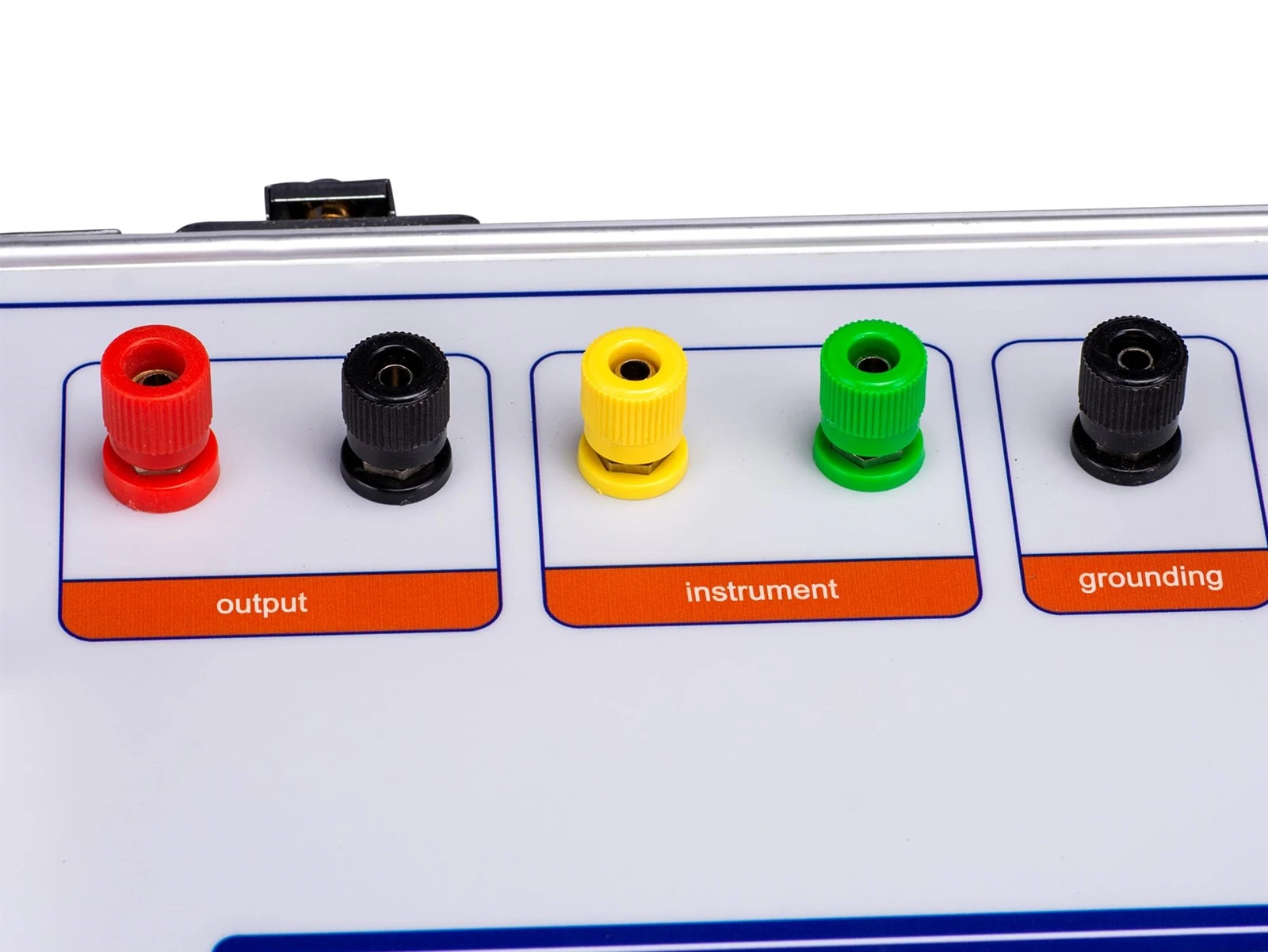



Buying FAQS
Q1: What testing functions does the UHV insulating boots(gloves) test device support?
The UHV insulating boots(gloves) test device is used for power-frequency withstand voltage testing and leakage current measurement of insulating gloves and boots. It supports multi-position testing at the same time, with each channel monitored independently. It is suitable for preventive testing in utilities as well as factory quality inspection.
Q2: How many samples can be tested at once?
A standard UHV setup allows up to 8 test positions running in parallel.
Each channel works independently. If one position fails, it is automatically isolated without affecting the rest of the system.
Q3: Which standards does the insulating boots(gloves) test device follow?
The insulating boots(gloves) test device is designed in line with common utility and international standards, including:
DL/T 1476-2015 (Preventive test rules for electrical safety tools)
GB/T 17622-2008 (Insulating gloves for live working)
Relevant IEC and power industry standards
Test logic and protection are aligned with utility safety practices.
Q4: How is insulating glove testing performed?
Insulating gloves are tested with an automatic water-filling structure:
Gloves are mounted on test electrodes
Water level is set automatically based on glove class
Distance between cuff and water surface is automatically adjusted
Internal and external water levels are balanced automatically
This keeps test conditions stable and repeatable.
Q5: How are insulating boots tested?
UHV uses a dry-type test method for insulating boots:
Steel balls are placed inside the boots
Boots sit on a sponge support inside the tank
Water is filled automatically to the required level
Full filling is not needed, so drying after test is not an issue
This makes handling faster and more practical.
Q6: How is leakage current monitored and protected?
Each channel has an independent leakage current acquisition unit.
Key features:
Real-time monitoring across all channels
Wireless data transmission to the main controller
High-speed sampling with LED display
Battery-powered measuring modules
If leakage exceeds the set limit, the affected channel trips immediately without disturbing the others.
Q7: What kind of control system is used?
The system is built on PLC control with a touchscreen HMI.
Main functions:
One-key automatic water filling
Water level detection (gloves and tank)
Position recognition
Automatic reset after test
Real-time alarm and status display
Voltage, current, leakage current, timing, and system status are shown on one screen.
Q8: How does automatic voltage control work?
A stepper motor-driven regulator is used for automatic voltage control:
System start and safety check
Automatic voltage ramp-up
Voltage holding at set value
Automatic timing start
Automatic ramp-down after test
Power off and result display when finished
The process follows standard utility testing practice.
Q9: What safety protections are included?
The system includes multiple protection layers:
Overcurrent and leakage current protection
Automatic trip on breakdown
Emergency stop function
Electrical interlock system
Alarm for abnormal conditions
Automatic discharge function
Faults are isolated quickly to protect both operator and equipment.
Q10: Can it work with existing test transformers?
Yes.
The insulating boots(gloves) test device can be configured to match:
Existing high-voltage test transformers
Different transformer ratios
Utility-standard test setups
It integrates easily into existing test labs.
Q11: Is PC software available?
Optional UHV PC software supports full test management:
Real-time monitoring
Remote operation control
Data logging and storage
Automatic report generation
Data export (PDF/Excel)
Traceable test records
It is suitable for digital laboratory systems.
Q12: What industries use this system?
UHV insulating boots(gloves) test devices are widely used in:
Power utilities and grid maintenance teams
Substations and transmission systems
Safety tool manufacturers
Third-party testing laboratories
Railway electrification systems
Industrial and mining enterprises
Electrical equipment manufacturers
Q13: Is maintenance complicated?
The system is designed for long-term industrial use with simple maintenance:
Regular cleaning of electrodes and tank
Periodic check of electrical contacts
Routine verification of protection functions
Dry and ventilated storage when not in use
Q14: What after-sales service is provided?
UHV provides full lifecycle support:
Factory commissioning and acceptance testing
Remote installation guidance
Operator training (online or on-site)
Lifetime technical support
Fast troubleshooting response
Spare parts and upgrade service
Support is available for both domestic and overseas customers.
Q15: Is the insulating boots(gloves) test device suitable for export markets?
Yes, and it is fully customizable for international use:
CE compliance support
English interface and manuals
Voltage/frequency customization (110V / 220V / 60Hz, etc.)
OEM branding and nameplate customization
Export-grade wooden packaging
Remote installation and commissioning support
It is designed for stable operation in global utility and industrial environments.
Precautions for use
1. Safety distance and grounding
During testing, operators must keep a safe distance (air clearance: no more than 20 kV per meter). The test bench and control cabinet must be properly grounded, and the grounding resistance should be below 0.1 Ω.
2. Insulation check before use
Before operation, insulation resistance testing must be carried out on the transformer:
Input to ground insulation resistance > 2 MΩ
Output to ground insulation resistance > 10 MΩ
3. Pre-use inspection and cleaning
Check whether electrical contacts are loose and ensure good contact condition
Confirm the protection system is functioning normally
Clean insulating supports, electrode rods, and water tank with alcohol before use
4. Maintenance and storage after use
Wipe all components with a dry cloth after testing
Keep the equipment in a dry and well-ventilated environment for long-term storage
5. Environmental requirements
The working and storage areas must be free from substances that may affect insulation performance, such as:
Explosive gases
Corrosive gases or vapors
Chemical dust or other contaminants
6. Operating requirements
The insulating boots(gloves) test device must be operated by trained professionals only, strictly following the operating procedures. Unauthorized use is not allowed.
7. Protection and fault handling
In the following situations, the system will activate protection automatically:
Leakage current exceeds the preset limit
Test sample breakdown or damage occurs
The system will immediately cut off power, reset to zero, and trigger an alarm. Faulty samples must be removed before restarting the test.
If grid voltage fluctuation occurs, voltage adjustment can be made via the control buttons.
We are a professional insulating boots(gloves) test device manufacturers in China.We can provide the best professional insulating boots(gloves) test device for sales and competitive price. If you are looking for insulating boots(gloves) test device supplier, we are a good choice.
Contact us to get insulating boots(gloves) test device price.
Hot Tags: insulating boots(gloves) test device, China insulating boots(gloves) test device manufacturers, suppliers, factory, cable hipot tester, MV cable withstand test set, hipot test ramp dwell controller, how to perform dielectric withstand test, hipot test interface, hipot IR measurement tester


