

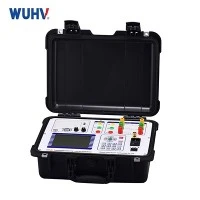


### **What is a Battery Test Kit?**
A **Battery Test Kit** is a tool used to assess the condition and performance of batteries by measuring their **voltage**, **charge capacity**, **internal resistance**, and **overall health**. It is an essential diagnostic tool for monitoring battery performance and ensuring that batteries are functioning as intended. Battery test kits can be used on various types of batteries, including **lead-acid**, **lithium-ion**, **nickel-cadmium (NiCd)**, and other rechargeable and non-rechargeable battery types.
Battery test kits typically include a **multimeter** or **voltmeter**, **conductance testers**, **load testers**, and sometimes additional diagnostic tools that simulate the load and charging conditions that the battery will experience in real-world usage. These kits are particularly useful for identifying issues like **underperformance**, **short circuits**, **leakage**, and **voltage drops** in batteries.
---
### **Purpose of a Battery Test Kit**
1. **Monitor Battery Health**:
* The primary purpose of a battery test kit is to check the **health** of a battery by testing its **voltage**, **internal resistance**, and **charge capacity**. Regular testing can help predict the **lifespan** of the battery and identify when it may need to be replaced.
2. **Ensure Battery Efficiency**:
* By testing a battery's performance, users can ensure that it is operating at optimal efficiency. Batteries that are underperforming or showing signs of **discharge instability** can be identified before they fail completely.
3. **Prevent Unexpected Failures**:
* Testing batteries before they are put into service or during routine maintenance helps prevent **unexpected failures**. It can identify weak batteries that could lead to system breakdowns, downtime, or equipment damage.
4. **Verify Battery Charging and Discharging Conditions**:
* Battery test kits can also test the **charging capacity** and **discharge efficiency**, ensuring that the battery charges fully and maintains power effectively when used.
5. **Extend Battery Life**:
* Regular battery testing allows for early detection of issues like **overcharging**, **deep discharging**, or **leakage**, which can extend the overall **lifespan** of the battery if corrective measures are taken.
6. **Safety and Compliance**:
* In certain applications, batteries must meet specific safety standards. The test kit ensures that batteries meet the **voltage** and **charge capacity** requirements necessary for safe operation.
---
### **Applications of a Battery Test Kit**
Battery test kits are used in a wide variety of industries and for various purposes. Below are some of the most common applications:
#### 1. **Automotive and Marine**
* **Application**: Battery test kits are used to test **car batteries**, **marine batteries**, **RV batteries**, and other lead-acid batteries commonly used in vehicles.
* **Purpose**: To ensure that automotive or marine batteries are capable of delivering adequate power for **starting engines**, **operating electronics**, and **providing backup power**.
#### 2. **Electric Vehicles (EV)**
* **Application**: Battery test kits are used to test **lithium-ion batteries** found in **electric vehicles** (EVs) and **hybrid vehicles**.
* **Purpose**: Ensures the **battery's charge capacity** and **voltage output** meet the performance requirements for the **drivetrain** and **battery management systems**.
#### 3. **Renewable Energy Systems**
* **Application**: Test kits are used to assess batteries in **solar power systems**, **wind energy storage**, and **battery storage systems**.
* **Purpose**: To ensure **deep-cycle** batteries, which store energy, maintain charge and function properly, providing reliable power storage in renewable energy systems.
#### 4. **UPS Systems (Uninterruptible Power Supplies)**
* **Application**: Test kits are used to check the health of the **batteries** inside **UPS systems** used in data centers, hospitals, and other critical infrastructures.
* **Purpose**: Ensures that the UPS batteries can provide **reliable backup power** during grid failures or emergencies, minimizing downtime.
#### 5. **Telecommunications**
* **Application**: In telecommunications networks, **backup batteries** are used to ensure that cell towers and communication equipment stay operational during power outages.
* **Purpose**: Regular testing of batteries ensures **reliable operation** of critical communication systems.
#### 6. **Battery Manufacturers and Laboratories**
* **Application**: Battery manufacturers and testing laboratories use these kits to check the **quality** and **performance** of batteries during manufacturing or R\&D.
* **Purpose**: Ensures that batteries meet specifications and quality standards before they are released to the market.
#### 7. **Industrial and Emergency Equipment**
* **Application**: Batteries are used in **forklifts**, **electric pallet jacks**, **emergency lights**, **medical equipment**, and **power tools**.
* **Purpose**: A battery test kit checks the **condition** of these batteries to ensure that they will work reliably when needed, especially in critical operations.
#### 8. **Consumer Electronics**
* **Application**: Used by technicians or consumers to test the **batteries** in items like **smartphones**, **tablets**, **laptops**, and **cameras**.
* **Purpose**: Helps determine if the battery is still capable of holding a sufficient charge, or if it is time to replace it.
---
### **How to Use a Battery Test Kit**
Using a battery test kit typically involves a series of straightforward steps. The exact method depends on the type of test being conducted and the type of battery, but below is a general guideline:
#### 1. **Preparation**
* **Read the Manufacturer's Instructions**: Always begin by reading the **manual** for both the battery and the test kit to ensure that the process is followed correctly and safely.
* **Safety First**: Wear **protective gloves** and **goggles** if necessary. Avoid touching battery terminals directly to prevent injury or shock, especially when testing high-voltage batteries.
* **Ensure Battery is Isolated**: If you are testing a battery that is part of a larger system, make sure it is disconnected from the system to prevent electrical hazards.
#### 2. **Inspect the Battery**
* **Visual Inspection**: Look for any signs of **damage**, **leakage**, **corrosion**, or **bulging**. These can indicate that the battery is already damaged or compromised.
* **Check Voltage**: Use the voltmeter to measure the battery's **open-circuit voltage** (OCV). Compare this with the **rated voltage** specified by the manufacturer to see if the battery is underperforming.
#### 3. **Using the Battery Test Kit**
The test kit typically includes various tools for testing specific parameters:
* **Voltage Test**:
* **How to use**: Connect the **test probes** to the positive and negative terminals of the battery. Measure the **voltage output** and compare it to the battery's **nominal voltage** (for example, 12V for car batteries).
* **Load Test**:
* **How to use**: For load testing, the test kit may include a **resistor** or **discharge device**. Connect the load to the battery and measure how the voltage holds up under load conditions. A drop in voltage can indicate poor battery health.
* **Conductance Test**:
* **How to use**: A conductance tester can be used to assess the **internal resistance** of the battery. This test gives a more accurate idea of the battery's ability to hold a charge and deliver power under load.
* **Capacity Test**:
* **How to use**: A **capacity tester** helps measure the total available energy the battery can deliver, often by discharging it at a controlled rate. This test is crucial for **deep-cycle** batteries, such as those used in solar systems or EVs.
* **Internal Resistance Test**:
* **How to use**: Some advanced test kits measure the **internal resistance** of the battery. Higher internal resistance often correlates with a reduction in performance and indicates that the battery is aging.
#### 4. **Interpret the Results**
* **Voltage Readings**: If the voltage is too low compared to the rated value, the battery might be faulty or undercharged. If the voltage is excessively high, this could indicate an overcharging issue.
* **Load Test Results**: If the voltage drops significantly under load, this could indicate that the battery is weak and no longer capable of maintaining power.
* **Conductance**: Low conductance suggests high internal resistance, which may indicate aging or damage in the battery's internal structure.
* **Capacity**: If the battery's capacity is below expectations, it may be nearing the end of its useful life and could require replacement.
#### 5. **Post-Test Actions**
* **Document the Results**: Record the test results for future reference, maintenance schedules, or compliance reports.
* **Test Multiple Batteries**: If you are testing multiple batteries (e.g., in a bank), make sure to repeat the testing process for each one to ensure all batteries are in good condition.
* **Replace or Maintain**: If the test results indicate poor performance or damage, consider **replacing the battery** or taking corrective action, such as **recharging**, **desulfation**, or **repair** if applicable.