

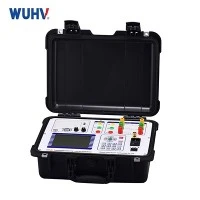


Partial discharge (PD) is measured using specialized equipment and methods designed to capture and analyze the signals generated during partial discharge events in high-voltage electrical equipment. The measurement process involves the following key steps:
Instrumentation Setup:
PD Detector: Use a PD detector or partial discharge monitoring device. The detector may employ different sensor technologies, such as capacitive, inductive, or ultrasonic sensors, depending on the specific method of detection.
High Voltage Source: Energize the equipment under test with a high voltage. This voltage stimulates the partial discharge within the insulation.
Sensor Placement:
Position sensors at strategic locations within or near the equipment where partial discharge is likely to occur. The sensors are sensitive to the electromagnetic or acoustic signals generated by PD events.
Signal Capture:
Capture the signals produced by partial discharge events using the sensors. Different types of sensors may capture signals differently-capacitive sensors measure electromagnetic pulses, inductive sensors measure electrical pulses, and ultrasonic sensors capture acoustic emissions.
Data Analysis:
Process and analyze the captured signals using the PD detector's built-in software or algorithms. The analysis includes assessing the amplitude, frequency, and other characteristics of the signals to determine the presence and severity of partial discharge.
Thresholds and Criteria:
Set predefined thresholds and criteria in the PD detector. These thresholds help distinguish between acceptable and unacceptable levels of partial discharge. If the measured signals surpass these thresholds, it indicates a potential issue with the insulation.
Localization (Optional):
Some advanced PD detection systems have localization capabilities. These systems use multiple sensors to determine the specific location within the equipment where partial discharge is occurring.
Continuous Monitoring (Optional):
In some cases, PD detectors are used for continuous monitoring. Continuous monitoring provides real-time information about changes in partial discharge activity over time, enabling early detection of potential insulation problems.
Interpretation and Action:
Interpret the results of the measurement and take appropriate actions based on the severity of the partial discharge. This may involve further investigation, maintenance, or repair to address insulation issues and prevent equipment failure.
It's important to note that the measurement process may vary depending on the specific PD detection method and the type of equipment being tested. Regular PD measurements are a critical aspect of condition monitoring and preventive maintenance for high-voltage electrical systems.