

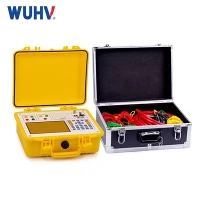


### **1. What is a Motor Test Bench?**
A **Motor Test Bench** is a specialized test system or setup designed to **evaluate the performance, efficiency, and operational characteristics** of electric motors (AC, DC, synchronous, asynchronous). It enables controlled testing of motors under various load and speed conditions to verify quality, diagnose faults, or validate design.
---
### **2. Purpose**
* **Performance Verification:** Measure torque, speed, power, efficiency, current, voltage, temperature, vibration, and noise.
* **Quality Control:** Validate manufacturing consistency and compliance with standards.
* **R\&D:** Test prototype motors for performance optimization.
* **Diagnostics:** Detect defects such as bearing faults, winding issues, imbalance, and insulation failures.
* **Endurance Testing:** Simulate long-term operation to check reliability.
---
### **3. Types of Motor Test Benches**
**A. Based on Motor Type Tested:**
* **AC Motor Test Bench** (Induction, Synchronous, PM motors)
* **DC Motor Test Bench** (Brushed, Brushless)
* **Specialized benches** for stepper motors, servo motors, BLDC motors.
**B. Based on Load Type:**
* **Dynamometer Load Test Bench:** Uses an electrical, hydraulic, or mechanical dynamometer to apply a variable load.
* **Brake Test Bench:** Uses mechanical brakes (eddy current or friction) to apply load.
* **Regenerative Test Bench:** Captures motor output energy and feeds back to power supply.
**C. Based on Control and Measurement:**
* **Manual Test Bench:** Operator controls load and speed manually.
* **Automated Test Bench:** Uses PLC/PC for automated test sequences, data logging, and report generation.
---
### **4. Applications**
* **Manufacturing Plants:** Routine testing of motors before shipment.
* **Research & Development:** Testing new motor designs, materials, and control algorithms.
* **Maintenance & Repair Workshops:** Diagnostics of in-service motors.
* **Automotive Industry:** Testing electric vehicle motors and drives.
* **Aerospace & Defense:** Qualification tests for aerospace-grade motors.
* **Renewable Energy:** Testing wind turbine generators and hydroelectric motors.
---
### **5. How to Use a Motor Test Bench**
1. **Setup:**
* Mount the motor securely on the test stand.
* Connect power supply (AC or DC as appropriate).
* Connect dynamometer or load device.
* Attach sensors for torque, speed, temperature, vibration, current, and voltage.
2. **Calibration:**
* Calibrate measuring instruments and dynamometer.
* Ensure data acquisition system is configured.
3. **Test Execution:**
* Power on motor and gradually ramp speed/load per test protocol.
* Record parameters continuously.
* Perform specific tests such as no-load test, locked rotor, load test, efficiency test, thermal test.
4. **Data Analysis:**
* Analyze torque-speed curves, power consumption, efficiency, vibration spectra.
* Compare results to motor specs or standards.
5. **Shutdown and Reporting:**
* Gradually reduce load and speed.
* Power off motor.
* Generate and save test report.
---
### **6. FAQs**
**Q1: What parameters can a motor test bench measure?**
**A:** Torque, speed (rpm), input power, output power, efficiency, current, voltage, power factor, temperature, vibration, noise levels.
---
**Q2: What types of dynamometers are used?**
**A:** Electrical (AC/DC), hydraulic, eddy current, or mechanical brakes, depending on precision and power range.
---
**Q3: Can motor test benches test motors under regenerative braking?**
**A:** Yes, regenerative test benches recover energy from the motor back to the power supply or grid.
---
**Q4: What standards apply to motor testing?**
**A:**
* **IEC 60034 series** - rotating electrical machines
* **NEMA MG1** - motors and generators
* **IEEE 112** - methods for testing electric motors
* **ISO 9001** - quality management for manufacturing
---
**Q5: Can I test motor controllers or drives on the test bench?**
**A:** Yes, motor test benches can integrate with drive controllers to test motor-drive systems.
---
**Q6: How often should motor test benches be calibrated?**
**A:** Typically annually, or per internal quality system requirements, to maintain measurement accuracy.
---
**Q7: Are there portable motor test benches?**
**A:** Portable benches exist for on-site motor diagnostics but usually have limited load capacity.