

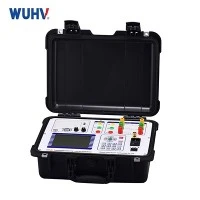


A Transformer Turns Ratio (TTR) Test Set is a specialized instrument used to measure the turns ratio of a transformer. The turns ratio is a critical parameter that helps ensure the transformer is functioning correctly. The TTR test checks if the ratio between the primary and secondary windings of a transformer matches the specified design ratio, which directly impacts the transformer's voltage transformation capability. Below are the FAQs related to Transformer TTR Test Sets.
1. What is a Transformer Turns Ratio (TTR) Test Set?
A Transformer Turns Ratio (TTR) Test Set is a device used to measure the ratio of the number of turns in the primary winding to the number of turns in the secondary winding of a transformer. The turns ratio is essential for ensuring that the transformer is operating correctly and that the voltage transformation is accurate. This test is typically performed during installation, commissioning, and maintenance of transformers.
2. Why is the Turns Ratio of a Transformer Important?
The turns ratio of a transformer determines the voltage step-up or step-down function. It is calculated by the ratio of the number of turns in the primary winding to the number of turns in the secondary winding. For example, if a transformer has a turns ratio of 10:1, it means the voltage on the primary side is reduced by a factor of 10 on the secondary side.
The turns ratio is crucial because:
Voltage Regulation: Ensures that the voltage transformation is accurate.
Safety: Incorrect turns ratios could lead to over-voltage or under-voltage, which can damage electrical equipment.
Efficiency: Helps ensure the transformer is operating at optimal efficiency.
3. How Does a Transformer TTR Test Set Work?
A TTR Test Set works by applying a low-voltage signal to the primary side of the transformer and measuring the corresponding voltage on the secondary side. The tester then calculates the ratio between the primary and secondary voltages to determine the turns ratio.
Basic Steps in a TTR Test:
Voltage Application: A known low-voltage signal is applied to the primary winding of the transformer.
Measurement: The test set measures the corresponding voltage on the secondary winding.
Calculation: The tester calculates the turns ratio by dividing the primary voltage by the secondary voltage.
Comparison: The calculated ratio is compared with the transformer's rated turns ratio to verify that it matches the manufacturer's specifications.
4. What Parameters Are Measured During TTR Testing?
A TTR Test Set primarily measures the following parameters:
Turns Ratio: The ratio of the number of turns in the primary winding to the number of turns in the secondary winding.
Primary Voltage: The voltage applied to the primary winding.
Secondary Voltage: The voltage measured on the secondary winding.
Phase Difference: Some advanced TTR test sets can also check for phase displacement, ensuring that the transformer's winding connections are correct.
Polarity: Some models can check the polarity of the transformer windings, ensuring proper operation in the electrical system.
5. What Are the Common Types of Transformer Turns Ratio (TTR) Test Sets?
There are different types of TTR Test Sets, each with unique features designed for specific applications:
Manual TTR Testers: Simple devices where the user manually calculates the turns ratio by comparing the primary and secondary voltage readings. These are typically low-cost and used for basic testing.
Automatic TTR Testers: More advanced models that automatically calculate and display the turns ratio, often with higher accuracy and faster testing capabilities. These are suitable for more frequent testing and higher accuracy needs.
Handheld TTR Testers: Portable and lightweight, ideal for field testing. These are often used for on-site testing of transformers in substations or power plants.
Bench-Top TTR Testers: Larger, more complex units used for laboratory or factory settings, often designed for testing larger transformers.
6. What Are the Benefits of Using a TTR Test Set?
The key benefits of using a TTR Test Set include:
Accuracy: Provides a precise measurement of the turns ratio to ensure the transformer is operating correctly.
Early Detection of Faults: Helps identify issues such as winding faults, incorrect connections, or manufacturing defects before they cause major problems.
Predictive Maintenance: Regular TTR testing can be part of a predictive maintenance program, preventing unexpected transformer failures by detecting degradation or faults early.
Compliance: Ensures that the transformer meets regulatory and safety standards by confirming that its voltage transformation function is operating correctly.
7. When Should TTR Testing Be Performed?
TTR testing should be performed in the following scenarios:
Installation: When a new transformer is installed, TTR testing is crucial to confirm that it was manufactured correctly and that it is operating as specified.
Commissioning: During the commissioning process to ensure that the transformer is working properly and in line with the design specifications.
Routine Maintenance: TTR testing is often part of a routine maintenance schedule, performed periodically (e.g., annually or biennially) to monitor the transformer's health.
Post-Maintenance or Repair: After any repairs or maintenance activities, particularly if there is suspicion of incorrect wiring or mechanical damage.
Troubleshooting: If the transformer is showing signs of malfunction, TTR testing can help diagnose issues with the turns ratio or winding connections.
8. What Can an Incorrect Turns Ratio Indicate?
An incorrect turns ratio could indicate several potential issues with the transformer, including:
Winding Faults: The windings could be damaged, resulting in an incorrect turns ratio.
Incorrect Manufacturing: The transformer might have been manufactured incorrectly, leading to a mismatch in the turns ratio.
Miswiring: There could be a misconnection or fault in the primary or secondary windings.
Tap Changer Issues: If the transformer has a tap changer, an incorrect tap setting could result in a wrong turns ratio.
Transformer Degradation: Over time, winding degradation or corrosion can alter the transformer's turns ratio.
If the turns ratio is incorrect, the transformer will not operate efficiently, and it could result in over-voltage or under-voltage on the secondary side.
9. How Accurate is a Transformer TTR Test Set?
The accuracy of a TTR Test Set depends on the quality and calibration of the instrument. High-quality TTR test sets can measure turns ratios with an accuracy of up to 0.1% or better. However, the accuracy can be influenced by factors such as:
Testing Environment: Environmental conditions like temperature, humidity, and noise can affect the readings.
Transformer Size: Larger transformers with complex windings may be more difficult to test accurately.
Test Frequency: More advanced test sets with higher test frequencies generally provide more accurate results, especially for high-voltage transformers.
It is essential to calibrate the test equipment regularly to maintain high accuracy.
10. What Is the Difference Between a TTR Test and Other Transformer Tests?
TTR Testing focuses specifically on measuring the turns ratio of a transformer, which is directly related to the voltage transformation function of the transformer. However, other transformer tests measure different parameters, including:
Insulation Resistance Testing: Measures the resistance of the insulation material in the transformer to ensure there are no leakage paths that could cause failures.
Winding Resistance Testing: Measures the resistance of the windings to detect short circuits, open windings, or degradation.
Dielectric Testing (Tan Delta): Measures the insulation's dissipation factor to evaluate the health of the insulation material.
Oil Testing: Measures the quality of the transformer's insulating oil (if applicable), checking for contamination or degradation.
Partial Discharge Testing: Detects electrical discharges inside the transformer insulation, which may be early indicators of insulation failure.
While TTR testing is primarily focused on the turns ratio, insulation and dielectric tests provide more detailed information about the transformer's overall health and condition.
11. Can TTR Tests Be Performed on All Types of Transformers?
TTR tests can be performed on most types of transformers, including:
Power Transformers
Distribution Transformers
Instrument Transformers (e.g., Current Transformers, Potential Transformers)
Autotransformers
Step-Up or Step-Down Transformers
The TTR test is suitable for both oil-filled and dry-type transformers, though specific test procedures may vary depending on the type and size of the transformer.
12. Are TTR Test Sets Portable?
Yes, many modern TTR Test Sets are portable and designed for field use. Portable TTR testers are compact, lightweight, and often battery-operated, making them ideal for on-site testing in substations, power plants, or during installation and commissioning. Some advanced portable models also offer automatic turns ratio calculations, making them easy to use in the field.
If you are looking for Transformer TTR manufacturers and suppliers, please feel free to contact us for high quality and googl price of the Transformer TTR and a more detailed introduction. As an factory of Transformer TTR, last 21years,we design, development, manufacturing and marketing in China, we have various types of Transformer TTR for sales to solve your problems.