

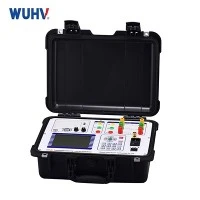


1. What is an Oil Kinematic Viscometer?
An Oil Kinematic Viscometer is an instrument used to measure the kinematic viscosity of oil samples. It determines how easily oil flows under the influence of gravity at a specific temperature, which is crucial for assessing oil quality, performance, and suitability for various applications.
2. Purpose
To measure the flow behavior of oils (lubricating oils, transformer oils, fuels, etc.).
To assess oil condition and quality in manufacturing, maintenance, and R&D.
To ensure oils meet industry standards for viscosity, which affects lubrication, cooling, and operational efficiency.
To detect oil degradation or contamination.
3. Work Principle
A fixed volume of oil flows through a calibrated glass capillary tube under gravity.
The time it takes for the oil to flow between two marks on the tube is measured.
The kinematic viscosity is calculated by multiplying the flow time by the viscometer constant.
The test is conducted at controlled temperatures (commonly 40°C or 100°C) using a temperature bath for accuracy.
4. Types of Oil Kinematic Viscometers
| Type | Description |
|---|---|
| Manual Viscometer | Glass tube, manual filling and timing with stopwatch |
| Semi-automatic Viscometer | Electronic timer with manual sample loading |
| Fully Automatic Viscometer | Automated sample loading, timing, temperature control, and cleaning |
5. Use For
Measuring kinematic viscosity of oils in labs, refineries, and field testing.
Quality control of engine oils, hydraulic fluids, transformer oils, and fuels.
R&D for new oil formulations and additives.
Monitoring oil condition during equipment maintenance.
Compliance with standards like ASTM D445, ISO 3104, and IEC 3104.
6. Difference vs Other Viscometers
| Feature | Kinematic Viscometer | Dynamic Viscometer |
|---|---|---|
| Measures | Viscosity relative to fluid density (gravity flow) | Viscosity under applied shear stress |
| Principle | Gravity-driven flow through capillary tube | Torque or force applied to rotate or shear fluid |
| Unit | Centistokes (cSt) or mm²/s | Pascal-seconds (Pa·s) or poise |
| Applications | Suitable for transparent and opaque oils, widely used for quality control | Used for complex rheological properties, non-Newtonian fluids |
| Complexity | Simple, often less expensive | More complex and costly |
7. How to Use an Oil Kinematic Viscometer
Step-by-step:
Prepare the sample: Filter and degas the oil if necessary.
Set the temperature: Preheat the temperature bath to the test temperature (e.g., 40°C).
Fill the viscometer: Use a pipette or syringe to fill the capillary tube with the oil sample.
Place the viscometer in the bath: Immerse the viscometer ensuring the oil level aligns with the marks.
Allow temperature equilibrium: Wait for the sample to reach bath temperature.
Measure flow time: Use a stopwatch or electronic timer to record the time taken for the oil to flow between two calibration marks.
Calculate viscosity: Multiply flow time by viscometer constant to get kinematic viscosity.
Clean the viscometer: Thoroughly clean and dry before next use.
FAQs
Q1: Why is temperature control important in viscosity measurement?
A: Viscosity changes significantly with temperature; controlling temperature ensures accurate and consistent results.
Q2: Can I test dirty or opaque oils?
A: Yes, kinematic viscometers can test opaque oils since the flow time is the main measurement, though clarity helps for manual timing.
Q3: How often should the viscometer be calibrated?
A: Calibration should be done at least once a year or after maintenance using certified calibration fluids.
Q4: What sample volume is needed?
A: Usually a few milliliters (3–10 mL) depending on the viscometer size.
Q5: Can I use this viscometer for other fluids besides oil?
A: Yes, it can be used for other transparent or opaque liquids within the viscosity range of the tube, but confirm suitability for very low or very high viscosity fluids.
Q6: What standards does this test comply with?
A: Common standards include ASTM D445, ISO 3104, IP 71, and IEC 3104.
Q7: How does a fully automatic viscometer improve testing?
A: It reduces operator error, speeds up testing, automates cleaning, and provides digital data logging and reporting.
Q8: How to clean the viscometer properly?
A: Use suitable solvents to dissolve the oil, rinse with distilled water, and dry completely to avoid contamination or damage.