

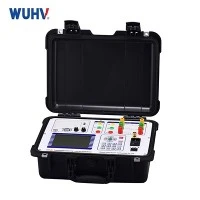


A resonant reactor, also known as a resonant transformer or a tuning reactor, is a type of electrical reactor specifically designed for use in resonant circuits. It is often employed in applications where resonance is desired, such as in AC (alternating current) resonant test systems, as discussed earlier. The resonant reactor is a key component in creating the resonant condition necessary for efficient energy transfer in such systems.
Here are some key features and functions of a resonant reactor:
Inductance and Resonance: A resonant reactor is characterized by its inductance, which is a measure of its ability to store energy in a magnetic field. When combined with a capacitor in a resonant circuit, the reactor contributes to the establishment of a specific resonant frequency for the circuit.
Tuning Element: The resonant reactor is often used as a tuning element in the resonant circuit. By adjusting the inductance of the reactor, the resonant frequency of the circuit can be tuned to match the desired frequency for efficient energy transfer.
Energy Storage: During the AC resonant testing process, energy is transferred between the capacitor and the resonant reactor. The reactor stores energy in its magnetic field during one part of the AC cycle and releases it during another, contributing to the efficient transfer of energy to the device under test.
Efficient Energy Transfer: The resonant reactor is critical for achieving efficient energy transfer in the resonant circuit. When the circuit is tuned to the resonant frequency, the reactor allows for high currents and voltages at that frequency, which is beneficial for testing purposes.
Safety and Control: Resonant reactors are designed to operate within specific voltage and current limits. Control mechanisms are often incorporated into the resonant test system to ensure that the testing conditions remain within safe and controlled parameters.
In summary, a resonant reactor plays a crucial role in creating a resonant circuit for applications like AC resonant testing. It allows for efficient energy transfer at a specific frequency, enhancing the sensitivity of the testing process and making it effective for assessing the insulation and quality of high-voltage electrical equipment.