



Product introduction
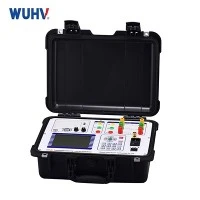
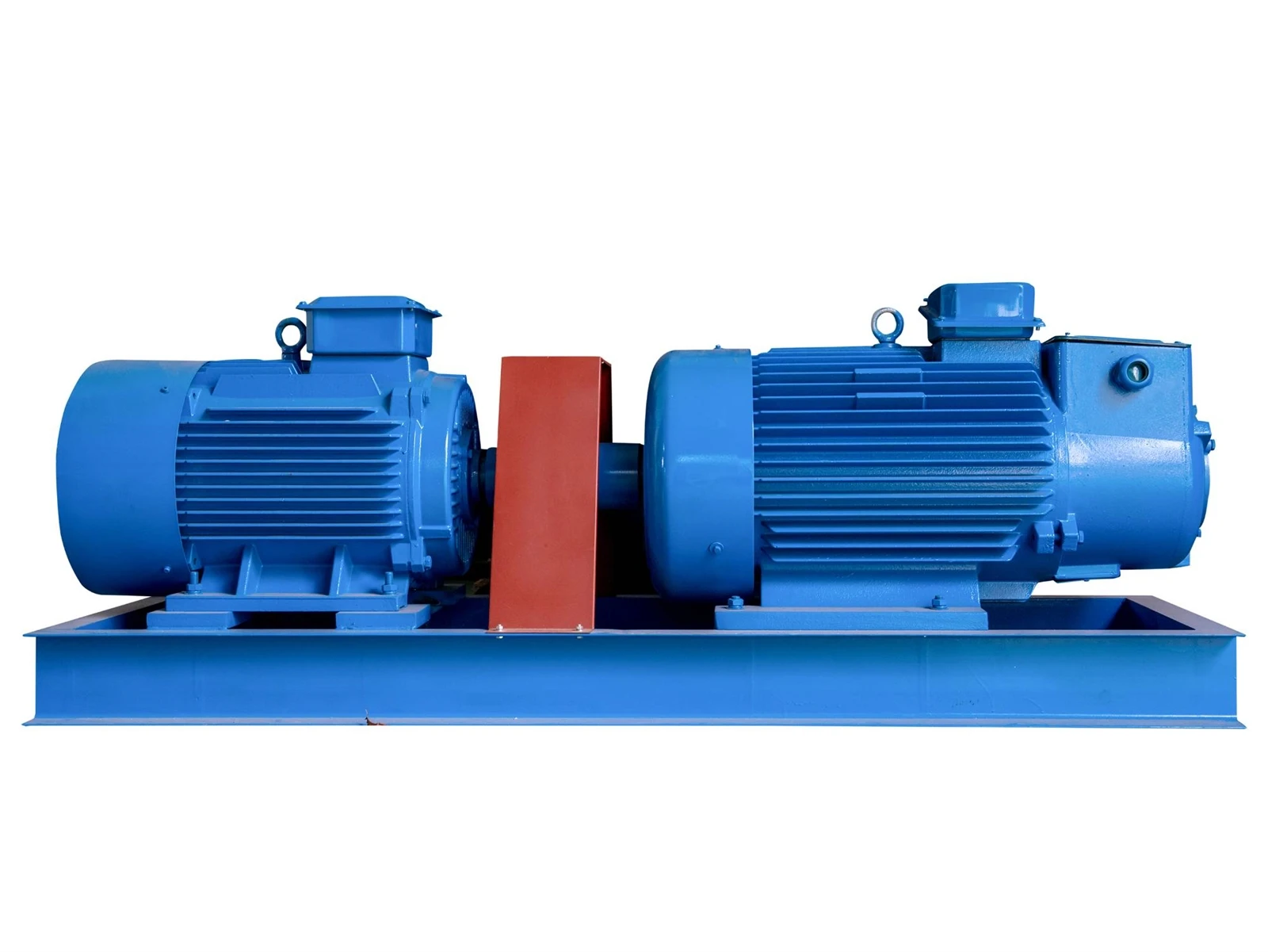
A Motor Load Test Bench is a comprehensive equipment system specifically designed for testing, evaluating, verifying, and calibrating the performance of electric motors (including generators).
It simulates various operating conditions that a motor might encounter in real-world applications, precisely measuring key parameters such as electrical, mechanical, thermal, and efficiency characteristics. It is an indispensable critical tool in motor R&D, manufacturing, quality control, and application validation.


Product Parameters of Motor Load Test Bench
Equipment power supply
| Power supply voltage | 460V | Frequency | 60Hz |
| Phase number | 3 Phase | Rated capacity | Not less than 500KVA |
Test capacity
| Serial number | Motor type | Rated voltage | Test frequency | No-load test | Remark |
| 1 | Low voltage three-phase asynchronous motor | 230V-660V | Sine wave 50Hz, 60Hz | 3kW-1250kW | The high-power motor adopts low-voltage test, and the motor rotates at full speed |
| 2 | High voltage three-phase asynchronous motor | 3KV-13.2KV | Sine wave 50Hz, 60Hz | 50kW-8000kW | |
| 3 | DC motor | DC800V or less | DC | 100kW-800kW |

Core Functions
1.Performance Testing: The motor load test bench can measure key performance indicators like input/output power, voltage, current, frequency, power factor, speed, torque, efficiency, and temperature rise.
2.Characteristic Curve Plotting: Draws motor characteristic curves (efficiency maps, speed-torque curves, power-torque curves, current-torque curves) under varying loads, speeds, and voltage/frequency conditions.
3.Durability & Reliability Testing: Conducts long-duration continuous operation, start-stop cycles, overload, and temperature limit tests to assess motor lifespan and reliability.
4.Type Tests & Routine Tests: Performs comprehensive type tests according to international (e.g., IEC), national (e.g., GB), or industry standards, or standardized, rapid routine tests on production motors.
5.Control Strategy Verification: Motor load test bench tests motor response characteristics and dynamic performance (e.g., starting, acceleration, deceleration, braking) under different control algorithms (e.g., V/F control, vector control, direct torque control).
6.Fault Diagnosis & Analysis: Identifies abnormal phenomena (e.g., vibration, noise, overheating, low efficiency) and analyzes potential causes.
7.Energy Efficiency Evaluation: Precisely measures motor efficiency at different load points to verify compliance with efficiency standards (e.g., IE1, IE2, IE3, IE4, IE5).
8.Parameter Identification: Determines the motor's equivalent circuit parameters (resistance, inductance, back-EMF constant, etc.).
Main advantages of Motor Load Test Bench
Improve detection efficiency
Concentrating multiple tests on one testing platform reduces the time for equipment replacement, wiring, and repetitive operations, making it particularly suitable for mass production and factory inspection of motors.
Improve the level of product quality control
By systematically detecting the insulation, electrical parameters, and operational performance of the motor, timely detection of winding abnormalities, insulation defects, and parameter deviations can be achieved, reducing the flow of unqualified products into the next production process.
Improve the consistency of test results
Adopting a unified testing process and setting parameters can help reduce human operational differences and make it easier to compare the testing results of different batches of motors.
Easy to trace quality
Save the motor model, test parameters, test results, and qualification judgment records to facilitate quality analysis, after-sales problem investigation, and production process management for enterprises.
Reduce comprehensive testing costs
Centralized management of multiple tests can reduce the redundant configuration of independent devices, save testing sites and manual operation time. The actual cost-effectiveness depends on the testing project, degree of automation, and production scale.
Flexible configuration for easy expansion
Corresponding functions can be selected based on motor power, voltage level, testing items, and production processes to meet the testing needs of different enterprises; Some systems also support customized testing processes and data management functions.
Main application areas of Motor Load Test Bench
Motor manufacturing industry: used for production process testing and factory performance inspection.
Industrial automation: used for performance testing of various drive motors and asynchronous motors.
Automobiles and new energy vehicles: used for testing products such as drive motors and auxiliary motors.
Household appliance industry: used for testing supporting motors such as air conditioners, fans, and water pumps.
Electrical equipment industry: used for performance verification of generators, motors, and related electrical equipment.
Research institutes and universities: used for motor research and development, experimental teaching, and technical research.
Third party testing agency: used for quality testing, certification, and acceptance of motor products.
The applicable value in different scenarios
motor production line
Accelerate batch testing and improve factory inspection efficiency
Motor maintenance workshop
Assist in diagnosing motor faults and checking the performance after maintenance
Quality Inspection Department
Unified testing process, save testing records
Motor R&D Laboratory
Collect electrical and operational parameters according to the experimental plan
Industrial equipment manufacturing enterprises
Check if the matching motor meets the procurement and acceptance requirements





Frequently Asked Questions
1. What is a motor load test bench?
The motor load test bench is a comprehensive testing equipment used to detect and evaluate the operational performance of motors. It can test the electrical parameters, operational performance, and related test items of motors, and is suitable for motor production, research and development, quality inspection, and laboratory scenarios.
2. What tests can be conducted on the motor load test bench?
Usually, no-load testing, load testing, power testing, current testing, voltage testing, speed testing, torque testing, efficiency testing, power factor testing, and temperature rise testing can be conducted according to the configuration.
3. Can the motor load test bench perform automatic testing?
Okay. According to the configuration, automatic collection of test parameters, data processing, display of test results, data storage, and generation of test reports can be achieved, reducing manual operations and improving testing efficiency.
4. Does the motor load test system support customization?
Support. Customization can be made according to the customer's motor power, rated voltage, rated current, speed, testing items, load mode, and on-site power conditions.
5. What industries are suitable for motor load test benches?
Mainly used in motor manufacturing enterprises, industrial automation, household appliances, automobiles and new energy vehicles, electrical equipment, research institutes, universities, and third-party testing institutions.
6. Is the motor load test system suitable for mass production lines?
fit. Through automated testing, rapid parameter acquisition, and standardized testing processes, it can be used for online inspection, sampling, and factory inspection of motor production lines, improving inspection efficiency.
7. Can the motor load test bench be used for export projects?
Okay. The motor load test system can be configured according to the power conditions, testing standards, and customer technical requirements of different countries, and can provide corresponding technical information and operating documents.
Suggestions for purchasing a motor test bench
When selecting, it is important to confirm whether the equipment covers the required testing items, whether the measurement range meets the rated parameters of the tested motor, and whether it has automatic testing, data storage, report generation, and necessary safety protection functions.
For production enterprises that require continuous testing of a large number of motors, it is recommended to focus on the degree of automation, testing pace, and data management capabilities; For maintenance and laboratory users, priority should be given to the integrity of testing items, measurement accuracy, and configuration flexibility.
The specific plan should be determined based on the motor type, rated power, rated voltage, and applicable testing standards, to avoid focusing only on the number of testing items and neglecting actual testing requirements.
We are a professional Motor Load Test Bench manufacturers in China.We can provide the best professional Motor Load Test Bench for sales and competitive price. If you are looking for Motor Load Test Bench supplier, we are a good choice.
Contact us to get Motor Load Test Bench price.
Hot Tags: motor load test bench, China motor load test bench manufacturers, suppliers, factory, transformer winding resistance tester, transformer ratio tester, 3 phase transformer testing, voltage ratio test, transformer turns ratio tester, ct pt test


