

Product introduction
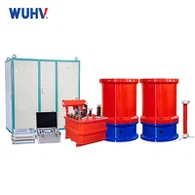
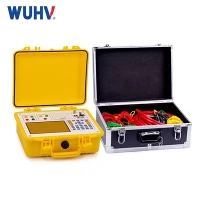
The CVT Resonance Test Set is a critical device in power systems used for conducting power frequency AC withstand voltage tests on high-voltage electrical equipment (such as cables, transformers, GIS, generators, etc.). It utilizes the principle of series resonance to generate high voltage at power frequency (50Hz or 60Hz) to verify the insulation strength and performance of the equipment.
An AC Resonance Test for CVT (also known as a Resonant Frequency Test or Resonant Withstand Test) is a specialized high-voltage test performed on Capacitive Voltage Transformers (CVTs) to assess the integrity of their main insulation system (primarily the capacitor sections and the electromagnetic unit insulation).
When searching for reliable AC resonance test system manufacturers, utility companies and contractors prioritize not only electrical performance but also long-term on-site stability. We are a certified manufacturer with competitive CVT AC resonance test system prices.

Technical parameters (customizable)
|
Rated capacity |
80kVA |
|
Rated voltage |
160kV |
|
Adjustable inductance range |
65~130H |
|
Rated frequency |
50Hz |
|
Rated current |
0.5A |
|
Adjustable gap range |
0~300mm |
Key Benefits Over Conventional Power Frequency Test Transformers
1.Dramatically Reduced Input Power Demand: This represents the most significant operational improvement. The resonance test system draws only 1/Q of the power required by the test object itself, substantially easing power source constraints, particularly crucial for field applications.
2.Enhanced Portability: The combination of a smaller power supply unit, lower-capacity excitation transformer, and modular reactor design results in a far more compact and lightweight system compared to an equally rated test transformer. This greatly simplifies transport and on-site deployment.
3.Superior Output Waveform: The resonant circuit of resonance test system inherently produces a high-purity sinusoidal output voltage at the test object, fully compliant with standard specifications.
4.Inherent Fault Current Limitation During Flashovers: If the test object flashes over or breaks down, the resonant condition collapses instantly. This causes a rapid increase in circuit impedance, naturally restricting the fault current magnitude (I = Uin / Z). The resulting current is merely a fraction (approximately 1/Q) of the pre-fault resonant current, significantly minimizing potential damage compared to the high short-circuit currents typical of test transformers.
5.Streamlined Resonance Tracking: Frequency-variable control enables rapid, precise, and largely automated identification and maintenance of the resonant point.
Typical Application Scenarios of CVT Resonance Test System
1.Power Cables: Commissioning tests, preventive maintenance tests (main insulation AC withstand voltage test, replacing DC withstand voltage).
2.Gas-Insulated Switchgear (GIS): Commissioning tests, post-overhaul tests (main circuit AC withstand voltage test).
3.Generators: Stator winding AC withstand voltage test.
4.Transformers: Induced voltage withstand test (requires frequencies above rated frequency but still falls under the power frequency resonance principle).
5.Capacitive Equipment: AC withstand voltage tests for bushings, instrument transformers, etc.
6.Other High-Voltage Electrical Equipment: AC withstand voltage tests for disconnectors, insulators, etc.


FAQs
1.What voltage levels and test capacities can UHV provide?
UHV offers Resonance Test Systems ranging from several tens of kilovolts to hundreds of kilovolts. The voltage, current, and capacity can be configured based on the capacitance and testing requirements of your equipment.
Our systems are widely used by:
Power utilities
Transformer manufacturers
Cable manufacturers
High-voltage testing laboratories
2.What equipment can be tested with the Resonance Test System?
The system is suitable for AC withstand voltage testing of:
Power cables
GIS and GIL equipment
Power transformers
Distribution transformers
Generators
Motors
Current transformers (CTs)
Voltage transformers (PTs)
High-voltage bushings
Switchgear
Reactors
3.Can the system be used for cable, GIS, and transformer testing?
Yes.
Our Resonant Test Systems are commonly used for:
XLPE cable AC withstand testing
GIS factory and on-site testing
Transformer induced voltage testing
Transformer AC withstand testing
Substation commissioning and maintenance testing
We can recommend different configurations depending on the test object.
4.What frequency ranges are available?
Typical frequency ranges include:
20 Hz to 300 Hz
30 Hz to 300 Hz
45 Hz to 65 Hz
The system automatically adjusts the frequency to find and maintain the resonance point.
5.Can the Resonance Test System automatically find and track the resonance point?
Yes.
The control system can:
Perform automatic frequency sweeping
Find the resonance point automatically
Track resonance continuously
Tune the system automatically
Maintain stable output voltage
This makes testing faster and reduces manual adjustments.
6.What is the maximum output current?
The output current depends on the system configuration and the test requirements.
For high-capacitance loads such as long power cables or GIS installations, we can design a system with the required current rating.
7.How stable is the output voltage and waveform?
UHV systems are designed to deliver:
Low waveform distortion
Clean sine-wave output
Stable voltage output
Excellent frequency stability
This helps ensure accurate and repeatable test results.
8.Does the Resonance Test System support fully automatic testing?
Yes.
The system can handle the entire test sequence automatically, including:
One-touch start
Automatic voltage ramp-up
Voltage holding
Automatic voltage ramp-down
Test completion
Report generation
In most cases, very little operator involvement is needed.
9.What safety protections are included?
The system comes with multiple protection functions, including:
Overvoltage protection
Overcurrent protection
Flashover protection
Breakdown protection
Ground fault protection
Emergency stop function
Zero-start interlock
If an abnormal condition occurs, the system shuts down automatically to protect both personnel and equipment.
10.What parameters can be monitored during testing?
The system continuously monitors:
Test voltage
Test current
Frequency
Test duration
Resonance status
Protection events
All test data can be stored for future review.
11.How accurate are the measurements?
UHV uses high-precision digital measurement technology to accurately measure:
Voltage
Current
Frequency
Resonance-related parameters
The system is suitable for both production testing and laboratory applications.
12.Can the Resonance Test System work with partial discharge testing?
Yes.
We can provide a complete solution for PD testing, including:
Partial discharge detectors
Low-PD reactors
Coupling capacitors
Related measurement accessories
The system can be configured to meet IEC 60270 requirements.
13.Does the Resonance Test System comply with international standards?
Yes.
Our Resonant Test Systems are designed and manufactured in accordance with:
IEC 60060
IEC 60270
IEC 60502
IEC 60840
IEEE Std 4
Relevant GB/T standards
Wuhan UHV as the CVT Resonance Test System supplier can help many power workers conduct various power tests more conveniently. Quality guaranteed, worry free after-sales service, welcome to purchase!
Hot Tags: resonance test system, China resonance test system manufacturers, suppliers, factory, CVT Resonance Test, hipot safety enclosure compatible tester, Variable Frequency Resonant, hipot test for LED lighting, mass production hipot tester system, ac resonant test system