

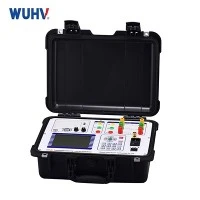


An AC Hipot Tester (also known as an AC High Potential Tester) is used for high-voltage testing of electrical insulation systems under alternating current (AC) conditions. It helps ensure that insulation materials can handle operating voltages without failure. Below are 20 commonly asked questions about AC Hipot testing.
1. What is an AC Hipot Tester?
An AC Hipot Tester is a device that applies a high AC voltage to the insulation of electrical equipment (e.g., cables, transformers, motors, switchgear) to verify the dielectric strength and overall integrity of the insulation.
2. What is the purpose of AC Hipot Testing?
AC Hipot testing is performed to check the insulation of electrical components and verify that it can safely withstand operating conditions under AC voltage. It detects insulation weaknesses or faults that could lead to breakdowns or electrical hazards.
3. How does an AC Hipot Tester work?
The tester generates a high AC voltage (usually higher than the normal operating voltage) and applies it to the equipment under test. It monitors the leakage current through the insulation. If the leakage current exceeds a predefined limit, the insulation is considered faulty.
4. What are the applications of an AC Hipot Tester?
Common applications include:
Cables: To test the dielectric strength of cable insulation.
Transformers: To check the insulation in transformer windings.
Motors and Generators: To test insulation on motor windings and coils.
Switchgear and Circuit Breakers: To verify the insulation of high-voltage switchgear.
Capacitors and Bushings: To ensure insulation quality in capacitors used in various high-voltage systems.
5. What is the difference between AC Hipot and DC Hipot testing?
AC Hipot Testing: Applies an alternating current (AC) voltage to the equipment, simulating the actual operational environment for AC systems.
DC Hipot Testing: Uses direct current (DC) voltage to assess the insulation's ability to handle steady DC voltage.
6. What is the typical test voltage range of an AC Hipot Tester?
Typical AC Hipot testers can generate test voltages from 2 kV to 100 kV. Specialized testers can go up to 200 kV or higher for testing large electrical equipment like transformers.
7. What is the standard test voltage for AC Hipot testing?
The test voltage is generally set to 1.5 to 2 times the rated voltage of the equipment under test. For instance:
For equipment rated at 11 kV, the test voltage would be around 16.5 kV to 22 kV.
For equipment rated at 132 kV, the test voltage might be set to 198 kV to 264 kV.
8. What is leakage current in AC Hipot testing?
Leakage current is the small current that flows through the insulation when a high AC voltage is applied. It is monitored during the test. A low leakage current indicates good insulation, while a high leakage current suggests an issue with the insulation.
9. How is leakage current measured in AC Hipot testing?
Leakage current is measured by an ammeter integrated into the AC Hipot tester, which continuously monitors the current flowing through the insulation as the test voltage is applied.
10. How long should an AC Hipot test last?
The test duration typically lasts from 1 minute to 10 minutes, depending on the equipment under test, the manufacturer's recommendations, and industry standards. Longer tests are sometimes used for higher voltage equipment.
11. What is a "pass" during an AC Hipot test?
A pass occurs when:
The equipment withstood the test voltage without causing any breakdown in the insulation.
The leakage current remained within acceptable limits throughout the test.
12. What happens if the leakage current exceeds the limit during the AC Hipot test?
If the leakage current exceeds the set limit during the test, the equipment fails the test, indicating that the insulation is faulty or compromised. The tester will usually stop the test and trigger an alarm or alert.
13. What is the typical leakage current limit during an AC Hipot test?
The leakage current limit varies depending on the equipment type, but it generally ranges from 1 μA to 100 μA. For high-voltage systems, the limit might be higher.
14. Can I use an AC Hipot tester on already installed equipment?
Yes, AC Hipot testers can be used to test installed equipment as long as it is properly isolated from the electrical network, and proper safety precautions are taken.
15. How do I set the correct test voltage for AC Hipot testing?
The test voltage should be set to 1.5 to 2 times the rated voltage of the equipment under test, unless specific standards or manufacturer instructions dictate otherwise. Always check the equipment's specifications before proceeding.
16. What is the difference between AC and DC testing for transformers?
AC Testing: Simulates real operational conditions for transformers in an AC system. It checks how the insulation performs under alternating voltage.
DC Testing: Used to check the dielectric strength of the insulation by applying a steady DC voltage. This test may not fully replicate the real operating conditions of AC-based transformers but is sometimes used for specific types of assessments.
17. What are the safety precautions to consider when using an AC Hipot tester?
Key safety measures include:
Proper grounding of the equipment under test.
Personal protective equipment (PPE) such as insulated gloves, boots, and face shields.
Establishing a safe test area and preventing unauthorized access.
Using interlock systems to prevent high-voltage exposure.
Following manufacturer safety guidelines and test procedures.
18. What is the role of a "continuity check" in AC Hipot testing?
A continuity check ensures that the equipment under test does not have any open circuits or faulty connections before starting the high-voltage test. It helps verify that the setup is correct and safe.
19. Can an AC Hipot tester damage the equipment being tested?
If the test voltage is set too high or the insulation is already compromised, the AC Hipot test can damage the equipment. Always follow manufacturer guidelines for the proper test voltage and duration to prevent equipment damage.
20. How do I maintain an AC Hipot tester?
Routine maintenance for an AC Hipot tester includes:
Calibration: Regularly calibrate the tester to ensure accuracy.
Inspect cables and connectors: Check for wear or damage before every test.
Clean the unit: Keep the tester free of dust and moisture.
Storage: Store the unit in a dry, cool place to prevent deterioration.
Conclusion
AC Hipot testing is crucial for ensuring the safety and reliability of electrical equipment. By applying a high AC voltage and monitoring the leakage current, it helps identify potential insulation failures before equipment is put into operation. Always ensure safety protocols are followed during testing to minimize risks to personnel and equipment.
If you are looking for AC Hipot Tester manufacturers and suppliers, please feel free to contact us for high quality and googl price of the AC Hipot Tester and a more detailed introduction. As an factory of AC Hipot Tester, last 21years,we design, development, manufacturing and marketing in China, we have various types of AC Hipot Tester for sales to solve your problems.