

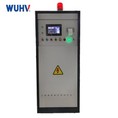

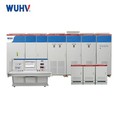
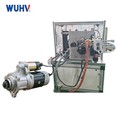
An AC Hipot Test Set (AC High Potential Test Set) is a testing device used to apply high alternating current (AC) voltage to electrical insulation systems to assess their ability to withstand stress and verify their integrity. This test is commonly used to detect weak spots or faults in the insulation before electrical equipment is put into service.
1. What is an AC Hipot Test Set?
An AC Hipot Test Set is an electrical testing system that applies a high-voltage AC signal to electrical equipment to test the insulation's dielectric strength. It simulates the operating conditions that the insulation will face during normal use. The tester measures the leakage current and checks if the equipment's insulation is capable of handling the voltage without failure.
2. Purpose of an AC Hipot Test Set
The purpose of using an AC Hipot Test Set is to ensure that the electrical insulation of equipment can withstand high voltage levels during normal operation, providing safety and reliability. The primary objectives include:
Verifying the integrity of insulation: Ensures insulation is intact and capable of withstanding the applied high-voltage AC stress.
Preventing future breakdowns: Identifies potential weak spots, faults, or degradation in insulation materials before equipment is used in real-world applications.
Compliance with industry standards: Meets testing requirements set by national and international standards for electrical safety.
3. How Does an AC Hipot Test Set Work?
An AC Hipot Test Set works by generating a high AC voltage that is applied to the insulation of the equipment under test (EUT). The tester then monitors the leakage current that flows through the insulation. The process typically involves the following steps:
Voltage Generation: The test set generates an alternating high voltage (usually at a frequency of 50 or 60 Hz, depending on the application).
Voltage Application: The voltage is applied across the equipment under test, usually across its insulation system, such as windings in motors or transformers.
Leakage Current Measurement: The tester measures the amount of current that leaks through the insulation as the high voltage is applied. This current is monitored continuously during the test.
Pass/Fail Criteria: If the leakage current remains within an acceptable limit, the insulation is considered to have passed the test. If the leakage current exceeds the limit or if breakdown occurs, the insulation is deemed faulty.
4. Applications of an AC Hipot Test Set
AC Hipot Test Sets are widely used in various industries to test the insulation integrity of electrical equipment, including:
Power Distribution Equipment: For testing the insulation of cables, transformers, and switchgear.
Electrical Motors and Generators: To ensure that the windings and other components can withstand operational voltage levels.
Cables: To verify the dielectric strength of cables and ensure that they will not fail under high voltage.
Capacitors and Bushings: To test the insulation integrity of high-voltage capacitors and bushings.
HVAC Systems: For testing the electrical insulation in large HVAC and refrigeration systems.
Manufacturing and R&D: To test prototype electrical components or systems in the development phase.
Automotive: For testing electric vehicles (EVs) and hybrid vehicle components, especially for high-voltage systems.
5. Test Steps for Using an AC Hipot Test Set
The following steps outline the typical procedure for conducting an AC Hipot test:
1. Preparation
Disconnect Power: Ensure the equipment under test (EUT) is disconnected from the power source and all other live components to prevent accidental electrical hazards.
Inspect Equipment: Inspect the AC Hipot tester, cables, connectors, and the EUT to make sure everything is in good condition and correctly configured.
Safety Precautions: Set up appropriate safety barriers and warning signs to prevent unauthorized personnel from entering the test area. All personnel involved should wear personal protective equipment (PPE) such as rubber gloves and insulated boots.
2. Set Test Parameters
Set Voltage: Set the AC Hipot Test Set to the required test voltage. The test voltage is typically 1.5 to 2 times the rated voltage of the equipment being tested. For instance, if the equipment is rated for 10 kV, the test voltage might be set to 15 kV to 20 kV.
Test Duration: Set the test duration, which is typically 1 minute to 10 minutes depending on the standards or specifications of the equipment.
3. Apply Test Voltage
Gradual Voltage Application: Gradually ramp up the AC voltage to the set test level to avoid sudden surges that could damage the equipment.
Voltage Stabilization: Allow the test voltage to stabilize before monitoring leakage current.
4. Monitor Leakage Current
Continuous Monitoring: Monitor the leakage current throughout the test. The test set will display the leakage current in real-time.
Compare with Acceptable Limits: Compare the leakage current with the acceptable threshold. If the leakage current exceeds the specified limit, the test will be considered a failure.
5. Test Completion
Voltage Discharge: After completing the test, gradually reduce the voltage to zero to safely discharge the equipment.
Record Results: Document the test results, including the leakage current and any failures or anomalies.
Post-Test Inspection: Perform any necessary post-test inspections to check for any visible signs of insulation breakdown or damage in the equipment.
6. Pass/Fail Criteria
Pass: If the leakage current remains within the set acceptable limits (usually between 1 µA and 100 µA depending on the type and voltage of the equipment), the equipment passes the test. It indicates that the insulation is capable of handling the high-voltage stress.
Fail: If the leakage current exceeds the predefined limit, or if the insulation breaks down or arcs, the equipment fails the test. This means the insulation is not sufficient for the required voltage, and further investigation or repairs are needed.
7. Safety Considerations
Grounding: Ensure that the equipment under test is properly grounded to prevent electrical hazards.
Isolation: Make sure that only authorized personnel are allowed to operate the tester and that the test area is secured.
Interlock Features: Use the tester's built-in safety interlocks and automatic shutdown features to avoid accidents.
PPE: Ensure that personnel wear the appropriate PPE, such as insulating gloves, boots, and face shields, to protect against electric shock during the test.
8. Maintenance and Calibration
Calibration: Periodically calibrate the AC Hipot Test Set to ensure its accuracy. This should be done at regular intervals as recommended by the manufacturer, or whenever test results are in doubt.
Routine Inspections: Inspect the test set for signs of wear or damage, including the cables, connectors, and insulation of the unit.
Clean and Store: Keep the test equipment clean and stored in a dry, cool environment to extend its lifespan and prevent damage.
If you are looking for AC Hipot Test Set manufacturers and suppliers, please feel free to contact us for high quality and googl price of the AC Hipot Test Set and a more detailed introduction. As an factory of AC Hipot Test Set, last 21years,we design, development, manufacturing and marketing in China, we have various types of AC Hipot Test Set for sales to solve your problems.