

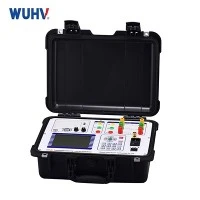


### **What is a Circuit Breaker Analyzer?**
A **Circuit Breaker Analyzer** is a specialized diagnostic tool used to evaluate the **performance** and **condition** of **circuit breakers** in electrical systems. Circuit breakers are crucial for protecting electrical circuits from overloads and short circuits by automatically disconnecting the power when abnormal conditions are detected. The analyzer helps assess the functionality of the breaker, verify its settings, and test its mechanical and electrical operations, including **trip times**, **contact resistance**, and **coil resistance**.
Circuit breaker analyzers provide detailed insights into the health of circuit breakers, helping engineers and maintenance teams ensure that these protective devices function properly, especially in high-voltage and critical systems.
---
### **Purpose of a Circuit Breaker Analyzer**
1. **Functional Testing**:
* The primary purpose of a circuit breaker analyzer is to test the **mechanical** and **electrical** performance of circuit breakers. This includes verifying their **trip mechanism**, **response time**, and **contact operation** under various fault conditions.
2. **Testing Trip Characteristics**:
* The analyzer is used to test and evaluate the **trip characteristics** of circuit breakers, including the **overcurrent**, **time delay**, and **instantaneous trip settings**. This ensures that breakers will react appropriately under fault conditions, protecting the electrical system.
3. **Routine Maintenance and Diagnostics**:
* It is used for **preventive maintenance** to monitor the condition of circuit breakers over time. Regular testing helps identify any degradation in performance, such as slow tripping or contact wear, which could lead to **system failures** or **downtime**.
4. **Verification of Settings and Calibration**:
* The analyzer helps verify the accuracy of the **trip settings** and **calibration** of the circuit breaker, ensuring that it is configured to operate within the desired parameters, such as current threshold and trip delay.
5. **Ensuring Compliance with Standards**:
* Regular testing with a circuit breaker analyzer ensures that the circuit breaker meets **industry standards** and **safety regulations**, such as those set by **IEC**, **IEEE**, or **NFPA**. This is critical for the safe and reliable operation of electrical systems.
6. **Troubleshooting Faults**:
* The analyzer is also used for troubleshooting when a circuit breaker fails to operate correctly. It can help identify if the problem lies with the **mechanical mechanism**, **electrical components**, or **settings** of the breaker.
---
### **Applications of a Circuit Breaker Analyzer**
Circuit breaker analyzers are used in various industries where electrical systems are critical for operation. Common applications include:
#### 1. **Power Generation and Distribution**
* **Application**: Used in power plants, **substations**, and **electrical transmission systems** to test the performance of **high-voltage circuit breakers** that protect transformers, generators, and transmission lines.
* **Purpose**: Ensures reliable operation of circuit breakers, preventing widespread outages or damage due to **fault conditions**.
#### 2. **Industrial and Commercial Facilities**
* **Application**: Used in large industrial complexes, factories, and commercial buildings where electrical equipment and circuits are protected by circuit breakers.
* **Purpose**: Ensures the **operational reliability** of circuit breakers protecting critical equipment, preventing fires and damage caused by electrical faults.
#### 3. **Electricity Utilities**
* **Application**: Utilities use circuit breaker analyzers to regularly test **distribution circuit breakers**, **feeder breakers**, and **protective relays** in the grid.
* **Purpose**: To ensure that circuit breakers function correctly in **distribution networks**, protecting power distribution systems from faults and overloads.
#### 4. **Renewable Energy**
* **Application**: Used to test circuit breakers in **wind farms**, **solar power plants**, and **battery storage systems**.
* **Purpose**: Ensures that circuit breakers in renewable energy systems operate effectively, protecting the systems from faults while maintaining consistent power output.
#### 5. **Marine and Offshore Systems**
* **Application**: Circuit breaker analyzers are used in **marine vessels** and **offshore platforms** to maintain circuit breakers used for **power distribution** and **safety protection**.
* **Purpose**: Ensures safe operation of electrical systems in high-risk environments like offshore platforms or ships, where downtime due to breaker failure could be catastrophic.
#### 6. **Data Centers**
* **Application**: Circuit breakers in **data centers** that protect **critical infrastructure**, such as servers and networking equipment, are regularly tested using circuit breaker analyzers.
* **Purpose**: Prevents data center shutdowns by ensuring that circuit breakers react appropriately to overloads or faults, maintaining **uptime** and **security**.
#### 7. **Electrical Contractors and Service Providers**
* **Application**: **Electrical maintenance contractors** use circuit breaker analyzers to test and diagnose issues in commercial and residential installations.
* **Purpose**: Provides **diagnostic insights** for repairing or replacing faulty circuit breakers, helping to restore **safety** and **reliability** in electrical systems.
---
### **How to Use a Circuit Breaker Analyzer**
Using a circuit breaker analyzer involves several steps to safely and accurately test the performance of the circuit breaker. Below is a step-by-step guide for using a typical analyzer:
#### 1. **Preparation**
* **Safety First**: Always wear **PPE** such as **insulated gloves**, **safety glasses**, and **protective clothing**. Follow the **lockout/tagout procedures** to prevent accidental energization during testing.
* **Disconnect the Breaker**: Ensure that the circuit breaker is properly isolated from the electrical circuit to prevent any unintended operation during the test.
#### 2. **Connect the Analyzer to the Breaker**
* **Connect Test Leads**: Attach the test leads from the analyzer to the **terminals** of the circuit breaker. The exact connection procedure will depend on the type of circuit breaker (e.g., **high-voltage**, **low-voltage**, **trip coils**).
* **Power the Analyzer**: Ensure that the analyzer is powered on and ready to collect data. Some analyzers are battery-operated, while others may need an external power source.
#### 3. **Set Test Parameters**
* **Select the Test Mode**: Choose the type of test to be performed. Common tests include:
* **Mechanical Trip Test**: Verifies if the circuit breaker opens mechanically when it should.
* **Current Injection Test**: Simulates fault conditions by injecting current to test the breaker's trip response.
* **Contact Resistance Test**: Measures the resistance across the breaker contacts to detect any wear or poor conductivity.
* **Adjust Settings**: Set the appropriate **current levels**, **trip delay times**, and other parameters based on the breaker's specifications and operational settings.
#### 4. **Perform the Test**
* **Inject Current**: For a **current injection test**, the analyzer will apply a test current to the circuit breaker and measure the response time and behavior.
* **Monitor the Breaker's Response**: The analyzer will monitor the **tripping time**, **contact resistance**, and **coil response** during the test. Ensure that the breaker operates as expected when the test conditions are applied.
* **Record Data**: Modern analyzers typically record and log the test results, including trip times, resistance values, and current levels.
#### 5. **Evaluate Results**
* **Compare to Specifications**: The analyzer will compare the measured data (e.g., trip times, current thresholds) to the **predefined specifications** or settings for the circuit breaker. Ensure that the breaker trips within the required time and that the resistance levels are within acceptable limits.
* **Identify Problems**: If the breaker fails to trip correctly or shows excessive resistance, it may indicate a problem, such as **worn contacts**, **incorrect settings**, or **mechanical issues**.
#### 6. **Post-Test Actions**
* **Disconnect the Analyzer**: After the test is complete, safely disconnect the analyzer from the circuit breaker.
* **Re-establish Connections**: If the circuit breaker is part of a live system, ensure it is properly reconnected to the system after testing.
* **Record and Report**: If the test results indicate any issues, document the findings and recommend repairs or adjustments. Many analyzers have software that generates **detailed reports** of test results for documentation.
#### 7. **Regular Maintenance**
* **Periodic Testing**: Regular testing of circuit breakers is recommended to monitor their health over time. This helps identify potential issues early, ensuring that the breakers will function as expected when needed.
---
### **Conclusion**
A **Circuit Breaker Analyzer** is an essential tool for ensuring the reliability, safety, and performance of circuit breakers in electrical systems. It allows for thorough testing of both the **electrical** and **mechanical** aspects of circuit breakers, including **trip times**, **contact resistance**, and **setting verification**. Regular use of circuit breaker analyzers helps to identify potential issues early, preventing equipment failures and reducing downtime. Whether in **power plants**, **industrial facilities**, or **commercial buildings**, a circuit breaker analyzer is crucial for maintaining **system integrity** and **compliance** with safety standards.