

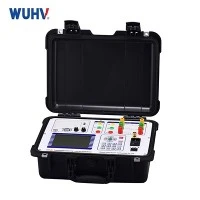


### **What is Partial Discharge (PD) Test Equipment?**
**Partial Discharge (PD) Test Equipment** is a diagnostic tool used to detect **partial discharges** in electrical insulation systems. Partial discharges occur when there are **localized electrical breakdowns** within the insulation of electrical components, such as **cables**, **transformers**, **switchgear**, and **motors**. These discharges can weaken the insulation over time and lead to equipment failure if not identified and addressed early.
Partial discharge testing is used to assess the **integrity** of electrical insulation and identify weak spots that could eventually result in catastrophic failures. The equipment detects PD activity by monitoring the **high-frequency electrical signals** produced during partial discharge events.
---
### **Purpose of Partial Discharge Test Equipment**
1. **Detection of Insulation Defects**:
* The main purpose of PD testing is to detect **defects** or **weaknesses** in the electrical insulation system, such as cracks, voids, contamination, or physical damage that could lead to partial discharges.
2. **Early Fault Detection**:
* PD testing helps detect potential insulation breakdowns at an early stage before they evolve into major faults, preventing equipment failures, **downtime**, and expensive repairs.
3. **Monitoring the Health of Electrical Systems**:
* It is used to monitor the **condition** of electrical systems over time, providing valuable insights into the **wear and tear** of insulation, particularly in critical systems like transformers and cables.
4. **Improved Safety**:
* Early detection of partial discharges helps improve the **safety** of electrical systems by preventing insulation failures that could lead to electrical fires, arc flash incidents, or equipment damage.
5. **Compliance with Standards**:
* Partial discharge testing is required for compliance with industry standards and regulations, ensuring that electrical equipment is functioning within safe parameters.
6. **Predictive Maintenance**:
* PD testing provides valuable data that can be used to schedule **maintenance** and predict when equipment may need repairs or replacement, improving reliability and reducing unexpected breakdowns.
---
### **Applications of Partial Discharge Test Equipment**
Partial discharge test equipment is widely used across various industries, particularly where electrical equipment and systems operate at high voltages and require regular maintenance and monitoring. Some common applications include:
#### 1. **Power Generation and Distribution**
* **Application**: PD testing is used to monitor the health of **high-voltage transformers**, **cables**, **switchgear**, and **insulated conductors** in power plants and substations.
* **Purpose**: To detect insulation weaknesses and ensure the reliability of critical equipment in the power grid, preventing outages and failures.
#### 2. **Electrical Equipment Manufacturing**
* **Application**: Manufacturers of **transformers**, **generators**, and other electrical equipment use PD testing to assess the quality of insulation during the production process.
* **Purpose**: To ensure the equipment meets **quality standards** and can withstand electrical stress without experiencing partial discharges.
#### 3. **Transmission and Distribution Networks**
* **Application**: PD testing is performed on **overhead transmission lines**, **underground cables**, and **distribution transformers** to monitor insulation quality and early-stage defects.
* **Purpose**: Prevents outages and failures by identifying deteriorating insulation before it leads to short circuits or ground faults.
#### 4. **Manufacturing Facilities and Industrial Plants**
* **Application**: PD testing is used to monitor **high-voltage electrical motors**, **cables**, and **switchgear** in **manufacturing plants** and **heavy industry**.
* **Purpose**: Detects partial discharge activities in critical industrial electrical equipment, enabling proactive maintenance and minimizing downtime.
#### 5. **Renewable Energy**
* **Application**: In **wind turbines**, **solar power plants**, and **battery storage systems**, PD testing is used to monitor the health of **transformers**, **inverters**, and **other electrical components**.
* **Purpose**: Ensures that renewable energy systems remain operational and free from insulation issues that could cause system failures.
#### 6. **Electric Vehicle (EV) Charging Infrastructure**
* **Application**: PD testing is used to ensure that the **EV charging stations**, **battery systems**, and **high-voltage inverters** remain free from partial discharge events.
* **Purpose**: Ensures the safety and longevity of charging infrastructure for electric vehicles.
#### 7. **HVAC and Utilities**
* **Application**: PD testing can also be applied to inspect the electrical systems in **HVAC units**, **utilities**, and **large-scale industrial equipment**.
* **Purpose**: Helps detect partial discharge activity in electrical systems that power heating, cooling, and ventilation systems, ensuring they operate without failures.
---
### **How to Use Partial Discharge Test Equipment**
Partial discharge testing involves the application of high-frequency electrical signals to monitor the **insulation integrity** of electrical systems. Below is a step-by-step guide on how to use PD test equipment:
#### 1. **Preparation**
* **Read the Manuals**: Understand the **testing procedure**, **specifications**, and safety guidelines for both the equipment and the PD testing device.
* **Safety First**: Always wear **personal protective equipment (PPE)** such as **insulated gloves**, **safety glasses**, and **protective clothing**.
* **Ensure Proper Grounding**: Properly ground all electrical equipment, including the PD test equipment, to avoid any accidental electrical shock.
* **Isolate the Equipment**: Disconnect the equipment being tested from the power source to prevent accidental energization during testing.
#### 2. **Connect the PD Testing Equipment**
* **Connect to the Equipment**: Attach the test probes or sensors from the PD test equipment to the insulation system under test. This could involve connecting to **terminals**, **cables**, **windings**, or **busbars** depending on the type of equipment.
* **Monitor the Signal Input**: The test equipment typically connects to the **test object** via high-frequency sensors that monitor partial discharge activity.
#### 3. **Set Up the Test Parameters**
* **Adjust the Settings**: Configure the PD test equipment based on the type of test being conducted and the electrical equipment under test. This includes setting parameters such as the **voltage level**, **frequency range**, and **detection sensitivity**.
* **Choose Test Mode**: Select the appropriate test mode based on the equipment being tested, such as **direct measurement** or **coupling through high-frequency capacitors** for sensitive tests.
#### 4. **Conduct the Test**
* **Apply Test Voltage**: Apply the appropriate test voltage to the equipment. This should simulate the operational voltage under normal conditions.
* **Monitor PD Activity**: As voltage is applied, the test equipment will monitor the **partial discharge** activity within the insulation system. The test equipment typically displays **real-time data** showing the occurrence, **frequency**, and **magnitude** of the partial discharges.
* **Record the Data**: Many PD testing devices automatically log test results, including **amplitude**, **location**, and **duration** of any detected partial discharges. This data helps identify potential areas of concern in the insulation.
#### 5. **Analyze the Results**
* **Review the PD Data**: The results will indicate whether partial discharge activity is within acceptable limits. If excessive PD is detected, it suggests **insulation degradation** or **damage**.
* **Interpret the Results**: Based on the detected PD events, the test equipment may also help localize where the **discharge activity** is occurring, allowing for more focused inspection or repairs.
* **Evaluate the Severity**: Evaluate the severity of the PD activity. In some cases, minor PD may be within acceptable limits, while in other cases, more severe discharges may require immediate attention.
#### 6. **Post-Test Actions**
* **Disconnect the Tester**: Safely disconnect the PD testing equipment from the system being tested.
* **Inspect the Equipment**: After the test, check the system for **damage**, **wear**, or any **signs of deterioration** that may have been detected during testing.
* **Re-establish Power**: Once testing is complete and the equipment is confirmed to be safe, reconnect the system to its power source.
#### 7. **Generate Reports**
* **Data Logging**: Many modern PD testers come equipped with **data logging** capabilities, allowing users to generate detailed reports. These reports may include graphs and charts showing **PD amplitude**, **location**, and **time**.
* **Documentation**: Record the results and provide documentation for **maintenance teams**, **compliance audits**, or for **future monitoring**.
---
### **Conclusion**
**Partial Discharge Test Equipment** is essential for monitoring the **health** and **integrity** of electrical insulation systems in high-voltage equipment, including **transformers**, **cables**, **switchgear**, and **motors**. By detecting partial discharge activity, this equipment helps identify early signs of **insulation deterioration**, enabling **predictive maintenance** and preventing costly failures. The primary purpose of PD testing is to enhance **safety**, ensure reliable operation, and extend the life of electrical systems. Proper use of PD testing equipment involves careful setup, monitoring of results, and detailed analysis to make informed decisions about maintenance and repairs.