

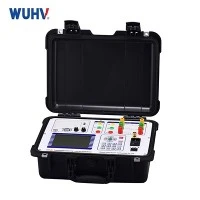


1. High Voltage AC Resonant Test System
Technical Principle:
This system uses a series resonance circuit formed by:
A variable frequency power supply
An excitation transformer
A high-voltage reactor (inductor)
The test object as a capacitive load
When the inductive reactance (XL) and capacitive reactance (XC) are equal, resonance occurs, and:
The output voltage is magnified while input power remains low.
Applications:
AC withstand test of long-length high-voltage cables
AC testing of GIS switchgear
AC withstand test of power transformers (especially >220 kV)
Testing of bushings, circuit breakers, CTs, PTs
Factory acceptance tests (FAT) and on-site commissioning
Benefits:
Very low input power needed (due to resonance)
Enables testing of large capacitive loads
High voltage stability and safety
Can be modular or containerized for field use
2. High Voltage Resonant Test System
Description:
A general category for any resonant-type test system operating at high voltages.
It may include:
Series or parallel resonant circuits
AC or DC test types (though AC is more common)
This term is often used as a broad, non-specific label for:
Any resonant test system above 100 kV
Systems used in both laboratory and on-site environments
Important Notes:
Must check specifications to confirm AC or DC
"High voltage" typically means >100 kV in this context
3. AC Resonant Test Set
Description:
A compact, portable version of the full resonant system. It usually includes:
Frequency control unit (typically 30–300 Hz)
Step-up transformer
High-voltage reactor
Capacitive voltage divider or digital meter
Transport case or wheeled cart
Best Used For:
MV/HV cable sections (e.g., 33 kV – 132 kV range)
Commissioning small substations
Rental or mobile test services
Training/testing in labs and universities
Advantages:
Easier to deploy at test sites
Modular or skid-mounted
May include automatic frequency tracking for resonance
Limitations:
Lower voltage range (usually <300 kV)
Not ideal for testing long cables or very large transformers
4. Cable Resonant Test
What it means:
This refers to the method or application of using a resonant circuit (typically AC) to perform a withstand test on HV cables.
This is needed because:
HV cables have large capacitance
Conventional hipot (high potential) testers require huge power to reach test voltages
Resonant test allows applying test voltage with only 5–10% of the required apparent power
Standards:
IEC 60502-2 (for cables up to 170 kV)
IEC 60840, IEC 62067 (for extruded cables above 170 kV)
IEEE 400.3: Guide for AC Withstand Testing of Cable Systems
Parameters Often Required:
Test voltage: 1.7 × U₀ (e.g., 127 kV for 66 kV rated cable)
Duration: 15 – 60 minutes
Test frequency: 20–300 Hz
5. Resonant Test Set
Description:
A general-purpose term for a test set using resonance to amplify voltage, typically:
Portable or fixed
AC based
May be manual or automated
Could be used for:
Small transformers
Switchgear
Cable samples
Routine lab tests
System Components Breakdown
| Component | Function |
|---|---|
| Variable Frequency Power Supply | Drives the system, typically 30–300 Hz |
| Excitation Transformer | Steps up voltage to energize HV reactor |
| HV Reactor (Inductor) | Tunes the circuit to resonate with capacitive load |
| Capacitive Load | The test object (usually HV cable, GIS, etc.) |
| Measuring Devices | Capacitive divider, peak voltmeter, digital control |
Optional:
PD detector
Discharge counter
Oscillograph or recorder
How to Choose: Professional Selection Guidelines
| Criteria | Recommendation |
|---|---|
| Test Object | Long HV cables (>100 m): Use AC Resonant System |
| GIS, transformers: Use High Voltage AC Resonant System | |
| MV switchgear, short cables: AC Resonant Test Set | |
| Test Location | Field: Modular or containerized system with variable frequency |
| Lab: Skid-mounted test set or fixed system | |
| Voltage Level | <100 kV: Portable test sets |
| 110 kV–220 kV: Compact resonant system | |
| >220 kV: Full resonant system with high-Q reactors | |
| Capacitance of Test Load | <1 µF: Most systems sufficient |
| >1 µF: Requires carefully selected reactor sizes to maintain resonance |
Example Use Case Matching
| Use Case | Recommended Equipment |
|---|---|
| 220 kV cable site test | High Voltage AC Resonant Test System with variable frequency |
| Lab test of 66 kV switchgear | AC Resonant Test Set |
| PD test preparation | AC Resonant System with PD coupling capacitor |
| GIS 330 kV | Containerized high voltage AC resonant system |
| Mobile testing service | Skid-mounted Resonant Test Set (modular) |
FAQs
What is an AC resonant test system?
A: It's a system that generates high AC voltage by using series resonance between an inductive reactor and the test object's capacitance. It allows testing large capacitive loads (like HV cables) with minimal power input.
Why use resonance for high-voltage testing?
A: Resonance amplifies voltage without requiring high-power sources. This makes it possible to test long cables or GIS equipment that would otherwise require prohibitively large and expensive test sets.
What is the test frequency used in AC resonant systems?
A: Most systems operate from 30 Hz to 300 Hz, allowing fine tuning for resonance with various capacitive loads.
What's the typical test duration?
A: According to standards (e.g., IEC 60502, IEC 60840), test durations are usually 15 to 60 minutes depending on the object and test voltage.
What is meant by Q-factor in resonant systems?
A: The Q-factor (quality factor) describes the sharpness of the resonance peak. A high Q-factor means higher voltage gain, but also a narrower frequency tuning range. It typically ranges from 20 to 50.
How do you achieve resonance?
A: By adjusting the test frequency so that the inductive reactance (XL) of the HV reactor equals the capacitive reactance (XC) of the load (e.g., cables, GIS). At this point, the system is at resonance.
What are the voltage and current limitations?
A: Portable sets can generate up to 300 kV, while large systems can exceed 600 kV and handle several hundred milliamperes to a few amps depending on the load capacitance.
Can the system work outdoors or on-site?
A: Yes. Most modern AC resonant test systems are modular or containerized, designed for field testing with robust weatherproof enclosures and vibration-resistant construction.
How do I tune the system to achieve resonance?
A: The system automatically or manually adjusts frequency (via a variable frequency source) until the output voltage peaks - indicating resonance.
Is it safe to operate?
A: Yes - systems include multiple safety features:
Overvoltage and overcurrent protection
Emergency stop buttons
Interlocks and grounding systems
Software-based automatic shutdown
Can I use it for partial discharge (PD) testing?
A: Yes. AC resonant systems can be configured with PD detection equipment and measuring capacitors to carry out PD measurements in addition to withstand voltage testing.
How do I know what size of reactor or power supply I need?
A: It depends on:
Test voltage
Capacitance of the DUT (Device Under Test)
Required test duration
Frequency tuning range
We can help you calculate these - just provide your specs.
What parameters should I provide to get a quotation?
A: You should specify:
Test voltage level (e.g. 132 kV, 220 kV)
Cable/system length and type
Load capacitance if known
Location (indoor/outdoor, fixed/mobile)
Standards you must comply with (IEC, IEEE, etc.)
If PD testing is required
What are the differences between test "Set" and "System"?
A:
| Term | Meaning |
|---|---|
| Test Set | Portable, compact, suited for lower voltage or temporary setups |
| Test System | Full system, often high power, modular or containerized, used for UHV or large-scale testing |
Is calibration required?
A: Yes. Regular calibration of voltage dividers and meters is essential to maintain test accuracy. Most suppliers provide calibration certificates (ISO 17025).
What certifications or compliance should the system meet?
A:
CE / IEC 61010 / ISO standards
EMC compliance for electrical noise
High-voltage insulation test standards (IEC 60502, 60840, 62067)
How does this compare to traditional hipot testing?
A:
| Feature | Traditional Hipot | AC Resonant |
|---|---|---|
| Power demand | Very high | Low due to resonance |
| Size & weight | Bulky | Compact/modular |
| Test duration | Short | Long (15–60 min) |
| Suitability for cables | Poor | Excellent |
Can one system test multiple voltage levels?
A: Yes. A properly designed resonant test system can test various voltage levels by adjusting the excitation transformer taps and using modular reactors.
How long is the lifespan of such systems?
A: Typically 10–20 years with proper maintenance. Spare parts availability and modular designs also make servicing easier.