

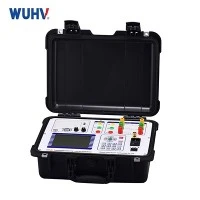


### **What is Primary Current Injection?**
**Primary Current Injection (PCI)** testing is a method used to verify the operation and functionality of **protective relays**, **circuit breakers**, and **switchgear** by applying **high-current** directly to the **primary circuit** of electrical equipment. Unlike secondary current injection, where low current is injected into the secondary side of a relay or system, PCI involves injecting the actual operational current directly into the primary circuit.
PCI testing is commonly used for testing **high-voltage equipment** such as **transformers**, **high-voltage circuit breakers**, and **relays** that are rated for high currents. The test is conducted by passing **actual current** through the primary equipment, allowing for a real-world assessment of the equipment's performance.
---
### **Purpose of Primary Current Injection**
1. **Verification of Relay and Protection System Operation**:
* The primary purpose of PCI testing is to verify that **protective relays** and **circuit breakers** respond correctly when **actual fault conditions** are simulated. PCI ensures that the system will properly detect faults and take the appropriate actions, such as **tripping breakers**.
2. **Accuracy of Trip Settings**:
* PCI testing allows for checking the **accuracy** of trip settings, such as **overcurrent**, **earth fault**, and **time delays** on protection relays. It helps to ensure that the relay will **trip** at the correct fault levels and within the correct time frame.
3. **Simulating Real Fault Conditions**:
* By injecting high current directly into the primary circuit, PCI tests how the equipment behaves under **real fault conditions**. This helps evaluate **coordination** between protective devices (e.g., ensuring that downstream devices trip before upstream devices during a fault).
4. **Verification of Circuit Breaker Performance**:
* PCI testing helps verify whether the **circuit breaker** can handle the fault current and whether it will operate properly to interrupt the flow of current in the event of a fault. It checks both **mechanical** and **electrical** performance.
5. **Detecting Potential Problems**:
* PCI is used to detect potential problems such as **misconfigured settings**, **inaccurate calibrations**, **contact wear**, or any **malfunctions** in protective devices, ensuring the system operates safely under fault conditions.
---
### **Applications of Primary Current Injection**
Primary Current Injection is used in a wide range of industries where high-current electrical systems are in place. Some common applications include:
#### 1. **Power Generation and Transmission**
* **Application**: Used to test **transformers**, **generators**, **circuit breakers**, and **switchgear** in power plants, substations, and transmission lines.
* **Purpose**: Ensures that protective systems are functional and reliable when dealing with large amounts of current during fault conditions. This is critical for preventing equipment damage, fires, and system failures.
#### 2. **Industrial Electrical Systems**
* **Application**: Used to test protective relays, circuit breakers, and **fuses** in industrial environments (e.g., **manufacturing plants**, **chemical plants**, **oil refineries**).
* **Purpose**: Verifies the performance of protection systems in electrical panels, motor control centers, and other critical infrastructure to minimize downtime and equipment damage.
#### 3. **Substations**
* **Application**: PCI is used to test protective relays and circuit breakers at electrical substations.
* **Purpose**: Ensures the protection system will operate under fault conditions, safeguarding the entire power distribution network.
#### 4. **Power Distribution Networks**
* **Application**: Used for testing **distribution boards**, **distribution transformers**, and **overcurrent relays** in public and private power grids.
* **Purpose**: Verifies the coordination between multiple protective devices, ensuring that faults are detected quickly and that the system is isolated without affecting the entire network.
#### 5. **Electric Vehicle (EV) Charging Infrastructure**
* **Application**: Testing high-current **EV charging stations**, **inverters**, and **chargers**.
* **Purpose**: Verifies that the protection systems in charging infrastructure can handle high current loads and react to faults appropriately, ensuring the safety of both users and equipment.
#### 6. **Testing of High Current Equipment**
* **Application**: PCI is used to test large equipment that handles high currents such as **motors**, **generators**, and **high-power inverters**.
* **Purpose**: To ensure that the equipment will operate safely under fault conditions and protect against electrical failures that could cause damage to critical assets.
#### 7. **Transmission Line Protection**
* **Application**: Used for testing relays and circuit breakers on **high-voltage transmission lines**.
* **Purpose**: Ensures that the protection system will isolate faults quickly and prevent the spread of faults that could affect large portions of the grid.
---
### **How to Use a Primary Current Injection Tester**
Using a **Primary Current Injection Tester** involves several important steps to ensure accurate results and safety during testing. Below is a step-by-step guide on how to use a PCI tester:
#### 1. **Preparation**
* **Safety First**: Prior to testing, ensure that appropriate **personal protective equipment (PPE)** is worn, such as **insulated gloves**, **safety glasses**, and **protective clothing**. Always follow **lockout/tagout procedures** to prevent accidental energizing of equipment during testing.
* **Read Equipment Manuals**: Review the technical manuals for both the tester and the equipment under test to understand the specifications, safety precautions, and operation.
#### 2. **Set Up the Tester**
* **Power Up the Tester**: Switch on the **Primary Current Injection Tester** and ensure it is correctly calibrated for the test.
* **Select Test Parameters**: Set the desired current level, fault condition (e.g., **overcurrent**, **earth fault**), and test duration. Ensure that the settings are within the manufacturer's recommended values.
* **Connect the Tester**: Connect the output leads of the tester to the primary terminals of the equipment being tested. Typically, the tester's output leads will connect to **busbars**, **breaker contacts**, or **terminals** where current flows.
#### 3. **Test Relay and Breaker Settings**
* **Apply Current**: Gradually apply current from the tester into the **primary circuit** of the device under test. This tests how the relay or breaker responds to high-current fault conditions.
* **Monitor Relay Response**: Observe whether the **relay operates** and the **circuit breaker trips** when the set fault conditions (e.g., overcurrent) are reached.
* **Test Settings**: Test the **trip settings** of the protection system by adjusting parameters such as **pickup current** or **time delay**. Ensure that the relay trips at the correct current level and within the specified time.
#### 4. **Perform Multiple Tests**
* **Fault Conditions**: Simulate multiple fault conditions, such as **overcurrent** and **earth faults**, to ensure that the protection system works under a range of possible scenarios. Each test should include measuring **trip times**, **current levels**, and **correctness of response**.
* **Coordination Testing**: Check whether the **coordination** between protective devices (e.g., **downstream relays trip first**) is functioning as expected, especially in multi-device setups.
#### 5. **Record Data**
* **Document Results**: Record the test results, including **current values**, **trip times**, and **settings**. Many modern testers include data logging capabilities to help automate this process.
* **Analyze Results**: After the test, analyze whether the **trip settings** were correct, and verify if the **circuit breaker tripped** as expected. If the relay did not operate as expected, **adjust the settings** or investigate potential issues with the protection device.
#### 6. **Post-Test Actions**
* **Reset the System**: After testing, ensure that the equipment is reset and ready for normal operation.
* **Disconnect Tester**: Safely disconnect the tester from the equipment under test.
* **Inspect Equipment**: Visually inspect the tested equipment for any signs of damage or wear, particularly if the breaker or relay failed to operate correctly.
* **Perform Final System Checks**: Once testing is completed, double-check the system to ensure everything is properly reconnected and there are no errors.
#### 7. **Generate Reports**
* **Reporting**: Some PCI testers come with software that can automatically generate test reports, detailing **test conditions**, **results**, and any deviations observed during the tests. These reports are important for **compliance**, **maintenance**, and **future troubleshooting**.
---
### **Conclusion**
**Primary Current Injection** is an essential method for testing and verifying the operation of high-current electrical protection systems, including **protective relays**, **circuit breakers**, and **switchgear**. By simulating fault conditions and applying high currents directly to the primary circuit, PCI helps ensure that electrical equipment will function properly under real-world fault conditions. It is commonly used in **power generation**, **industrial electrical systems**, and **high-voltage substations**, where the reliability of protection systems is critical to prevent electrical hazards, equipment damage, and downtime. Proper use of a PCI tester ensures accurate testing, optimal system performance, and enhanced safety.