

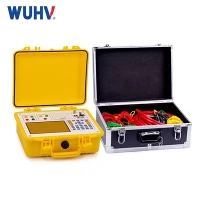


The instrument commonly used to test transformer oil is a transformer oil testing kit. These kits typically include various tools
and equipment for evaluating the condition of transformer oil to ensure the proper functioning and longevity of transformers.
Some of the key tests performed on transformer oil include:
Dielectric Strength Test: This test measures the ability of the oil to withstand electric stress without breaking down. It is also
known as the breakdown voltage test.
Acidity Test: This test determines the acidity of the transformer oil. Excessive acidity can indicate the presence of contaminants or
degradation of the oil.
Interfacial Tension Test: This test assesses the presence of polar contaminants, which can affect the oil's insulating properties.
Moisture Content Test: Transformer oil should have low moisture content to maintain its insulating properties. Various methods,
such as the Karl Fischer titration method, can be used to measure moisture content.
Dissolved Gas Analysis (DGA): DGA is used to identify and quantify the types and amounts of gases dissolved in the transformer
oil. Different gases can indicate various faults or issues within the transformer.
Color Test: The color of the oil can indicate the presence of contaminants or degradation. The ASTM color scale is often used for
this test.
Particulate Contamination Test: This test evaluates the presence of solid particles or contaminants in the oil, which can affect the
insulation properties.
Viscosity Test: The viscosity of the oil is measured to ensure it is within the specified range. Changes in viscosity can indicate
contamination or degradation.
Transformer oil testing is crucial for preventive maintenance and early detection of potential issues in power transformers,
helping to avoid costly equipment failures and downtime. Professional laboratories may also perform more advanced tests using
specialized equipment.