

1. What is Kinematic Viscosity?
Kinematic viscosity quantifies the resistance of a fluid to flow under gravity, expressed as the ratio of dynamic viscosity to fluid density.
It's crucial for characterizing fluid behavior in lubrication, fuel flow, chemical processing, and more.
2. Purpose of Kinematic Viscosity Test Equipment
This equipment is designed to:
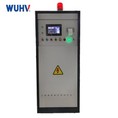
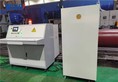
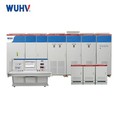
Measure the kinematic viscosity of liquids such as oils, fuels, lubricants, polymers, and chemicals.
Ensure product quality and conformity with industry standards.
Support R&D efforts to optimize fluid formulations.
Monitor fluid degradation or contamination during use.
3. How Does It Work?
The liquid sample is introduced into a U-shaped calibrated glass capillary tube (e.g., Ostwald, Cannon-Fenske).
The tube is immersed in a temperature-controlled bath (water or oil) to maintain a consistent test temperature.
The sample flows by gravity from one calibrated mark to another.
The time taken for the liquid to flow between marks is recorded.
The kinematic viscosity ν\nuν is calculated as:
ν=K×t\nu = K \times tν=K×t
where KKK is the viscometer constant and ttt is the flow time.
4. Types of Kinematic Viscosity Test Equipment
| Type | Description |
|---|---|
| Manual Viscometer | Glass tube, manual timing with stopwatch |
| Semi-automatic | Electronic timing sensors; manual sample handling |
| Fully Automatic | Automated sample loading, timing, temperature control, cleaning, and data management |
5. Typical Specifications
| Feature | Description |
|---|---|
| Temperature range | Ambient to 150°C or higher (depending on bath) |
| Timing accuracy | Millisecond precision with electronic timing |
| Sample volume | Few milliliters (typically 3–10 mL) |
| Measurement range | Viscosity from ~0.5 to 100,000 cSt (model dependent) |
| Standards compliant | ASTM D445, ISO 3104, IP 71 |
6. Applications
Petroleum industry (engine oils, fuels, lubricants)
Chemical manufacturing
Food and beverage (syrups, oils)
Pharmaceuticals (liquid formulations)
Research and development labs
FAQs
Q1: Why is temperature control critical in viscosity measurement?
A: Viscosity is highly temperature-dependent; even small changes can significantly affect results. Precise temperature control ensures accuracy and repeatability.
Q2: How do I choose the right viscometer tube?
A: Selection depends on expected viscosity range and fluid type. Calibration constants and tube dimensions must match the fluid's properties.
Q3: What is the difference between kinematic and dynamic viscosity?
A: Dynamic viscosity measures resistance to flow (Pa·s) under applied force; kinematic viscosity (m²/s or cSt) accounts for fluid density, measuring flow under gravity.
Q4: How often should the equipment be calibrated?
A: Typically annually or after any maintenance, using reference fluids with known viscosity values to ensure accuracy.
Q5: Can the equipment test opaque or colored liquids?
A: Yes, as long as the flow between timing marks is visible or timing sensors are used.
Q6: How is sample preparation done?
A: Samples should be free of bubbles, filtered if necessary, and at the target temperature before testing.
Q7: What are common errors in viscosity measurement?
A: Improper temperature control, air bubbles, incorrect timing, and dirty viscometer tubes can all cause errors.
Q8: Can automated testers clean the viscometer tubes?
A: Some fully automatic models include cleaning cycles, reducing manual labor and cross-contamination risk.
Q9: Are there safety precautions for high-temperature testing?
A: Yes, proper handling of hot liquids and bath equipment is essential to avoid burns and spills.
Q10: Can the data be integrated with LIMS or other QC systems?
A: Many modern instruments offer connectivity options for data export and integration with laboratory information management systems (LIMS).