

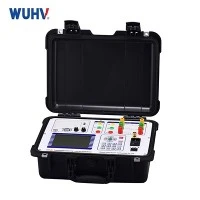


A no-load test, also known as an open-circuit test or excitation test, is a type of test conducted on transformers to determine their core losses and exciting current when no load is connected to the secondary winding. In a no-load test, the primary winding is energized with rated voltage at rated frequency while the secondary winding is left open-circuited or unloaded.
The main objectives of a no-load test are to:
Determine the core losses: The no-load test measures the total losses occurring in the transformer core when the transformer is energized with rated voltage and frequency but no load is connected to the secondary winding. These losses primarily consist of hysteresis losses and eddy current losses in the transformer core material.
Determine the exciting current: The no-load test also measures the exciting current drawn by the transformer when energized with rated voltage and frequency. This current is required to establish the magnetic flux in the transformer core and is influenced by the core characteristics, such as magnetic permeability and core geometry.
The procedure for conducting a no-load test typically involves the following steps:
Disconnect the secondary winding of the transformer or leave it open-circuited.
Connect the primary winding of the transformer to a variable AC voltage source capable of providing the rated voltage at the rated frequency of the transformer.
Gradually increase the voltage applied to the primary winding until the rated voltage is reached.
Measure and record the primary voltage, primary current, and power input to the transformer using appropriate instrumentation.
Calculate the core losses by subtracting the no-load input power from the measured power input.
Measure and record the exciting current drawn by the transformer.
Repeat the test at different voltage levels if necessary to analyze the transformer performance under different conditions.
The data obtained from the no-load test, including core losses and exciting current, are essential for evaluating the efficiency and performance characteristics of the transformer under no-load conditions. This information is used for transformer design, rating, and efficiency calculations, as well as for assessing the transformer's overall energy efficiency and operating characteristics.