

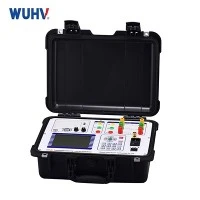


1. What is a Transformer Oil Chromatography Analyzer?
A Transformer Oil Chromatography Analyzer is a specialized analytical instrument that uses gas chromatography (GC) or related chromatography techniques to analyze dissolved gases and other chemical components in transformer insulating oil. It helps diagnose the condition of transformers by detecting faults inside the oil-filled equipment.
2. Purpose
To detect and quantify dissolved gases generated by thermal and electrical faults in transformer oil.
To monitor oil quality and degradation.
To support predictive maintenance by early detection of faults such as overheating, arcing, and partial discharge.
To comply with industry standards and improve transformer reliability.
3. Work Principle
Sample Preparation: A small oil sample is taken from the transformer.
Gas Extraction: Dissolved gases are extracted from the oil using vacuum, headspace, or membrane methods.
Chromatographic Separation: The extracted gases are injected into a chromatographic column, where components separate based on their interaction with the stationary phase inside the column.
Detection: Detectors (such as Flame Ionization Detector (FID) or Thermal Conductivity Detector (TCD)) measure the amount of each separated gas.
Data Analysis: The instrument software calculates gas concentrations and provides diagnostic information.
4. Types of Transformer Oil Chromatography Analyzers
| Type | Description |
|---|---|
| Bench-top analyzers | High-precision, lab-based instruments for detailed analysis |
| Portable analyzers | Field-deployable devices for on-site quick testing |
| Online/Continuous analyzers | Installed on transformers for real-time continuous monitoring |
5. Use For
Detecting dissolved gases like hydrogen, methane, ethylene, acetylene, carbon monoxide, carbon dioxide, and ethane in transformer oil.
Diagnosing types and severity of transformer faults.
Monitoring oil aging and contamination.
Supporting maintenance decisions and preventing transformer failures.
Research and quality control in transformer oil manufacturing.
6. Difference vs Other Oil Testing Methods
| Feature | Chromatography Analyzer | Other Oil Test Methods (e.g., dielectric, acidity) |
|---|---|---|
| Detection Focus | Identifies specific dissolved gases | Measures physical or chemical properties (dielectric constant, acidity) |
| Sensitivity | Very high for trace gas detection | Generally less sensitive to early fault gases |
| Diagnostic Capability | Can pinpoint fault types based on gas composition | Usually indicates oil degradation or general condition |
| Analysis Time | Minutes to hours, depending on instrument | Usually faster but less specific |
| Complexity | Requires skilled operation and calibration | Often simpler and quicker |
7. How to Use a Transformer Oil Chromatography Analyzer
Step-by-step:
Collect Oil Sample: Obtain a clean, uncontaminated oil sample from the transformer using proper sampling techniques.
Prepare Sample: Filter and degas the sample if required by the instrument.
Load Sample: Inject or place the oil into the analyzer's sample inlet or extraction system.
Gas Extraction: The analyzer extracts dissolved gases from the oil.
Chromatographic Analysis: The gases are separated and detected by the instrument.
View Results: Read the gas concentrations on the instrument display or computer software.
Interpret Data: Use built-in diagnostic software or manual interpretation methods (e.g., Duval Triangle) to assess transformer health.
Maintain Equipment: Regularly calibrate, clean columns, and check carrier gas supply for accurate results.