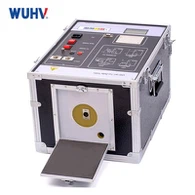

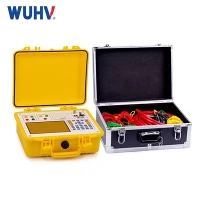


Product Introduction
Gas chromatography is a kind of separation and analysis technology of multi-component mixture. It mainly uses the differences in the boiling point, polarity and adsorption coefficient of each component in the sample in the chromatographic column to separate each component in the chromatographic column, and carries out qualitative and quantitative analysis of the separated components.
The gas chromatograph takes the gas as the mobile phase (carrier gas). When the sample is sent into the inlet and vaporized, it is carried by the carrier gas into the packed column or capillary column. Due to the differences in the boiling point, polarity and adsorption coefficient of each component in the sample, the components are separated in the column. Finally, the data is transmitted to the chromatographic workstation through serial port or network, and the chromatographic workstation records and analyzes the gas chromatogram of each component to obtain the analysis report of each component.
Due to the characteristics of high separation efficiency, fast analysis speed and small sample consumption, the method has been widely used in petrochemical, biochemistry, medicine, health and quarantine, food inspection, environmental protection, food industry, medical and clinical departments. Gas chromatography in these fields to solve the industrial production of intermediates and industrial products quality inspection, scientific research, pollution detection, production control and other problems.
Product Characteristics
1. The advanced 10/100M adaptive Ethernet communication interface and built-in IP protocol stack are used to facilitate the remote data transmission of the instrument through the intranet and the Internet, facilitate the establishment of the laboratory, simplify the configuration of the laboratory, analyze data and manage.
2. The gas chromatography analyzer is designed with three independent connection processes, which can connect local processing (laboratory site), unit supervisors, and higher-level supervisory departments. This facilitates real-time monitoring of instrument operation and analysis of data results by unit supervisors and higher-level supervisors;
3. The network version workstation equipped with the instrument can support multiple chromatographs simultaneously (up to 253), enabling data information processing and control, simplifying document management, and minimizing users' laboratory investment and operating costs
4. The instrument equipment adopts a multi processor parallel working mode, making the gas chromatography analyzer more stable and reliable, able to meet the needs of complex sample analysis, and can be equipped with various high-performance detectors such as FID, TCD, ECD, FPD, NPD, etc. It can install up to four detectors at the same time. In addition, detectors can be added to facilitate the installation and purchase of other detectors after purchasing the instrument;
5. The new microcomputer temperature control system has the advantages of high temperature control accuracy, high reliability, and strong anti-interference ability. It has six completely independent temperature control systems and can achieve 16 step programmed heating. The column box adopts an automatic rear door opening system, which improves the low-temperature control accuracy and accelerates the heating/cooling speed
6. The gas chromatography analyzer manufacturer can be equipped with advanced electronic flow controllers (EFC) and electronic pressure controllers (EPC) to achieve digital control, which can greatly improve the reproducibility of qualitative and quantitative results;
7. The gas chromatography analyzer supplier has a timed self starting program, which can easily complete online data analysis of gas samples during work (requires online automatic injection components);
8. A fully microcomputer controlled keyboard operation management system with simple and convenient operation methods, and a detector designed to automatically recognize information technology modes. It has the functions of fault diagnosis and power-off data protection, and can automatically save the set parameter conditions.
Product Function
Dissolved Gas Analysis (DGA): It uses gas chromatography to separate and analyze multiple gas components dissolved in oil, including hydrogen, methane, ethylene, acetylene, carbon monoxide, and carbon dioxide. This provides critical diagnostic information about transformer internal conditions.
Multi-Detector Capability: The gas chromatography analyzer factory supports a variety of high-performance detectors, including FID, TCD, ECD, FPD, and NPD, with up to four detectors installed simultaneously. This allows for comprehensive analysis of different gas types.
Advanced Temperature Control: It features a six-way independent temperature control system with a column box temperature control accuracy of ±0.02℃ and 21-stage program heating. The temperature range is from room temperature to 450℃, with liquid nitrogen refrigeration down to -80℃.
Network and Data Management: It adopts a 10/100M adaptive Ethernet communication interface with a built-in IP protocol stack, enabling long-distance data transmission via LAN or Internet. It supports network version workstations that can control up to 253 chromatographs.
Flexible Connectivity: It provides multiple communication options, including network interface output, RS232, and USB, allowing seamless integration with local computers or data management systems. It also supports remote diagnostics and program updates via internet connection.
Automated Operation: It supports timed self-start procedures for online gas sample analysis, and can be connected with automatic injectors from various manufacturers.
Modular Design: The modular structure design makes it easy to replace, upgrade, and maintain, protecting the effectiveness of investment.


Product Parameter
|
Network anti-control system |
Internal CAN's way, with interface board design, It can be converted to network port output at will |
|
Signal output bits |
24-bit |
|
Communication interface |
Network interface output(class 6 network cable connections) |
|
Circuit design |
ARM embedded design for easy wireless control, remote control and mobile app control |
|
Temperature control system |
Six-way independent temperature control |
|
Temperature control |
Room temperature - 450℃, liquid nitrogen refrigeration: - 80℃ - 450℃ |
|
Column box temperature control accuracy |
±0.02℃ |
|
Program heating up |
21 Stage 21 level, 0.1℃ / stage |
|
Show module |
Large-screen LCD |
|
Display accuracy |
0.01 ℃ |
|
Lift rate of column and box |
0~80 ℃ / min (adjustment increment 0.1 ℃ / min) up to 120 ℃ / min |
|
Temperature reprogrammed repeatability |
≤1% |
|
TCD detector sensitivity |
S value ≥ 10000mv.ml/mg (benzene) )up to 12000 mv.ml/mg (benzene) |
|
Baseline noise |
≤10uv |
|
Baseline Drift |
≤50uv/30min |
|
Detection limit of FID detector |
≤5 x 10-12g/s(cetane) |
|
Baseline noise |
≤2 x 10-14A |
|
Baseline Drift |
≤1×10-13A/30min(After the instrument stabilizes for 2 hours) |
|
Detection limit of ECD detector |
≤1.0 x 10⁻¹³g/s (r-666) |
|
Baseline noise |
≤40uv |
|
Baseline Drift |
≤100uv/30min |
|
Detection limit of FPD detector |
≤1.4 x 10⁻¹² g/s(p), ≤5×10-11g/s(S) |
|
Baseline noise |
≤20uv |
|
Baseline Drift |
≤50uv/30min |
|
Extended |
≤6 external events can be added |
|
Automation engineering |
Can be increased: automatic ignition function, automatic sampler connection, four-way flow pressure display function, optional counter-control workstation to achieve counter-control |
Application Scenarios
Petrochemical Industry
Crude oil composition analysis
Refinery process monitoring
Detection of hydrocarbon impurities in fuels and lubricants
Quality control of gasoline, diesel, transformer oil, and insulating oil
Natural gas composition analysis and purity testing
Environmental Monitoring
Air pollution analysis and volatile organic compounds (VOC) detection
Industrial emission monitoring
Water and soil contamination analysis
Hazardous chemical residue detection
Environmental laboratory testing and compliance monitoring
Food and Beverage
Industry Food additive analysis
Residual solvent detection in food processing
Flavor and fragrance composition analysis
Detection of pesticide residues and contaminants
Edible oil quality and safety testing
Pharmaceutical and Medical Industry
Drug purity analysis
Residual solvent testing in pharmaceutical production
Clinical laboratory analysis of biological samples
Pharmaceutical raw material quality control
Research and development of new medicines and formulations
Chemical Manufacturing
Intermediate and final product quality inspection
Chemical reaction monitoring
Solvent composition analysis
Industrial gas purity testing
Production process optimization and control
Research Institutes and Universities
Analytical chemistry research
Material composition studies
Scientific experiments involving gas separation and identification
Academic laboratory teaching and student training
Advanced chemical analysis research projects
Energy and Power
Industry Transformer oil dissolved gas analysis (DGA)
Insulating oil quality monitoring
Fuel gas analysis in power plants
Monitoring combustion efficiency
Gas impurity analysis in energy systems
FAQS:
Q1: Is the instrument suitable for quality control laboratories?
A1:Yes. It is widely used in QC laboratories for raw material testing, production monitoring, impurity analysis, and final product inspection.
Q2:Can the instrument detect impurities in transformer oil or insulating oil?
A2:Yes. Gas chromatography is widely used for dissolved gas analysis (DGA) in transformer oil to detect overheating, discharge, and insulation faults in power equipment.
Q3:What factors affect analysis accuracy?
A3:Important factors include: Carrier gas purity Column selection Detector calibration Sample preparation Temperature control stability
Q4:What is a dissolved gas analyzer?
A4:Dissolved gas analysis is an examination of electrical transformer oil contaminants. Insulating materials within electrical equipment liberate gases as they slowly break down over time.
Wuhan UHV Power Technology Co.,Ltd- Over 20 years as a direct-source manufacturer of high-voltage testing equipment. We offer high-voltage testing solutions at factory-direct prices, support customization, provide a one-year warranty, and deliver professional service throughout the entire process.
Hot Tags: transformer oil chromatography analyzer, China transformer oil chromatography analyzer manufacturers, suppliers, factory, flash point tester closed cup, digital flash point apparatus, flash point equipment, Mobile transformer oil tester, Transformer oil test system supplier, point tester