

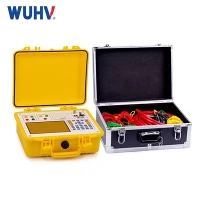


A Transformer OLTC Tester is a diagnostic tool used to analyze and evaluate the electrical and mechanical performance of the on-load tap changer (OLTC) in a transformer. It helps to detect early faults, ensure switching quality, and assess contact wear or misalignment.
Why OLTC Testing Is Important
The OLTC is one of the most failure-prone parts of a transformer due to its frequent mechanical movement and arcing during tap changes. If it fails, the whole transformer may go offline or get damaged.
Testing with an OLTC tester helps you:
Identify contact wear, carbon buildup, or bad switching
Detect mechanical binding, timing issues, or contact bounce
Monitor motor drive performance
Ensure voltage regulation is reliable
How Does an OLTC Tester Work?
Connect test leads to transformer windings and OLTC control points.
Initiate a tap change manually or via test equipment.
The tester injects current and measures voltage/resistance over time.
It captures dynamic resistance, motor current, and switching times.
The software displays waveforms and transition profiles for analysis.
Main Test Types and What They Reveal
| Test Type | Purpose | What It Detects |
|---|---|---|
| Dynamic Resistance Measurement (DRM) | Measures contact resistance over time during tap changes | Contact wear, poor transitions, arcing, bounce |
| Timing Test | Measures duration of each switching action | Slow or inconsistent tap changes, stuck mechanisms |
| Motor Current Test | Measures OLTC motor power profile | Mechanical blockage, worn gears, overcurrent issues |
| Transition Curve Analysis | Graphical plot of resistance during tap change | Signature-based fault identification |
| Tap Position Verification | Verifies each tap position connects properly | Incorrect tap settings or wiring faults |
Typical Testing Procedure
Safety first – De-energize transformer (if offline test), ground the system.
Connect test cables – to bushings and OLTC terminals.
Set up the test profile – in the test device (select tap range, resistance threshold).
Trigger tap changes – either manually (via OLTC drive) or automatically.
Capture and analyze results – using software for waveform and timing review.
Compare with previous data – for predictive maintenance.
Typical OLTC Tester Features
| Feature | Description |
|---|---|
| 🖥️ Digital interface | Touchscreen or PC software for analysis |
| ⚡ Multi-channel testing | Measures multiple phases/taps simultaneously |
| 📈 Graphical waveform display | Shows resistance and current curves |
| 💾 Data logging | Stores historical test results for trending |
| 🔌 Motor drive integration | Monitors OLTC motor behavior during operation |
Applications
Factory Acceptance Test (FAT) for new transformers
Commissioning of new substation transformers
Scheduled maintenance in substations and utilities
Post-fault analysis after OLTC failure or trip
Condition-based monitoring and asset management
Summary: Why Use an OLTC Tester?
🧠 Prevent tap changer failures before they cause transformer damage
📊 Get detailed insights into contact and motor condition
🛠️ Perform precise, repeatable diagnostics in the field or workshop
📈 Enable condition-based maintenance instead of just time-based