

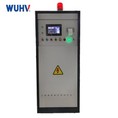

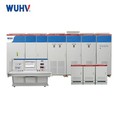
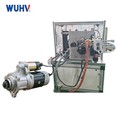
A Wide Voltage Range Battery Discharge Tester is a specialized instrument designed to simulate load and discharge batteries across a broad range of voltages (e.g. 10V to 600V or more), to assess their capacity, performance, and health under real operating conditions.
What Is It?
A Wide Voltage Range Battery Discharge Tester is used for controlled battery discharge testing, especially for large battery systems such as:
UPS (Uninterruptible Power Supply) systems
Telecom battery banks
Energy storage systems (ESS)
Electric vehicles (EV)
Industrial DC power systems
It allows you to discharge batteries safely, while measuring how the voltage, current, and capacity change over time.
Main Purposes
Measure actual capacity (Ah or Wh)
Evaluate battery aging or degradation
Test backup battery autonomy
Detect weak or damaged cells
Verify discharge performance under load
Ensure compliance with specs before commissioning or after maintenance
How It Works
Connect the tester to the battery or battery bank.
Set the voltage range, discharge current, and cutoff parameters (time, voltage, or capacity).
The tester applies a constant current or constant power load to simulate real use.
It measures and logs:
Voltage drop
Discharge time
Current
Total capacity (Ah or Wh)
Cell imbalance (if individual monitoring supported)
Once the cutoff point is reached, the tester stops and provides a full discharge report.
Key Specifications
| Parameter | Typical Range |
|---|---|
| Voltage range | 10V–500V / 800V / 1000V depending on model |
| Current range | 10A–1000A+ |
| Discharge modes | Constant Current (CC), Constant Power (CP), Constant Resistance (CR) |
| Cutoff settings | Voltage, Time, Capacity, or Manual |
| Data logging | Real-time graphing and export (USB/PC/Bluetooth) |
| Cooling | Forced air or liquid cooling for high power testers |
Typical Test Modes
| Mode | Use |
|---|---|
| Constant Current (CC) | Simulates linear load, most common for capacity testing |
| Constant Power (CP) | Simulates real-world variable loads like inverters or UPS |
| Step or Ramp Discharge | Used for profile testing under different loads |
| Cyclic Tests | Charge/discharge cycles to check battery aging or capacity fade |
Applications
Data center UPS testing
Electric vehicle battery pack testing
Industrial backup power systems
Renewable energy storage systems
Power plant DC system maintenance
Compliance and Safety
IEC 60896, IEC 61056, IEEE 450/1188/1106 for battery testing
Built-in protections:
Overvoltage/undervoltage
Overcurrent
Overtemperature
Reverse polarity
Benefits of Wide Voltage Range Testers
Can handle many battery configurations with a single unit
Portable options for field use
Accurate, automatic data logging and reporting
Helps prevent unexpected battery failure
Saves cost by avoiding full manual testing or replacement