

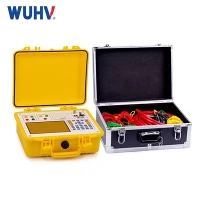


An AC resonant test system, also known as an AC resonant test set or resonant test transformer system, is a specialized high-voltage testing apparatus designed for testing the insulation of electrical components and systems, particularly those used in high-voltage applications. The AC resonant test system operates on the principle of resonance, where a combination of inductance and capacitance creates a resonant circuit. This circuit is excited by a variable frequency power source to produce a high-voltage AC output.
Here are key components and features of an AC resonant test system:
Resonant Circuit (Tank Circuit):
The core of the AC resonant test system is a resonant circuit, commonly referred to as the tank circuit. This circuit consists of an inductor (typically the test transformer), a capacitor, and sometimes a resistor. The values of inductance and capacitance are chosen to create a resonant frequency.
Variable Frequency Power Source:
The AC resonant test system is equipped with a variable frequency AC power source. This power source allows operators to adjust the frequency to match the resonant frequency of the tank circuit. The frequency is typically varied within a specified range to optimize testing conditions.
Test Transformer:
A high-voltage test transformer is a crucial component of the AC resonant test system. This transformer generates the high-voltage AC output required for testing. It is designed to handle the high currents and voltages associated with resonant testing.
Coupling Transformer:
A coupling transformer is used to connect the high-voltage test transformer to the test object. It ensures efficient transfer of power from the resonant circuit to the test object, allowing for proper energization and testing.
Control and Measurement System:
The AC resonant test system includes a control and measurement system that allows operators to set and monitor the test parameters. This system typically includes controls for adjusting the test voltage, frequency, and duration. Safety interlocks and protective features are also integrated into the control system.
Safety Features:
Due to the high voltages involved in the testing process, AC resonant test systems incorporate various safety features, including interlocks, grounding systems, and protective enclosures. These features are essential for ensuring the safety of personnel and preventing electrical hazards.
Optional Impulse Generator:
Some AC resonant test systems may include an impulse generator as an optional component. This generator can simulate transient overvoltage conditions, allowing for testing the impulse withstand capability of insulating materials and components.
The primary purpose of an AC resonant test system is to subject the test object to a high-voltage, high-frequency AC voltage that matches the resonant frequency of the tank circuit. This type of testing is particularly effective for detecting weaknesses or defects in the insulation of electrical components. AC resonant testing is commonly used for routine testing, type testing, and acceptance testing of high-voltage equipment such as power transformers, circuit breakers, bushings, and other electrical apparatus.