

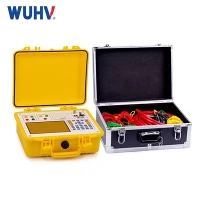


A resonance test system, often referred to as a resonant test set or resonant test circuit, is a type of high-voltage testing system used to evaluate the insulation characteristics and integrity of electrical components, particularly for high-voltage equipment. The resonance test is designed to subject the test object to a specific frequency that corresponds to the natural resonant frequency of the test circuit. This type of testing is commonly used for power transformers, circuit breakers, and other high-voltage apparatus. Here are key components and features of a resonance test system:
Resonant Circuit:
The core of the resonance test system is the resonant circuit, also known as the tank circuit. It typically consists of an inductor (coil) and a capacitor connected in parallel. The combination of the inductance and capacitance determines the resonant frequency of the circuit.
Variable Frequency Power Source:
A variable frequency power source is used to generate the AC voltage at the desired resonant frequency. The frequency of the power source can be adjusted to match the resonant frequency of the tank circuit.
Test Object:
The test object, which could be a power transformer, circuit breaker, or other high-voltage device, is connected to the resonant circuit. The goal is to subject the test object to the resonant frequency and evaluate its insulation response.
Coupling Transformer:
A coupling transformer is used to transfer power from the resonant circuit to the test object efficiently. It ensures that the high-voltage energy generated by the resonant circuit is effectively applied to the insulation of the test object.
Control and Measurement System:
The resonance test system is equipped with a control and measurement system that allows operators to set and monitor the test parameters. This system includes controls for adjusting the test voltage, frequency, and duration, as well as safety interlocks.
Safety Features:
Due to the high voltages involved in the testing process, resonance test systems incorporate various safety features, such as interlocks, grounding systems, and protective enclosures.
The resonance test is particularly effective for detecting weaknesses or defects in the insulation of electrical components. By applying a resonant frequency to the test object, the test can reveal potential issues that may not be apparent under normal operating conditions. This method of testing is commonly used for routine testing, type testing, and acceptance testing of high-voltage equipment, providing valuable information about the insulation integrity and overall performance of the tested objects.
It's worth noting that while "resonance test system" is a general term, specific implementations and configurations may vary based on the type of equipment being tested and industry standards.