

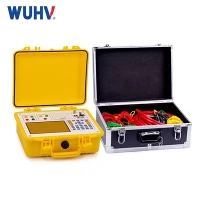


The terms "hipot test" (short for high potential test) and high-voltage test are often used interchangeably, but they have distinct meanings and applications in electrical testing. Here's a breakdown of the differences:
1. Definition
Hipot Test (High Potential Test): A hipot test is a specific type of high-voltage test primarily used to evaluate the insulation strength of electrical equipment and components. The goal is to determine whether the insulation can withstand a high voltage (higher than the normal operating voltage) without breaking down or allowing current to flow through it. It's typically used to check for dielectric breakdown or weak insulation.
High Voltage Test: This term is more general and refers to any test that involves applying high voltage to a component or system. This can include hipot tests, but it could also involve other tests such as high-voltage resistance tests, leakage current tests, or tests of the component's voltage endurance. It might not necessarily focus solely on the insulation's performance under high voltage.
2. Purpose
Hipot Test: The primary objective of a hipot test is to check the dielectric strength of insulation material. It is designed to test whether the insulation is capable of withstanding a higher voltage than its rated operating voltage without allowing electrical leakage or breakdown. It's often used to verify compliance with industry standards.
High Voltage Test: A high-voltage test can serve a variety of purposes depending on the equipment being tested. It could be used to assess:
Insulation Resistance (measuring how well the insulation resists current flow)
Voltage Withstand Capability (determining if a system can operate safely at high voltages)
Leakage Current (detecting if any current leaks through insulation)
Electrical Endurance (assessing the longevity of insulation under high voltage stress)
3. Testing Method
Hipot Test:
Typically involves applying a voltage higher than the rated voltage of the component, sometimes up to 2-3 times the rated voltage.
It's a pass/fail test: if any current leaks through the insulation (beyond a set threshold), it fails.
AC or DC voltage can be used, depending on the type of insulation and the standards being followed.
The test is focused on the insulation resistance and dielectric strength.
High Voltage Test:
More flexible in approach: it can involve tests for insulation resistance, dielectric breakdown, leakage current, or even tests for voltage endurance over extended periods.
A high-voltage test might be used to check the overall performance of an electrical system at high voltages, beyond just insulation.
High-voltage testing is typically more about verifying operational limits and performance under extreme conditions, not just insulation strength.
4. Common Applications
Hipot Test:
Electrical components such as transformers, cables, and circuit breakers.
Consumer electronics like power adapters, computers, and appliances to ensure they don't have faulty insulation that could lead to electrical shock or fires.
Motors and generators: to test whether their windings can withstand high voltage without failing.
Testing of high-voltage cables and systems like power lines, substations, and high-voltage transformers.
Endurance tests for components that will be exposed to high-voltage conditions over long periods.
Leakage current tests on electrical systems to ensure safety and compliance with regulations.
5. Voltage Levels
Hipot Test: The voltage applied during a hipot test is generally higher than the normal operating voltage of the component. For example, if a component is rated for 230V, a hipot test might apply 2-3 times that value (e.g., 500V or higher) for testing.
High Voltage Test: The applied voltage could vary widely depending on the test, the component, and the purpose. For example, a high-voltage resistance test could involve voltages ranging from several hundred volts to several hundred kV, depending on what is being tested.
6. Test Duration
Hipot Test: The duration of the hipot test is typically short-often a matter of seconds to a minute. This is because the test is designed to stress the insulation for a brief period to see if it can withstand a high voltage without breaking down.
High Voltage Test: Depending on the test type, the test duration can vary. For example, voltage endurance tests(also called stress tests) may last hours or even days, while leakage current or insulation resistance tests might be quicker, lasting only a few minutes.
7. Pass/Fail Criteria
Hipot Test: The result is binary: the component either passes or fails. The test is a success if no leakage currentor electrical breakdown occurs during the high-voltage application. If leakage current exceeds the acceptable threshold, the equipment fails.
High Voltage Test: In a high-voltage test, the criteria might be more varied, depending on what's being tested. For example:
In a voltage withstand test, the component passes if it can operate at high voltage for an extended period without damage.
In an insulation resistance test, it passes if the resistance is above a certain value.
In a leakage current test, the component passes if the current is below a specified threshold.
Summary of Differences
| Feature | Hipot Test | High Voltage Test |
|---|---|---|
| Definition | Specific test for insulation dielectric strength | General term for any test involving high voltage |
| Purpose | To check insulation strength and dielectric resistance | To check various electrical characteristics, including voltage endurance, leakage current, etc. |
| Test Method | Applies a high voltage to check for insulation breakdown | Can involve AC or DC voltage, checking for various criteria like resistance, leakage, endurance |
| Test Focus | Focuses primarily on insulation resistance and dielectric breakdown | Broader focus, including voltage withstand, endurance, leakage current, etc. |
| Voltage Levels | Higher than rated voltage (usually 2-3x rated) | Can vary widely, depending on the test and equipment |
| Test Duration | Short (seconds to minutes) | Can be long (minutes to hours) depending on the test |
| Common Use | Electrical components like motors, transformers, cables, and consumer electronics | Power systems, high-voltage cables, and systems, leakage current testing |
Conclusion
While hipot tests are a specific type of high-voltage test primarily aimed at testing insulation strength, a high-voltage test encompasses a broader range of testing activities. The hipot test is a more focused, safety-critical procedure for checking whether electrical components can safely withstand voltage without insulation failure, while a high-voltage testcan serve multiple purposes beyond just insulation testing.