

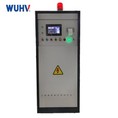

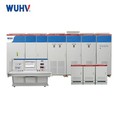
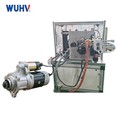
High Voltage Testing Overview
High Voltage Testing is used to ensure the safety, reliability, and operational effectiveness of electrical equipment and components under conditions of high voltage. Electrical equipment like transformers, cables, circuit breakers, motors, and generators need to be able to operate safely and efficiently at the high voltages they are designed for.
During these tests, the equipment is subjected to stress voltages (often much higher than their rated voltage) for a specified period, and the resulting behavior is observed to ensure that no insulation breakdown, leakage, or failure occurs.
Key Types of High Voltage Tests
1. Hipot (High Potential) Test
The Hipot test is commonly used to determine the integrity of electrical insulation by applying a high-voltage potential between the system's conductors and ground. This ensures that the insulation can withstand voltage stresses without breaking down.
Test Setup:
Test Equipment: A Hipot tester or high-voltage dielectric tester is used.
Test Procedure: A high-voltage AC or DC is applied to the component. Typically, the voltage is 1.5–2 times the rated voltage of the system under test.
Duration: The test is typically performed for 30 seconds to 1 minute, though the duration can vary based on equipment size and testing protocols.
Pass Criteria: If the insulation is intact, there will be no breakdown or excessive leakage current. If leakage current exceeds the specified threshold, the test fails.
Advantages:
Detects weak spots or defective insulation in the system.
Helps prevent operational failures by confirming the insulation strength before the equipment is put into service.
2. Insulation Resistance Test (IR Test)
The Insulation Resistance Test is another essential method to evaluate the condition of the insulation of electrical systems. This test measures the resistance of insulation to current leakage under a DC voltage.
Test Setup:
Test Equipment: A megohmmeter (insulation resistance tester) applies a DC voltage (usually 500V to 5kV).
Test Procedure: The tester is connected between the energized part of the equipment and ground. The current through the insulation is measured, and the insulation resistance is calculated.
Pass Criteria:
A high insulation resistance is required (usually in the megaohms (MΩ) range). If the resistance falls below the acceptable threshold (e.g., 1 MΩ or lower), it indicates potential issues with the insulation.
Advantages:
Provides insight into the overall health of insulation materials.
Helps detect degradation, moisture, or other issues that could lead to future failures.
3. Voltage Withstand (Endurance) Test
The Voltage Withstand Test (also known as the Endurance Test) assesses the system's ability to withstand voltage stresses over time. Unlike the quick Hipot Test, the voltage withstand test often involves subjecting the system to voltage for a much longer duration (e.g., several hours).
Test Setup:
Test Equipment: A high-voltage source (either AC or DC) capable of supplying the required test voltage.
Test Procedure: The equipment is subjected to a continuous high voltage, typically 1.25–1.5 times its rated voltage, over an extended period (e.g., 1 hour or longer).
Pass Criteria: The system should be able to withstand the applied voltage without any breakdown or significant change in performance (such as heating, leakage, or failure).
Advantages:
Simulates real-world conditions, including continuous stress on insulation and components.
Verifies that equipment will not fail during normal use under high-voltage conditions.
4. Leakage Current Test
The Leakage Current Test measures the current that leaks through the insulation when high voltage is applied. A certain amount of leakage current is normal, but excessive leakage could indicate insulation degradation or defects.
Test Setup:
Test Equipment: A high-voltage test device with a current measurement system.
Test Procedure: A high voltage (typically AC or DC) is applied to the system. The amount of leakage current is monitored to see if it exceeds specified limits.
Pass Criteria: Leakage current should be minimal and within acceptable thresholds, depending on the equipment's specifications.
Advantages:
Useful for detecting minor insulation flaws that may not immediately cause failure but could lead to future issues (e.g., breakdown or arcing).
Helps identify potential insulation breakdown or contamination (e.g., from moisture).
5. Dielectric Breakdown Test
The Dielectric Breakdown Test determines the maximum voltage that the insulation material of a component or system can withstand before it fails and allows current to pass through.
Test Setup:
Test Equipment: A high-voltage power supply capable of gradually increasing the voltage to the test specimen.
Test Procedure: The voltage is applied slowly to the insulation material until breakdown occurs (typically the point at which the material allows current to flow through).
Pass Criteria: The system should fail only at or above the specified dielectric breakdown voltage, meaning it can safely operate below that level.
Advantages:
Provides critical data on the maximum voltage limit of insulation materials.
Helps evaluate the overall performance of the insulation material at high voltages.
High Voltage Testing Safety Considerations
High-voltage testing is inherently dangerous, so ensuring safety during testing is essential:
Personal Protective Equipment (PPE):
Insulated gloves rated for high voltage.
Arc flash protective clothing (suits, face shields, goggles).
Insulated footwear.
Hearing protection, if noise levels are high.
Lockout/Tagout (LOTO):
Before testing, ensure all equipment is de-energized and secure by using LOTO procedures to prevent accidental activation during testing.
Grounding:
All test equipment and the object being tested must be properly grounded to prevent accidental shocks.
Test Area Safety:
Restrict access to the test area to trained and authorized personnel.
Place warning signs, barriers, and physical guards around the test area to keep unauthorized personnel away.
Standards for High Voltage Testing
High-voltage testing is governed by various international standards that specify the testing procedures, safety protocols, and acceptable limits for different types of equipment. These include:
IEEE Standards: Such as IEEE 43 for testing insulation in electrical machines and IEEE 4 for insulation coordination.
IEC Standards: The International Electrotechnical Commission (IEC) provides a range of standards for high-voltage testing, such as IEC 60060 for high-voltage testing techniques and IEC 60216 for electrical insulation materials.
UL Standards: Underwriters Laboratories (UL) publishes standards for electrical safety, such as UL 506 and UL 508, which cover safety requirements for electrical equipment.
Additional High Voltage Testing Techniques
Partial Discharge Testing: This test detects small electrical discharges within insulation that could lead to future breakdown. It's especially useful in cables and transformers.
Tan Delta Test: Measures the dielectric losses in insulation materials. It is often used to evaluate the condition of transformer insulation and cables.