

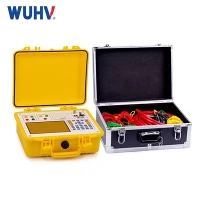


Oscilloscopes and power analyzers are both electronic test instruments, but they serve different purposes and are designed to measure different aspects of electrical signals. Here are the key differences between an oscilloscope and a power analyzer:
Purpose:
Oscilloscope:
The primary purpose of an oscilloscope is to visualize and analyze the time-domain waveform of electrical signals. It provides a graphical representation of how the voltage or current of a signal varies over time.
Power Analyzer:
A power analyzer, on the other hand, is designed to measure and analyze various electrical parameters related to power quality, energy consumption, and power distribution. It provides insights into the characteristics of the electrical power supply.
Measurement Parameters:
Oscilloscope:
Measures voltage and current waveforms, frequency, amplitude, phase relationships, and transient events.
Power Analyzer:
Measures parameters such as voltage, current, power factor, active power, reactive power, apparent power, harmonic content, frequency, and other power quality indicators.
Waveform Analysis:
Oscilloscope:
Provides a detailed view of the shape, amplitude, and timing of electrical waveforms. Useful for troubleshooting circuits, identifying signal distortions, and analyzing transients.
Power Analyzer:
Focuses on analyzing the quality of electrical power, identifying harmonics, power factor, and other parameters crucial for understanding the efficiency and stability of the power supply.
Applications:
Oscilloscope:
Widely used in electronics and communications for debugging, signal analysis, and circuit testing. It is especially useful for analyzing time-varying signals in electronic circuits.
Power Analyzer:
Commonly used in power systems, energy management, and industrial applications to assess power quality, energy consumption, and the overall efficiency of electrical systems.
Display Type:
Oscilloscope:
Typically equipped with a display screen that shows the waveform in the time domain.
Power Analyzer:
May have a display screen showing various parameters, numerical values, and graphical representations related to power quality.
Portability and Form Factor:
Oscilloscope:
Available in various form factors, including handheld, benchtop, and PC-based models. Portable models are common for field use.
Power Analyzer:
Can be handheld or benchtop, but is often designed for specific applications in power systems and energy analysis.
Typical Users:
Oscilloscope:
Used by electronics engineers, technicians, and researchers working on circuits, electronic devices, and communications systems.
Power Analyzer:
Used by power system engineers, electrical technicians, and energy managers for monitoring and analyzing power quality, optimizing energy usage, and assessing electrical system efficiency.
In summary, while both oscilloscopes and power analyzers are essential tools for electrical measurements, they serve different purposes. An oscilloscope is primarily used for visualizing and analyzing time-domain waveforms, while a power analyzer is specialized for measuring and analyzing parameters related to power quality, energy consumption, and power distribution.