

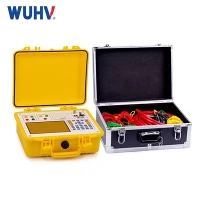


Several tests can be used to find the fault location in an underground cable. The choice of test depends on the nature of the fault and the characteristics of the cable. Here are some commonly used tests for locating faults in underground cables:
Time Domain Reflectometry (TDR):
TDR is a widely used method for locating faults in underground cables. It involves sending a pulse into the cable and measuring the time it takes for the signal to reflect back. By analyzing the reflection pattern, technicians can determine the distance to the fault.
Thumpers or Thumping:
Thumping is a method where a high-voltage pulse is applied to the cable, causing a sound or "thump" at the fault location. By listening for the sound or using specialized equipment, technicians can identify the approximate location of the fault.
Cable Route Tracing:
Cable route tracing involves using a cable route tracer to follow the path of the underground cable. This equipment typically includes a transmitter that sends a signal through the cable, and a receiver that can trace the signal along the cable route. It helps identify the general location of the fault.
Audio Frequency Resonance Method:
This method involves applying an audio frequency signal to the cable and using a receiver to detect the resonance caused by the fault. The frequency at which resonance occurs can provide information about the fault location.
High-Voltage Bridge or Surge Generator:
High-voltage bridges or surge generators can be used to apply high-voltage impulses to the cable. The resulting disturbances in the cable can help pinpoint the fault location.
DC Voltage Test:
DC voltage testing involves applying a direct current (DC) voltage to the cable and monitoring the current flow. A significant drop in current may indicate the presence of a fault, and the test can help identify the faulted section.
Low-Voltage Pulse Method:
The low-voltage pulse method involves injecting a low-voltage pulse into the cable and using a time-domain reflectometer (TDR) or similar equipment to analyze the reflections caused by the fault. This method is suitable for locating faults in communication cables.
Cable Insulation Resistance Measurement:
Measuring the insulation resistance of the cable can help identify faults, especially those involving insulation breakdown. A low insulation resistance reading may indicate the presence of a fault.
Visual Inspection and Excavation:
In some cases, a visual inspection of the cable route combined with excavation may be necessary. This allows technicians to physically inspect the cable and identify visible signs of damage or faults.
Ground Penetrating Radar (GPR):
GPR can be used to detect changes in the dielectric properties of the soil caused by the presence of a fault. This non-intrusive method can provide information about the location and extent of the fault.
It's important to note that the choice of testing method depends on factors such as the type of cable, the accessibility of the cable, and the specific characteristics of the fault. In many cases, a combination of tests may be used to accurately locate the fault in an underground cable. Additionally, safety precautions should be followed when conducting these tests. If in doubt, seeking assistance from professionals with expertise in cable fault location is recommended.