

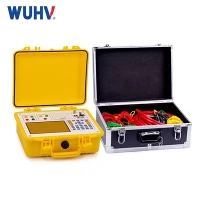


Primary injection and secondary injection are two different methods of testing protective relays, circuit breakers, and other protective devices in electrical power systems. These methods differ in how the test current is injected into the protective device being tested and the type of test conducted.
Here are the key differences between primary and secondary current injection:
Injection Point:
Primary Injection: In primary injection testing, the test current is injected directly into the primary side of the protective device, typically at the location where the device is connected to the electrical system.
Secondary Injection: In secondary injection testing, the test current is injected into the secondary side of the protective device, usually at the location of the current or voltage transformers that provide input signals to the protective relay.
Current Levels:
Primary Injection: Primary injection testing involves injecting high currents directly into the primary side of the protective device, typically ranging from hundreds to thousands of amperes. These currents simulate fault conditions or overloads in the electrical system.
Secondary Injection: Secondary injection testing involves injecting low currents into the secondary side of the protective device, typically ranging from milliamperes to amperes. These currents simulate the output signals from current or voltage transformers and are used to test the operation of the protective relay.
Purpose of Test:
Primary Injection: Primary injection testing is primarily used to verify the performance and functionality of circuit breakers and protective relays under actual fault conditions. It tests the entire protective system, including the tripping mechanism of the circuit breaker and the operation of the protective relay.
Secondary Injection: Secondary injection testing is used to verify the operation and settings of protective relays without subjecting the system to high fault currents. It focuses on testing the relay's response to simulated fault conditions and verifying its timing characteristics and settings.
Equipment Requirements:
Primary Injection: Primary injection testing requires specialized test equipment capable of generating high currents at low voltages, such as primary injection test sets or primary injection test kits.
Secondary Injection: Secondary injection testing requires test equipment capable of generating low currents at low voltages, such as secondary injection test sets or relay test sets.
Overall, primary injection testing is used for testing the performance of protective devices under actual fault conditions, while secondary injection testing is used for testing the operation and settings of protective relays in a controlled manner. Both methods are essential for ensuring the reliable operation of protective devices in electrical power systems.