

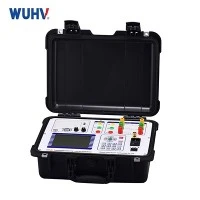


Types of HV Tests
This test applies alternating current (AC) at a higher voltage level than the rated voltage of the equipment. It is typically performed at power frequency (50Hz or 60Hz), though higher frequencies may be used for specialized equipment.
Purpose: To simulate real-world operating conditions where the equipment may encounter transient overvoltages or fluctuations.
In a DC HV test, a direct current (DC) voltage is applied instead of alternating current. The DC test is usually performed at a higher voltage to check for the insulation's ability to withstand a constant high-voltage stress.
Purpose: To detect defects in the insulation that might not show up under AC conditions. DC testing also helps assess the long-term performance of insulation.
This test applies a high voltage in the form of a short-duration impulse, typically used to simulate the effects of lightning strikes or switching surges.
Purpose: To assess the ability of equipment to withstand short-duration high-voltage spikes that occur in the system due to lightning or switching events.
Dielectric Withstand Test:
The dielectric withstand test involves applying a voltage to a device to verify that it can withstand the electrical stresses that it might encounter during normal operation and occasional abnormal events.
Purpose: To ensure that the dielectric (insulating) properties of the material are adequate for safe operation.
How HV Testing Is Performed
Test Setup:
High-Voltage Power Supply: An AC or DC source that can generate the required test voltage.
Test Object (Device Under Test): The equipment being tested (e.g., cables, transformers, switchgear).
Measuring Instruments: Devices like voltmeters, ammeters, and insulation resistance testers are used to monitor the voltage and the insulation's response to it.
Earthing/Guarding: Proper grounding of the equipment under test and the test setup is critical for safety during the test.
Testing Procedure:
The device under test (DUT) is connected to the high voltage test equipment.
The test voltage is gradually increased from 0 to the desired test voltage level.
The test is usually held for a set period, often between 1 minute and 15 minutes, to observe any signs of failure like breakdown of insulation, sparks, or leakage current.
For AC tests, the voltage is typically increased until the target voltage is reached, and it is held at that level.
For DC tests, the voltage is usually applied in a step-wise manner and held for the required time.
After the test duration, the voltage is reduced gradually to avoid sudden discharges that could damage the equipment.
Monitoring and Results:
Leakage Current: During the test, the current that flows through the insulation is measured. If it exceeds a certain threshold, it indicates that the insulation is compromised.
Breakdown or Flashover: If the equipment fails to withstand the high voltage (e.g., the insulation breaks down or the equipment arcs), it will fail the test.
The test voltage is typically recorded and compared to the rated insulation strength of the equipment.
Applications of HV Testing
Power Cables:
HV testing is used to verify that cables used in power transmission can withstand the voltages they will encounter. This is especially crucial for underground or underwater cables, which are difficult to replace if damaged.
Example: Testing cables for offshore wind farms or substations that experience high voltages.
Transformers:
The insulation of transformers must withstand high voltages during normal and fault conditions. HV testing ensures that the transformer windings and core are properly insulated and will not fail under stress.
Example: Testing power transformers in electrical substations.
Switchgear and Circuit Breakers:
HV testing helps verify that the switchgear can safely interrupt and isolate faults without damage to its insulation or other components.
Example: HV testing of the insulation in circuit breakers used in industrial plants.
Motors and Generators:
Motors and generators used in industries like oil, gas, and mining operate at high voltages and require testing to ensure the windings are adequately insulated.
Example: Testing insulation in large generators for power plants or offshore platforms.
Electrical Equipment in High Voltage Applications:
Equipment like busbars, insulators, and transformers, used in substations, require periodic HV testing to ensure reliability and avoid catastrophic failures during operation.
Testing of Electrical Safety Equipment:
HV testing is often used as part of quality control and safety checks for products such as surge protectors, fuses, and other devices that are expected to protect systems from high-voltage surges.
Precautions and Safety Measures
Personal Protective Equipment (PPE):
Operators must wear PPE, such as insulated gloves, dielectric footwear, face shields, and arc flash suits, to protect against electrical hazards during testing.
Proper Grounding:
All equipment must be grounded to prevent the buildup of harmful voltages that could pose a shock hazard to operators.
Test Area Isolation:
The testing area should be isolated, and only qualified personnel should be present. Warning signs and barricades should be in place to ensure that unauthorized personnel do not enter the area during testing.
Monitoring:
Continuous monitoring of the voltage, current, and insulation resistance should be performed during the test to ensure there are no sudden changes or failures.