

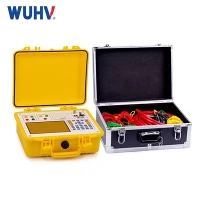


VLF (Very Low Frequency) cable testing is a diagnostic technique used to assess the integrity and condition of high-voltage cables and their insulation systems. The VLF testing method involves applying an AC (Alternating Current) voltage at a very low frequency to the cable, typically in the range of 0.1 Hz to 0.01 Hz. This low-frequency testing is designed to simulate higher-than-normal operating conditions and stress the cable's insulation.
Key aspects and objectives of VLF cable testing include:
Dielectric Strength Assessment:
Purpose: VLF testing assesses the dielectric strength of the cable insulation.
Objective: To determine the cable's ability to withstand high-voltage stress without breakdown.
Sensitivity to Insulation Defects:
Detection of Defects: VLF testing is more sensitive to insulation defects compared to traditional power frequency testing.
Identification of Weaknesses: It helps identify weaknesses, voids, or contamination within the insulation.
Partial Discharge Detection:
Sensitivity: VLF testing is effective in detecting partial discharges within the cable insulation.
Early Warning of Issues: Detection of partial discharges serves as an early warning of potential insulation deterioration.
Non-Destructive Testing:
Safe Testing Method: VLF testing is non-destructive, meaning that it applies a controlled stress to the insulation without causing significant damage.
Routine Maintenance: It allows for routine testing without the risk of harming the cables.
Preventive Maintenance:
Identification of Issues: By identifying potential issues early, preventive maintenance measures can be taken to avoid unplanned outages and failures.
Extension of Cable Life: Regular VLF testing contributes to the extension of the cable's operational life.
Quality Control in Cable Manufacturing:
Verification of Quality: VLF testing is employed in the quality control of newly manufactured cables to ensure the integrity of the insulation.
Identification of Manufacturing Defects: It helps identify defects that may have occurred during the manufacturing process.
Testing of Medium and High Voltage Cables:
Versatility: VLF testing is suitable for both medium and high voltage levels, making it applicable to a wide range of electrical systems and cables.
Long Cable Testing:
Suitability for Long Cables: VLF testing is particularly suitable for testing long cables, such as those used in power distribution networks or underground installations.
Effective Coverage: The low frequency allows for effective testing over extended cable lengths.
Evaluation of Insulation Condition Over Time:
Extended Test Duration: VLF testing allows for longer-duration testing, providing a more comprehensive evaluation of the cable's performance over time.
Tracking of Insulation Health: It helps track changes in insulation condition over multiple testing sessions.
VLF cable testing is widely used in the electrical industry as part of preventive maintenance programs, quality control in cable manufacturing, and routine diagnostic testing of high-voltage cables. The results obtained from VLF testing provide valuable information about the insulation's health and can guide maintenance and replacement decisions.