

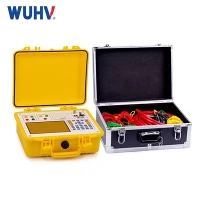


VLF (Very Low Frequency) testing and PD (Partial Discharge) testing are related but distinct techniques used in the assessment of high-voltage cables and electrical insulation systems. While both tests contribute to the overall evaluation of insulation integrity, they focus on different aspects of the testing process. Here are the key differences between VLF testing and PD testing:
VLF (Very Low Frequency) Testing:
Objective:
Main Focus: VLF testing primarily assesses the ability of the cable insulation to withstand high-voltage stress at very low frequencies.
Purpose: To determine the cable's ability to withstand voltage levels significantly higher than standard power frequency (50 or 60 Hz) without breaking down.
Frequency:
Frequency Range: VLF testing typically operates at frequencies between 0.1 Hz and 0.01 Hz.
Low Frequency: The low frequency allows for extended-duration testing, making it effective in detecting insulation issues that might not be apparent under standard power frequency conditions.
Testing Conditions:
Non-Destructive: VLF testing is non-destructive, meaning that it does not cause significant stress or damage to the insulation during the testing process.
Routine Maintenance: It is commonly used for routine maintenance, preventive testing, and quality control in cable manufacturing.
Partial Discharge Detection:
Partial Discharge Sensitivity: VLF testing is effective in detecting partial discharges within the insulation.
Integrated Feature: Some VLF testers may have integrated partial discharge detection capabilities.
Applications:
Medium and High Voltage Levels: VLF testing is suitable for medium and high voltage levels, making it applicable for a wide range of applications, including distribution networks and high-voltage equipment.
Partial Discharge (PD) Testing:
Objective:
Main Focus: PD testing specifically focuses on detecting partial discharges within the cable insulation.
Purpose: To identify early signs of insulation deterioration, defects, or weaknesses that may lead to cable failures.
Frequency:
Frequency Range: PD testing often involves higher frequencies, typically in the radio frequency (RF) range (kHz to MHz).
Sensitivity to Discharges: Higher frequencies are more sensitive to detecting partial discharge events.
Testing Conditions:
Destructive Potential: PD testing, especially at higher frequencies, can be more stressful to the insulation and has the potential to accelerate aging.
Diagnostic Nature: PD testing is often used for diagnostic purposes to identify specific areas of insulation degradation.
Partial Discharge Detection:
Primary Focus: PD testing is specifically designed for the detection and measurement of partial discharge events.
Quantitative Analysis: PD testing provides quantitative information about the magnitude, location, and characteristics of partial discharges.
Applications:
Diagnostic Testing: PD testing is commonly employed as a diagnostic tool to assess the condition of cables, transformers, and other high-voltage equipment.
Critical Applications: It is often used in critical applications where the early detection of partial discharges is crucial for preventing unplanned outages.
Summary:
VLF Testing: Focuses on assessing the cable's ability to withstand high-voltage stress at very low frequencies. It is non-destructive, suitable for routine maintenance, and can detect partial discharges as an integrated feature.
PD Testing: Specifically targets the detection and measurement of partial discharges within the insulation. PD testing can involve higher frequencies, is more diagnostic in nature, and provides detailed information about discharge events.
While both VLF testing and PD testing contribute to the evaluation of insulation integrity, they serve different purposes within the overall testing and maintenance strategies for high-voltage electrical systems.