

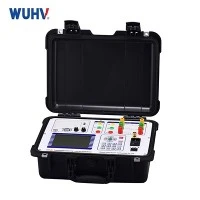


Product introduction
The Transformer Capacitance & Tan Delta Tester is a high-precision instrument that automatically measures the dielectric loss tangent and capacitance of various high-voltage power equipment on site in power plants, substations, and other places. Due to the use of frequency conversion technology, accurate measurement can be ensured under strong electric field interference. The instrument adopts English menu operation, and the microcomputer automatically completes the entire measurement process. This instrument is also suitable for measuring the tgδ and capacitance of high-voltage electrical equipment in workshops, laboratories, and research institutions.

Technical parameters of transformer capacitance & tan delta tester
| High voltage output | 0.5~10kV |
| Increasing by 500V for each level, a total of 20 levels, capacity: 1500VA | |
| Accuracy | tgδ: ± (reading * 1.5% + 0.06%) |
| Cx: ± (reading * 1.5% + 5PF) | |
| Resolution | tgδ: 0.001% |
| Cx: 0.001pF | |
| Measuring range | 0.001% |
| Internal high pressure | 3PF~<60000PF/10KV |
| 60PF~1uF/0.5KV | |
| External high pressure | 3PF~1.5uF/10KV |
| 60PF~30uF/0.5KV | |
| Power supply | AC 220V ± 10% 50/60 ± 1Hz |
| Measuring method | a.single frequency: 45(45Hz measuring),50(50Hz measuring),55(55Hz measuring),60(60Hz measuring),65(65Hz measuring) |
| b.different frequency: 50D(45Hz/55Hz measure each time) 60D(55Hz/65Hz measure each time) Automatic frequency conversion | |
| Harmonic adaptation | ≤3% |
| Application condition | -15℃-50℃ Relative humidity<80% |
| Dimension | 460 (L) × 345 (W) × 345 (H) |
| Weight | 35kg |
Key Features of a Transformer Capacitance & Tan Delta Tester
1. Variable Frequency Testing: Uses test frequencies different from the power frequency to reduce interference and improve measurement stability.
2. Multiple Measurement Functions: Measures the dielectric dissipation factor (tan δ) and capacitance to help evaluate the insulation condition of electrical equipment.
3. Strong Anti-Interference Performance: Suitable for on-site testing in substations and other environments with strong electromagnetic interference.
4. Accurate Measurement: Uses digital measurement and data processing technology to provide reliable results for dielectric loss and capacitance measurements.
5. Easy Operation: Typically equipped with a digital display and automatic calculation functions. Some models also support automatic testing, data storage, and test report generation.
6. Wide Range of Applications: Suitable for dielectric loss testing of power transformers, current transformers, voltage transformers, bushings, capacitors, and other applicable electrical equipment.
7. Safety Protection: Depending on the model, the tester may include overvoltage and overcurrent protection to improve safety during field testing.
Video
Application Scenarios of transformer capacitance & tan delta tester
Handover test: Before the new equipment is put into operation, insulation performance testing shall be conducted on high-voltage equipment such as transformers, transformers, bushings, circuit breakers, capacitors, etc., and the equipment quality shall be accepted to ensure compliance with the commissioning standards.
Preventive maintenance: Regularly measure the dielectric loss and capacitance of high-voltage power equipment in operation, detect the moisture, aging, and local defects of insulation materials, predict equipment failures in advance, avoid insulation breakdown and other safety accidents, and ensure the stable operation of the power system.
Fault diagnosis: When insulation abnormalities occur in power equipment, accurate measurement of tg δ and Cx values is used to analyze the cause of the fault (such as moisture, aging, partial discharge, etc.), providing scientific basis for equipment maintenance.
Research and Teaching: Provide a standard testing platform for power research institutions and universities, supporting research on insulation material properties, optimization of testing methods, and related professional teaching experiments.
Insulation oil testing: equipped with standard oil cups and dedicated testing lines, it can measure the loss of liquid insulation media such as transformer oil and evaluate the insulation performance of insulation oil.
Selection of Transformer Capacitance & Tan Delta Tester
1. Select the testing object: Clearly identify the equipment that needs to be tested, such as power transformers, transformers, bushings, or capacitors, and confirm whether the instrument supports the corresponding testing items.
2. Pay attention to measurement parameters: Focus on the measurement range, resolution, and accuracy of dielectric loss factor (tan δ) and capacitance to ensure that they meet the actual test requirements.
3. Consider anti-interference capability: If mainly used in strong electromagnetic interference environments such as substations, priority should be given to frequency measurement technology and corresponding anti-interference performance.
4. Confirm the testing method: Based on the wiring conditions of the tested equipment, confirm whether the instrument supports the required functions such as forward connection method, reverse connection method, grounded sample testing (GST), ungrounded sample testing (UST), and CVT self-excited method.
5. Check the automation function: Select models with automatic testing, data storage, result analysis, and report export functions according to work needs to improve on-site testing efficiency.
6. Emphasize safety protection: Understand whether the instrument has overvoltage, overcurrent and other protection functions, and confirm that the supporting test lines, grounding devices and operating requirements comply with on-site safety regulations.
7. Consider after-sales service: Choose a supplier that can provide technical guidance, operation training, maintenance support, and calibration services to facilitate subsequent use and maintenance.
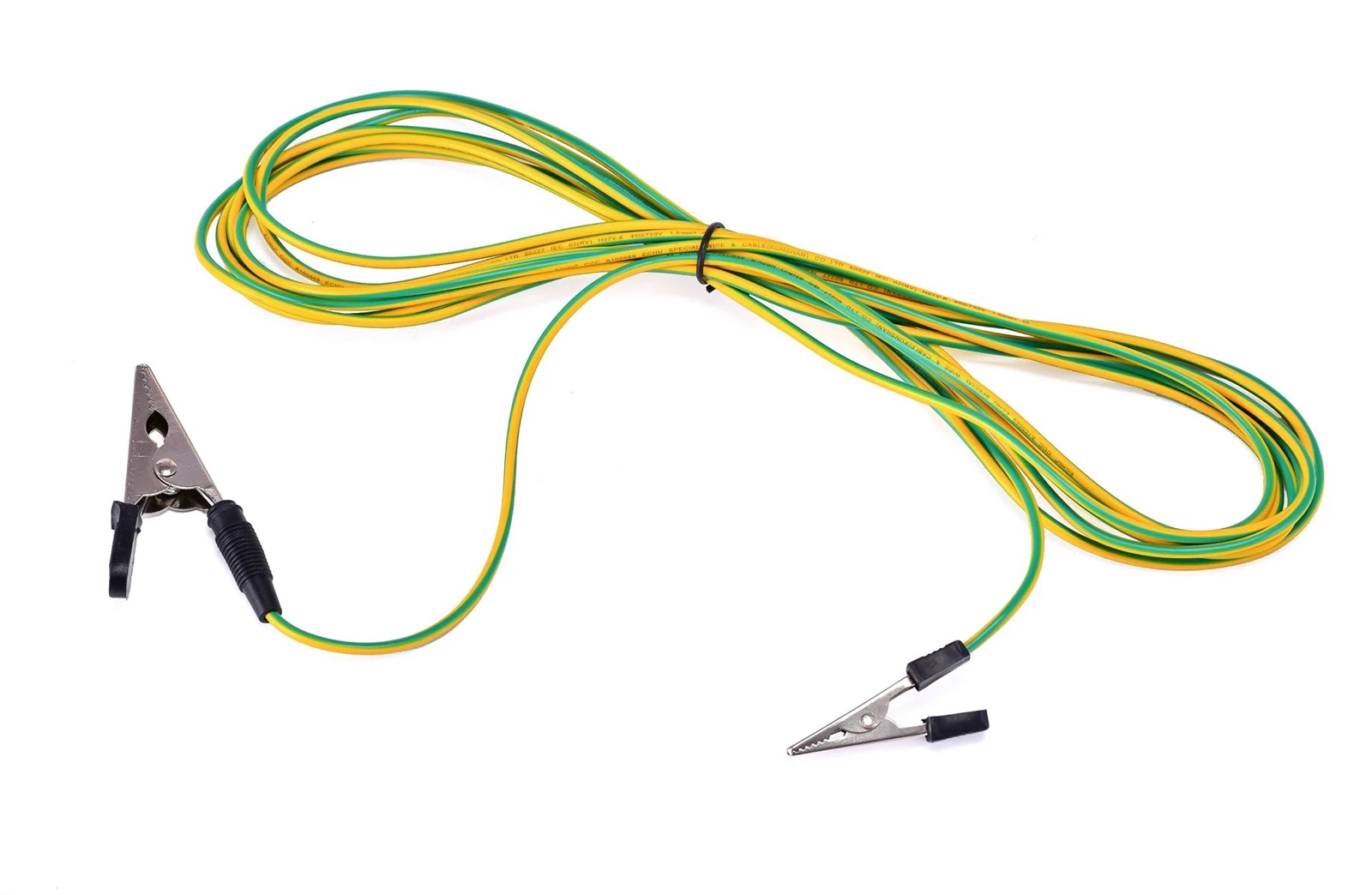
Parts




FAQs
What is the role of this transformer capacitance & tan delta tester in the power testing system?
The instrument is used to measure high-voltage electrical equipment in terms of:
Dielectric loss factor (tan δ / dissipation factor)
Capacitance (Cx)
Insulation condition parameters (comprehensive diagnosis)
In UHV systems, it is a core device for preventive insulation testing.
It is mainly used to evaluate:
Insulation aging
Moisture ingress
Oil-paper degradation
Development trends of internal defects
Why must capacitance measurement and tan delta testing be performed together?
Because they provide different diagnostic dimensions:
Tan δ: reflects dielectric loss and insulation condition
Capacitance Cx: reflects structural and dielectric changes
In UHV systems:
Tan δ alone is not sufficient to determine abnormal conditions in bushings or main transformers; it must be evaluated together with Cx variation trends.
How is this device different from a standard insulation resistance tester?
The difference is as follows:
IR test: only indicates whether insulation is leaking
Tan δ + Cx: evaluates insulation quality changes and degradation trends
In UHV diagnostics, tan delta is considered a trend-based diagnostic method.
What are the differences between UHV-grade equipment and conventional power-grade instruments?
UHV versions typically include:
Variable frequency testing (45–65 Hz)
Stronger anti-interference performance (GIS environments)
Higher measurement resolution (tan δ up to 10⁻⁵ level)
Enhanced shielding and dual-channel sampling
Automatic capacitance compensation system
CVT test compatibility
Why is variable-frequency technology required in UHV field testing?
Because field conditions include:
Strong 50 Hz power-frequency interference
Transient disturbances from GIS operations
Influence of long cable distributed capacitance
Advantages of variable-frequency testing:
Avoids interference frequency points
Improves detection of weak loss signals
Enhances repeatability and stability
What is the typical test voltage range for UHV-grade transformer capacitance & tan delta tester?
Typical configurations:
0.5 kV – 12 kV (standard field units)
15 kV / 20 kV (high-end laboratory grade)
Supports CVT and voltage divider extended testing
Which power equipment is mainly tested?
Key applications include:
1000 kV main transformers
±800 kV converter transformers (HVDC)
RIP/RIF high-voltage bushings
GIS insulators
Shunt and series reactors
Power capacitor banks
Why are bushings a key test object?
Because bushings:
Operate under long-term high electric field stress
Have complex oil-paper or resin insulation structures
Are among the most failure-prone components in UHV systems
A rise in tan δ usually indicates:
Moisture ingress
Partial discharge development
Insulation aging
What is the significance of capacitance (Cx) in bushing diagnosis?
Changes in Cx usually indicate:
Structural layer displacement
Development of dielectric loss anomalies
Influence of internal partial discharge
In UHV systems:
Cx variation is treated as a structural abnormality signal.
What are the main sources of interference in UHV substations?
Including:
High-voltage bus electromagnetic fields
Switching noise from GIS operations
Ground potential fluctuations
Distributed capacitance of long cables
How is high anti-interference performance achieved?
Core technologies include:
Variable-frequency measurement (frequency shift)
Phase-sensitive detection (PSD)
Dual-shield reference channel design
Three-terminal / four-terminal compensation
Software filtering and phase correction
Why is anti-interference performance more important than accuracy?
In UHV field conditions:
Accuracy is valid mainly in laboratory environments
Field errors are dominated by interference
Therefore, engineering procurement focuses more on:
Stability over nominal accuracy
Does the transformer capacitance & tan delta tester support automatic diagnostic functions?
UHV-grade systems typically support:
Automatic temperature compensation (oil temperature correction)
Humidity and environmental correction models
Historical trend comparison analysis
Insulation condition index evaluation
Does transformer capacitance & tan delta tester support automatic report generation?
Yes, including:
IEC 60247 format
IEEE C57 series report structure
Grid-standard test reports
PDF/Excel export
Can it be integrated into UHV test vehicles?
Yes. Typical systems include:
UHV mobile test vehicles
On-site GIS integrated testing platforms
High-voltage combined test systems
The tan delta and capacitance tester is usually a core module.
Does transformer capacitance & tan delta tester support CVT testing?
Yes, including:
Capacitive voltage transformer testing
Intermediate transformer compensation
Voltage divider error correction
High-voltage ratio analysis
What is the typical service life of the equipment?
10–15 years system lifespan
High-voltage modules require maintenance or upgrade after 5–8 years
Is professional qualification required for operation?
Yes, including:
Electrical test operation certification
High-voltage testing standards (DL/T system compliance)
UHV field safety training
What is the future development direction?
Trends include:
Integrated diagnosis using tan δ + PD + DGA
AI-based insulation condition assessment
Hybrid online and offline monitoring systems
Digital substations (IEC 61850)
Will it be replaced by online monitoring systems?
Not in the short term.
Offline testing remains the diagnostic benchmark
Online systems are mainly used for trend monitoring
We are a professional Transformer Capacitance & Tan Delta Tester manufacturer in China. We can provide the best professional Transformer Capacitance & Tan Delta Tester for sales and competitive price. If you are looking for Transformer Capacitance & Tan Delta Tester supplier, we are a good choice.
Contact us to get Transformer Capacitance & Tan Delta Tester price.
Hot Tags: transformer capacitance & tan delta tester, China transformer capacitance & tan delta tester manufacturers, suppliers, factory, Professional Transformer DGA Gas Chromatograph


